|

EUR/JPY Price Analysis: Bears about to bounce should USD/JPY sink

  • EUR/JPY bulls could be nearing capitulation within the recent soft correction. 
  • Bears are targeting a blow-off to test below 141.00.

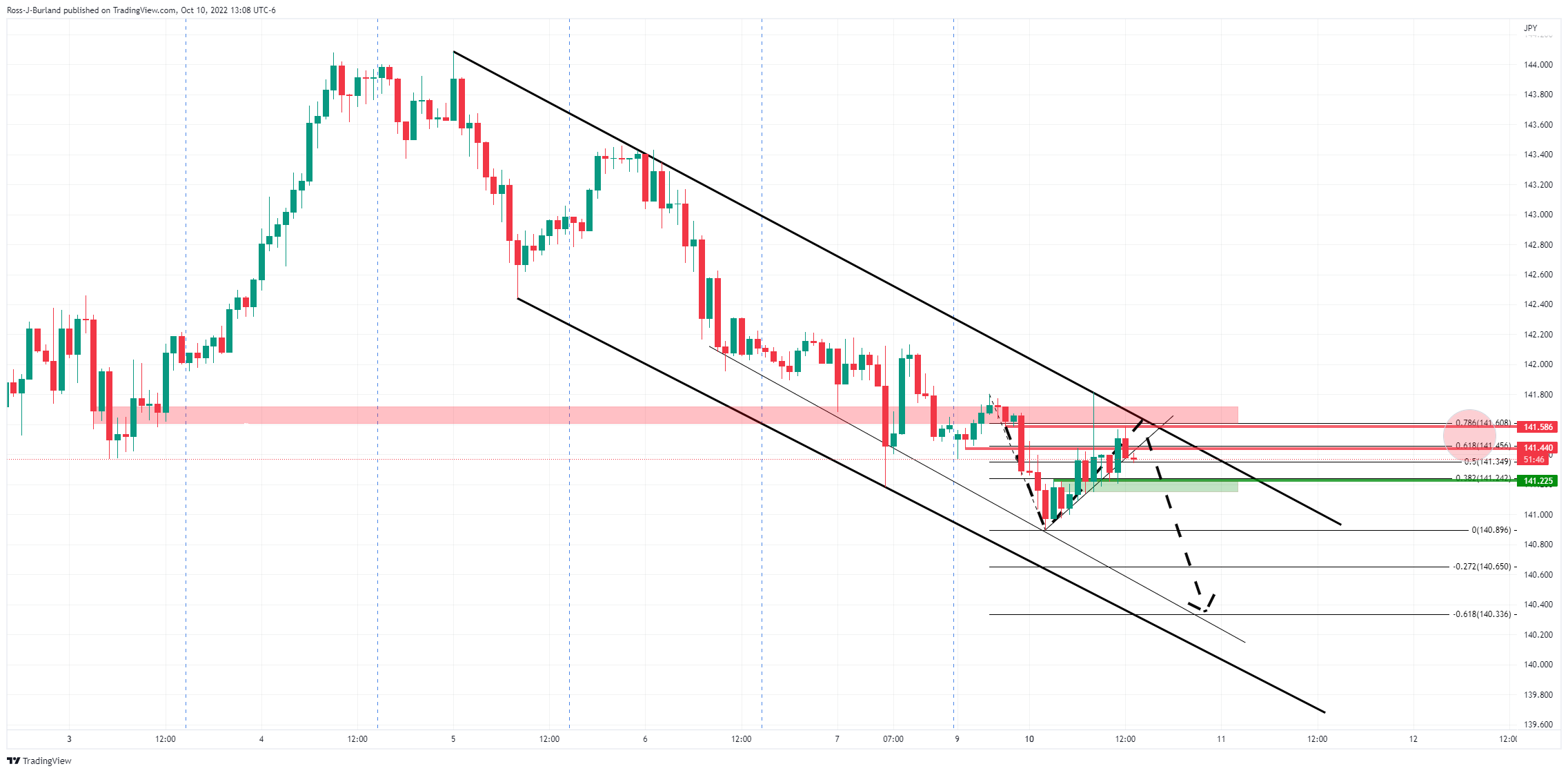
EUR/JPY, as the following analysis will illustrate, could be on the verge of a significant move to the downside. The price has been in a broad bearish trend since the start of the month and there could be more to come from the bears should the correction decelerate as follows: 

EUR/JPY H1 chart
EUR/JPY M15 chart
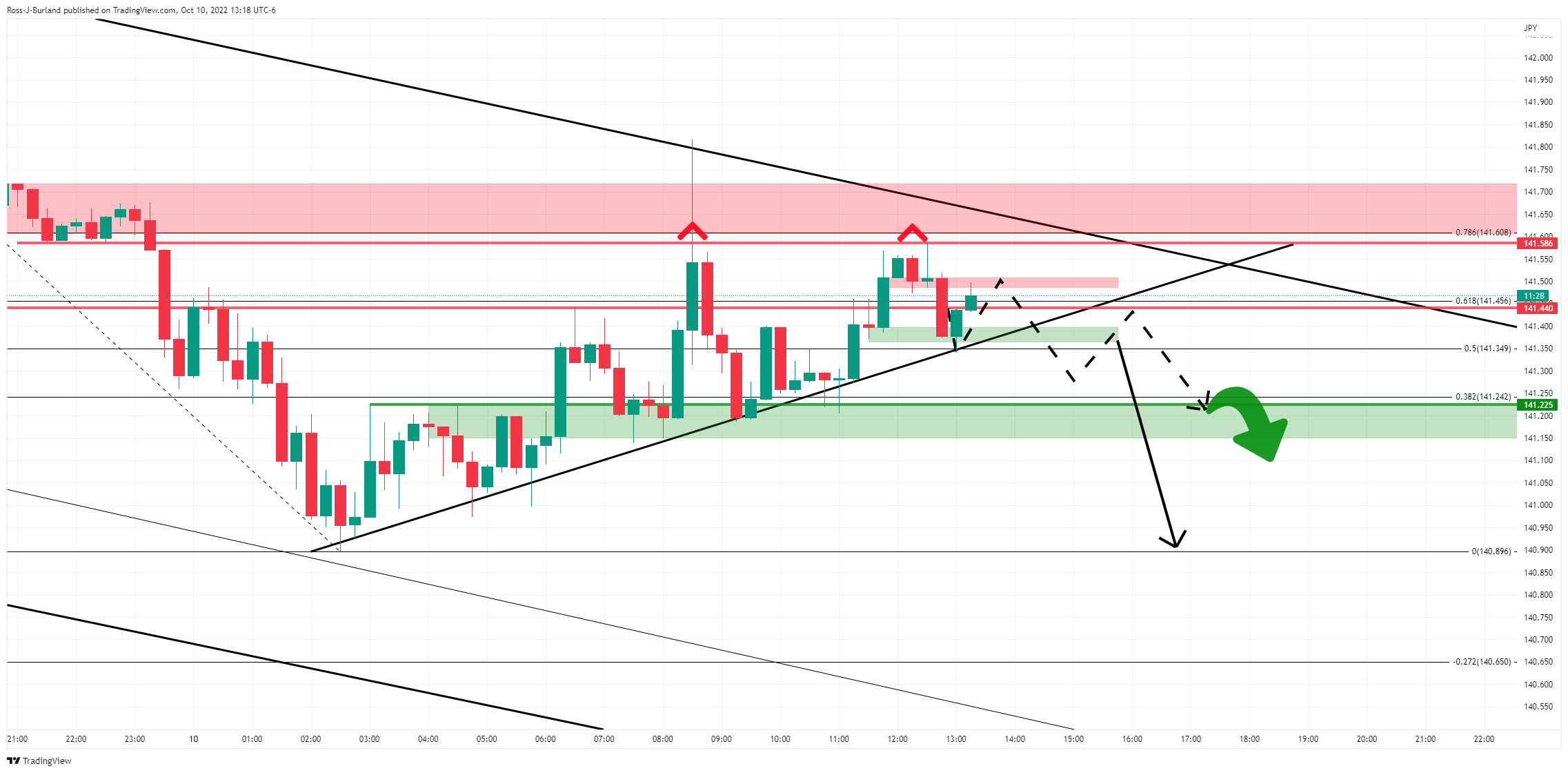
While there this is by no means a cert', the price is forming a series of topping formations as per the arrows on top of the peaks. This signifies that the correction is decelerating and that a downside continuation is likely to be imminent. Given the grinding correction, there is the prospect of a sharp sell-off below 141.20 for a test below 141 for the days ahead.

However, the price could just as well creep below the trendline support and meet demand around 141.25 before gathering there ahead of the sell-off. In either scenario, USD/JPY bulls will need to capitulate which is a possible scenario considering the fears of intervention from the Bank of Japan:
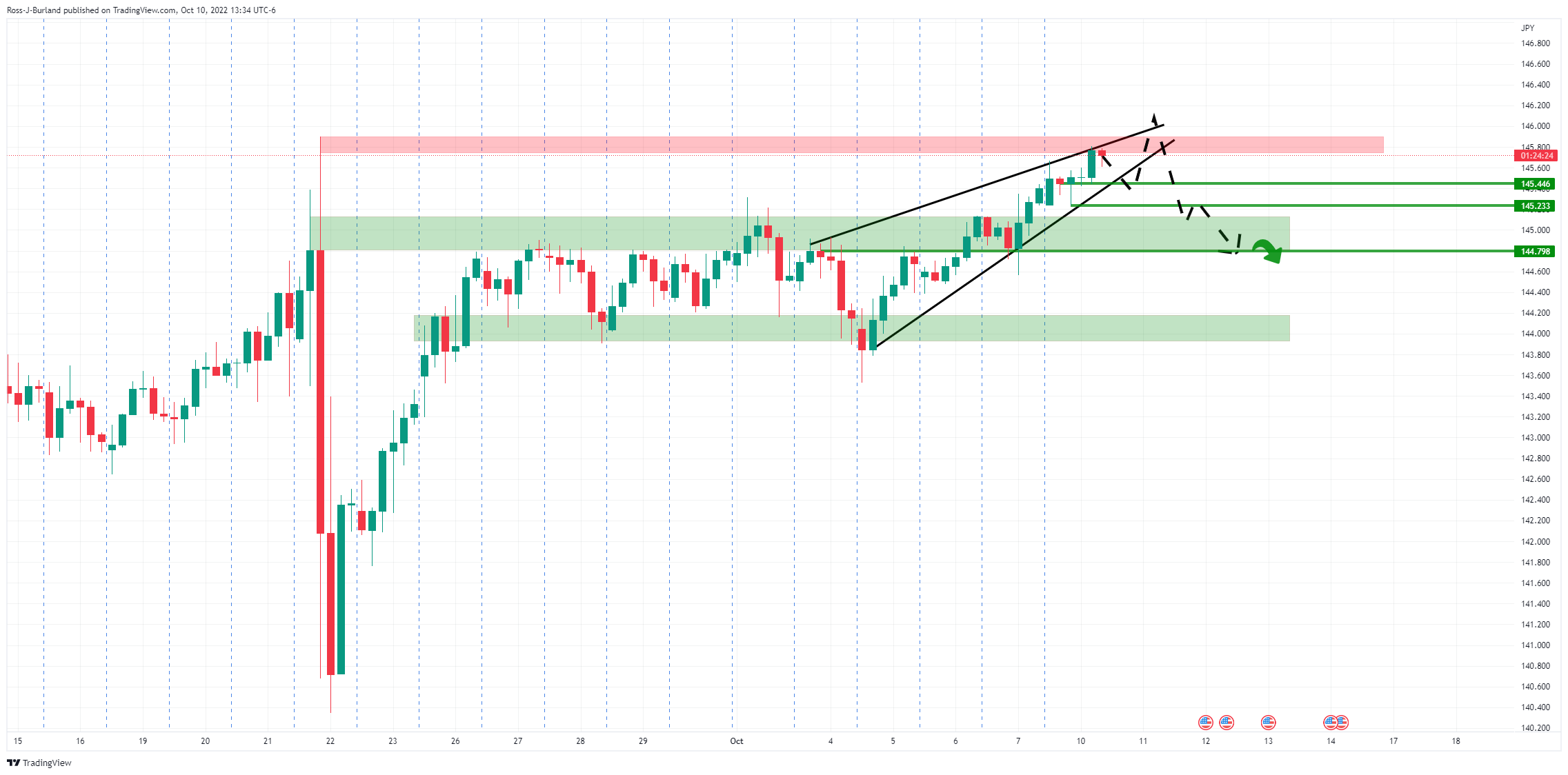
''We are wary that a move above 145 in USDJPY will compel FX intervention, which could be more likely given the upcoming Consumer Price Index (especially if stronger). That could introduce temporary USD drag. Nonetheless, the USD remains best in class, and we look to accumulate on dips,'' analysts at TD Securities explained. 

Author

Ross J Burland

Ross J Burland, born in England, UK, is a sportsman at heart. He played Rugby and Judo for his county, Kent and the South East of England Rugby team.


More from Ross J Burland
Share:

Editor's Picks

AUD/USD flatlines near 0.6965 as less hawkish RBA counters USD weakness

AUD/USD holds steady above a two-week low, trading near 0.6965 in the Asian session on Wednesday as early midterm election results heighten political uncertainty and weigh heavily on the US Dollar. Moreover, reviving safe-haven demand triggers a fresh leg down in US bond yields, offsetting Fed hike bets and exerting additional pressure on the buck. However, a less hawkish RBA caps the Aussie.

USD/JPY declines below 158.00 as USD weakens on midterm election results

USD/JPY comes under heavy selling pressure on Wednesday, dropping below 158.00 during the Asian session as the US Dollar slumps to a one-month low amid heightened political uncertainty after early US midterm vote counts. Moreover, the prospect of gridlock in Washington drives safe-haven flows, triggering a fresh leg down in US bond yields and further weighing on the buck.

Gold reclaims $4,000 and above

Gold manages to regain some composure, leaving behind two consecutive daily pullbacks and reclaiming the area above the key $4,000 mark per troy ounce on Wednesday. The strong decline in the US Dollar, declining US Treasury yields and lower crude oil price all contributes to the yellow metal’s recovery.

Crypto Today: Bitcoin, Ethereum, XRP extend advance as US Dollar slides on Democrats' US midterm victory

Bitcoin trades above $78,000 on Wednesday as risk-on sentiment improves in the broader cryptocurrency market. Ethereum mirrors BTC’s recovery outlook, hovering above $2,300. Ripple similarly exchanges hands above $1.28, marking two consecutive days of gains.

US midterms 2026: Investor Q&A on the Democratic sweep
1. Gridlock replaces the stimulus narrative. A Democratic Congress would constrain Trump's ability to pursue additional fiscal expansion and legislative tax measures. But it cannot simply reverse the president's entire economic agenda. Executive powers, existing legislation and presidential vetoes remain important. 2. AI faces a higher hurdle, not an extinction event.
The 2% inflation target came from a throwaway remark. It now moves trillions
The Federal Reserve's 2% inflation goal grew out of an off-the-cuff remark by a New Zealand politician in 1988. Bond investors still price long-term US debt as if 2% holds, so a change in how the Fed measures inflation would move markets.