|

EUR/CAD Price Forecast: Two possible scenarios for EUR/CAD

  • EUR/CAD could go higher after breaking out of a large multi-month consolidation. 
  • Alternatively, the pair might have formed a Double Top pattern and be about to fall.

EUR/CAD has two possible polar-opposite scenarios in which price could play out:

1) The pair is going higher – it has broken out from a consolidation pattern formed since August and is about to rally as it fulfills the price target for the pattern. 

2) The breakout above the upper trendline of the pattern is “false” and the pair has formed a small Double Top bearish reversal pattern (DT) instead. This will likely see prices fall if price breaks below the pattern’s lows.

EUR/CAD 4-hour Chart 
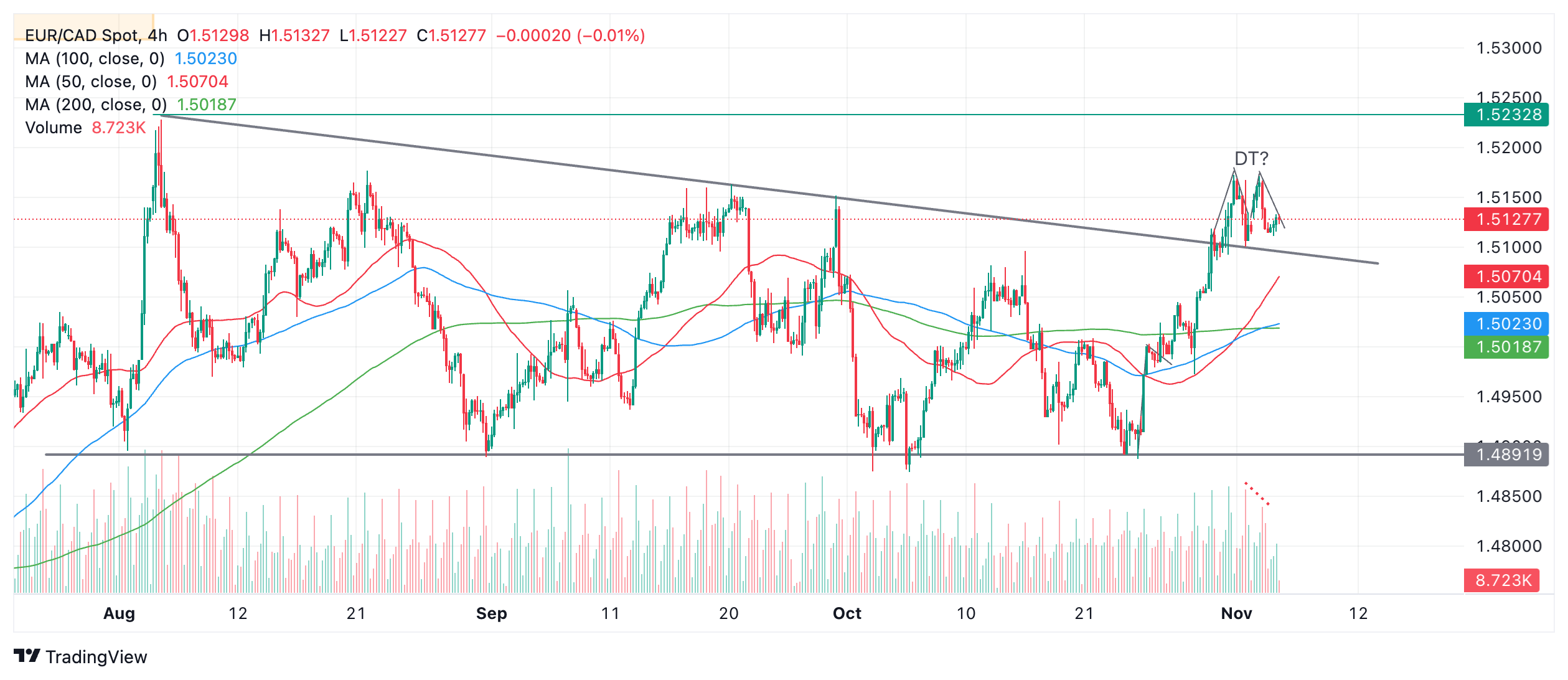
A break above the 1.5172 (November 1 high) would probably confirm scenario 1) and lead to a continuation higher, to an initial target at 1.5228, the August 5 high, followed by 1.5312, the 61.8% Fibonacci price projection of the height of the pattern. 

A break below 1.5101 (November 1 low), on the other hand, would probably confirm the DT and lead to a move down to 1.5051 which is equal to the height of the pattern extrapolated lower. 

Volume was lower on the right hand shoulder of the DT compared to the left (red dotted line on chart) which helps confirm the pattern as authentic and adds bearish color. 

Author

Joaquin Monfort

Joaquin Monfort is a financial writer and analyst with over 10 years experience writing about financial markets and alt data. He holds a degree in Anthropology from London University and a Diploma in Technical analysis.


More from Joaquin Monfort
Share:

Editor's Picks

AUD/USD eyes 100-SMA hurdle near 0.7035 as hawkish RBA counters firmer USD

AUD/USD regains positive traction on Tuesday and climbs to 0.7030 during the Asian session, reversing the previous day's corrective slide from a one-month high as hawkish RBA rate expectations continue to support the Aussie. Spot prices, however, remain below the 100-day SMA pivotal resistance amid a firmer US Dollar as traders brace for Australia’s September CPI report on Wednesday ahead of the Fed rate decision.

USD/JPY sticks to modest gains above 157.50 as traders await Fed, BoJ meetings

USD/JPY attracts buyers for the third straight day, recovering further from a one-month low ahead of Wednesday’s FOMC decision and the BoJ policy update on Friday. Meanwhile, expectations that the BoJ may hold off on aggressive rate hikes weigh on the Japanese Yen, and the US Dollar advances to a nearly two-week high, supporting the currency pair.

Gold sticks to intraday losses around $4,000 as USD stays firm ahead of FOMC

Gold maintains its offered tone through the first half of Tuesday’s European session, with bearish traders looking to extend the slide further below the $4,000 psychological mark amid a broadly firmer US Dollar. The precious metal, however, holds above the three-month low touched on Monday, as traders refrain from placing aggressive directional bets and opt to wait for the outcome of the two-day FOMC policy meeting on Wednesday.

Pi Network stalls as weak crypto sentiment caps recovery

Pi Network (PI) holds steady above $0.0760 at press time on Tuesday, stalling after a roughly 2% rebound the previous day. The broader market's weak sentiment and reduced trading volume weigh on the PI token. The technical outlook is bearish, with price capped below a long-term resistance trendline and weak momentum.

France tests the Euro's nerve: What the OAT spread is telling FX traders
France's 10-year borrowing premium over Germany hit its widest since the 2011 debt crisis last week. With public spending above 57% of GDP, unrest on the streets and a presidential election next spring, cuts look unlikely. If Paris cannot trim, the bill may be paid quietly through financial repression.
What November 3 means for the Fed's rate path and the US Dollar

The USD faces a decisive period ahead of the November 3 midterm elections. While markets anticipate another interest rate increase from the Fed in December, the battle for control of Congress could reshape fiscal policy expectations and, indirectly, the path of US monetary policy in 2027.