BP Stock News and Forecast: Why is BP stock price collapsing on Monday?
- BP shares fall over 7% on Monday as Rosneft pressure mounts.
- UK government said to pressure BP into selling its stake.
- BP announces on Sunday that it will dispose of Rosneft stake.


BP stock is falling sharply this morning following its Sunday announcement that it would dump its stake in Russian energy giant Rosneft. BP stock closed at $30.73 in New York on Friday, and already the shares are trading some 7% lower at $28.57 in Monday's premarket session.
BP Stock News
BP is Europe's second-largest energy company. Bowing to pressure from the UK government among others, BP announced on Sunday that it would dump its stake in Russian oil and gas firm Rosneft. BP holds a near 20% stake in the Russian energy firm and it is highly profitable for BP. The Rosneft stake accounts for nearly 50% of BP's oil and gas reserves and accounts for over 30% of BP's total production. Current BP CEO Bob Looney and BP's former CEO, Bob Dudley, will both step down from the Rosneft board.
"Like so many, I have been deeply shocked and saddened by the situation unfolding in Ukraine, and my heart goes out to everyone affected," Looney said. "It has caused us to fundamentally rethink BP's position with Rosneft. I am convinced that the decisions we have taken as a board are not only the right thing to do but are also in the long-term interests of BP." Looney said.
BP went on to say it will result in two material changes to results for the first quarter in 2022. "As a result of the resignations of BP’s nominated directors, BP has determined that it no longer meets the criteria set out under International Financial Reporting Standards (IFRS) for having “significant influence” over Rosneft. BP will therefore no longer equity account for its interest in Rosneft, treating it now as a financial asset measured at fair value. This will result in two material changes to BP’s financial reporting and finances in the results for the first quarter of 2022."
BP now expects "a 7-9% EBITDA per share CAGR between 2H19/1H20 through 2025 at oil prices of $50-60 per barrel" and forecasts EBITDA from resilient hydrocarbons to come in about $2 billion lower by 2025.
BP Stock Forecast
This is likely to be dominated by oil and gas prices, both of which are underpinned by the conflict. Currently, oil prices are nearly double that $50-$60 expectation. However, this is a significant impact on BP sentiment and could see a retracement to $26 and a consolidation phase. Indeed volume-based support is high from $26 to $24.
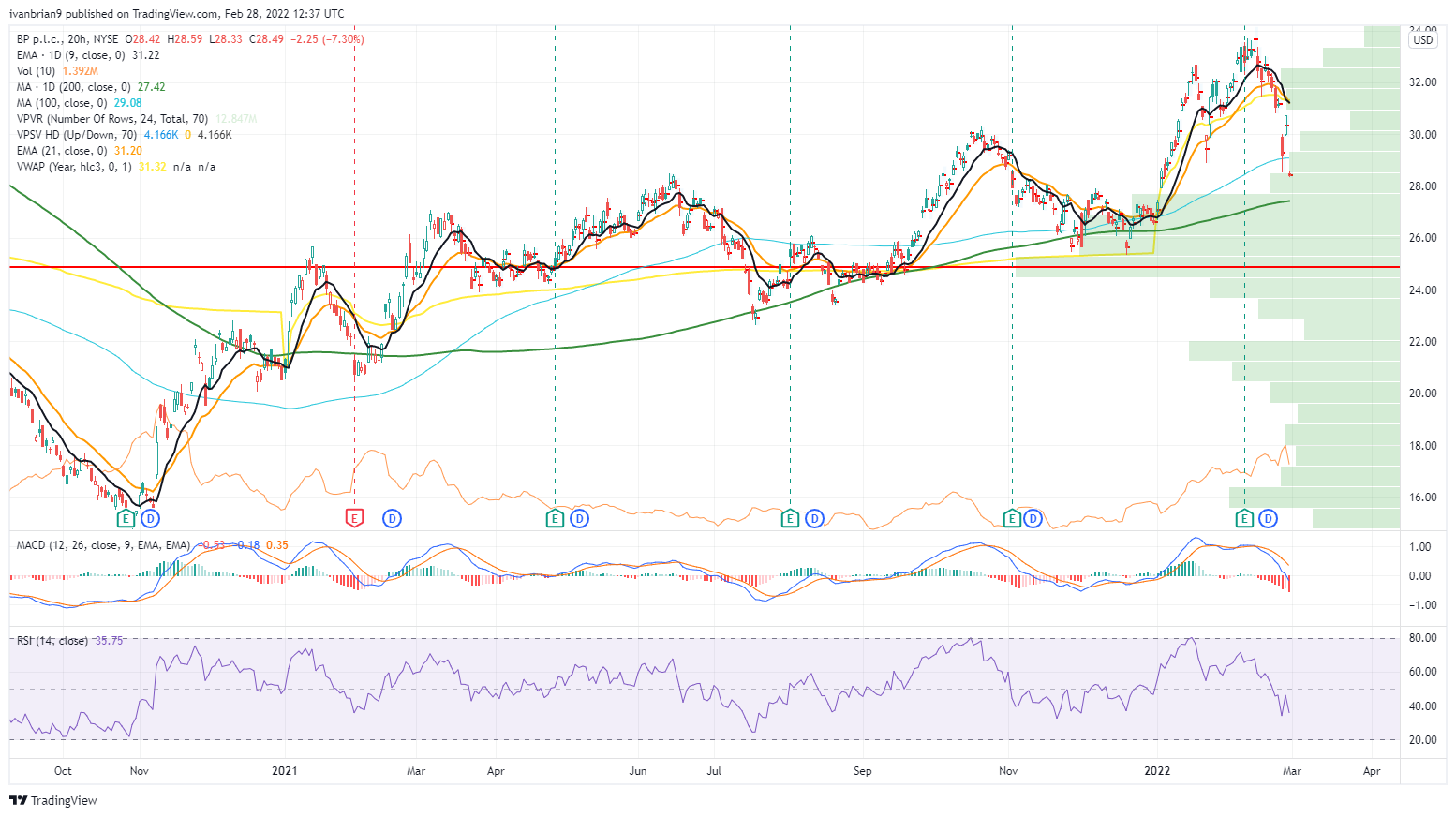
BP chart, 20-hour
Taking a look at the broader trend, we see how BP stock has been trending lower for some time. We saw a strong spike lower in March 2020, the start of the pandemic when oil prices went negative for some futures contracts as no one wanted delivery and some speculators got caught long. Since then oil prices have recovered sharply, but the BP stock price has not followed suit. Recent results from the sector were strong, and XLE is the strongest performing sector in 2022.
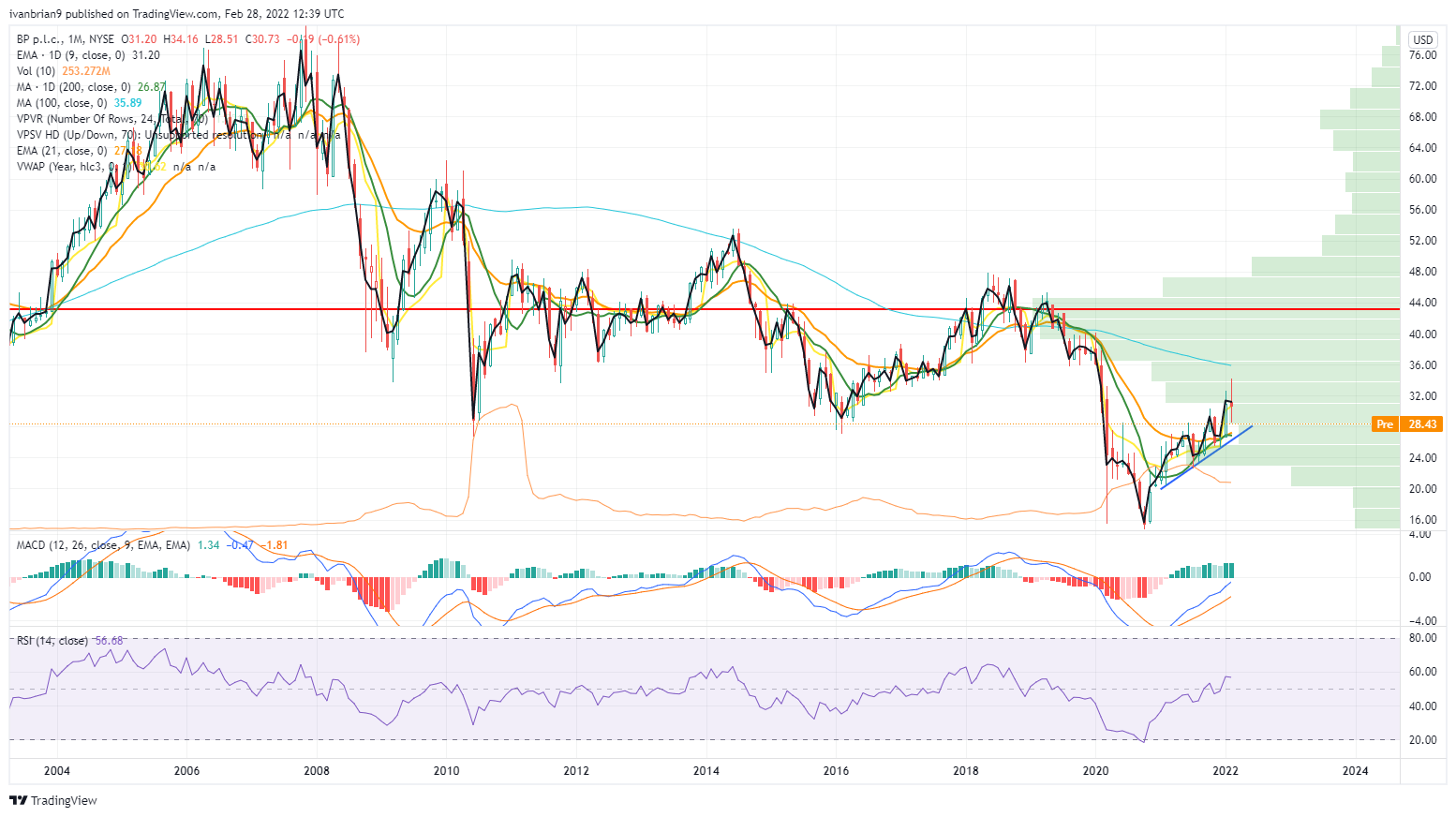
BP chart, weekly
We see how the relationship between oil prices and BP's stock price has broken down recently. Given where oil prices are and are likely to remain, this should provide support to the BP stock price.
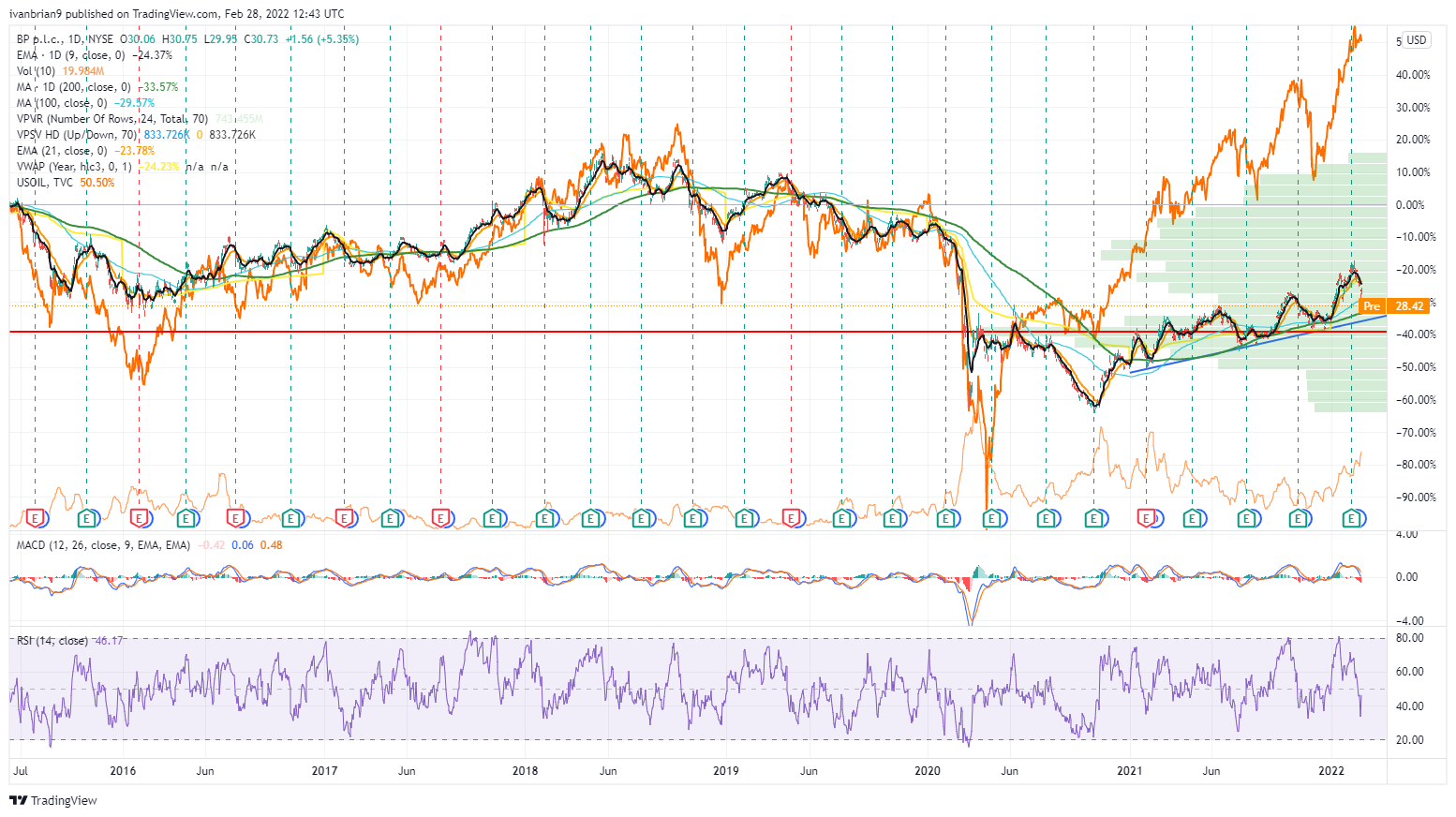
BP stock price versus WTI Oil 1-day chart. Oil is in orange.
Premium
You have reached your limit of 3 free articles for this month.
Start your subscription and get access to all our original articles.
Author
Ivan Brian
FXStreet
Ivan Brian started his career with AIB Bank in corporate finance and then worked for seven years at Baxter. He started as a macro analyst before becoming Head of Research and then CFO.