Stablecoin wars: Tether emerges as retail favorite and Binance’s BUSD witnesses massive growth
- Tether, the largest stablecoin by market capitalization, struggles with growth in on-chain volume, as USDC and Binance’s BUSD take off.
- The changes in the stablecoin landscape reveal that Tether has emerged as a favorite for retail transactions while USDC is the top pick for institutions.
- Binance’s BUSD grows alongside the cryptocurrency exchange platform and positions itself as the most compliant and safest stablecoin.
Stablecoins have seen a shift in their activity level and general sentiment has fallen alongside prices, despite a spike in demand and utilization. Tether (USDT), the largest stablecoin by market capitalization witnessed a decline in its on-chain volume in 2022 whilst USDC and Binance’s BUSD took over with a spurt in their trade volume.
USDC on-chain volume in 2022 was nearly four times that of USDT, signaling a shift in popularity of stablecoins among traders.
Also read: Solana could destroy Ethereum alternatives with its massive surge in activity on the SOL blockchain
USDC and BUSD are steadily taking over as compliant popular stablecoins, replacing Tether
USDC and BUSD have witnessed a steady growth in their on-chain volume and market capitalization throughout 2022, based on data from crypto aggregator Nansen.
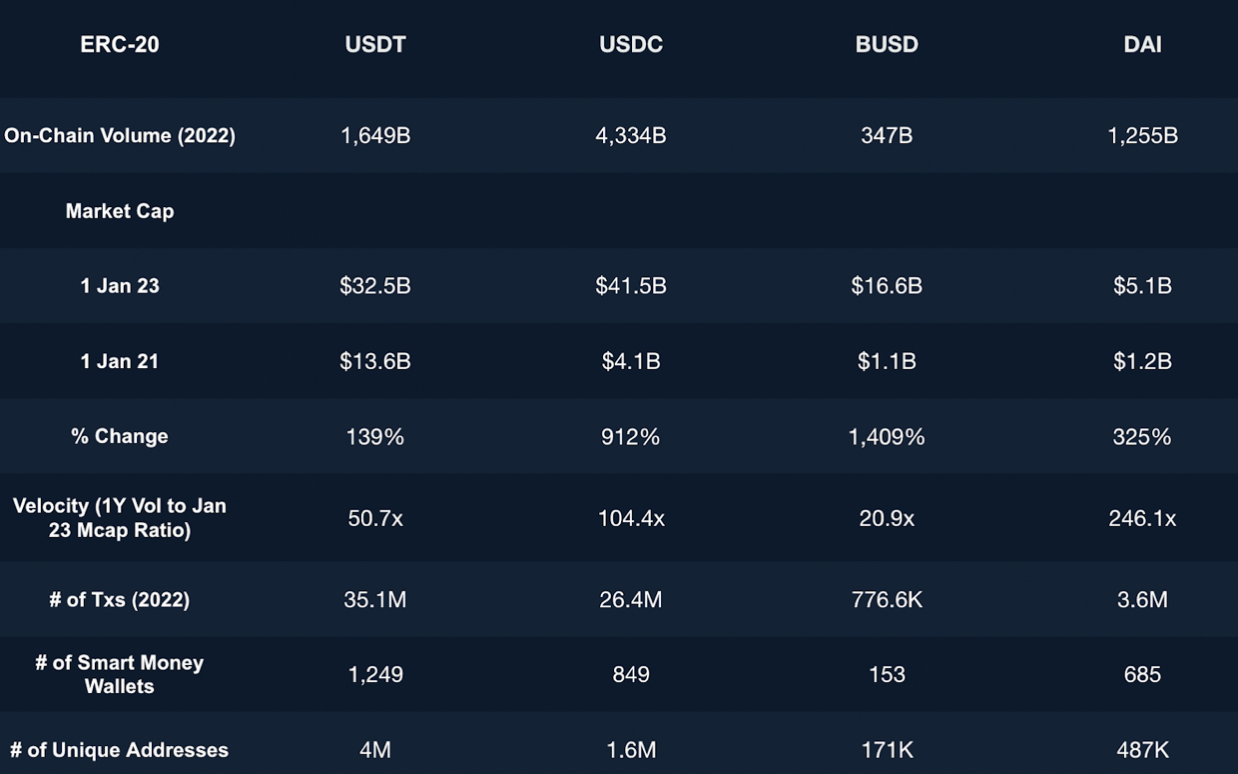
Stablecoin statistics from Nansen
As seen in the chart above, USDT is the largest stablecoin by the overall market capitalization, USDC is second, BUSD the third and DAI is a distant fourth. A look at ERC-20 market capitalizations paints a different picture, USDT was dominant until mid January 2022, where general trust in Tether dropped due to a barrage of continuous FUD and suspicion about their operations.
USDC has witnessed higher adoption among institutions ever since. Over half of the USDT supply is on Tron, with the large bulk of the remaining supply on the Ethereum blockchain.
Binance’s stablecoin grew 1,409%, emerging as the safest stablecoin
In the two-year time period between 2020 and 2022, BUSD and USDC both experienced massive growth. The two stablecoins grew approximately 1,409% and 912% respectively.
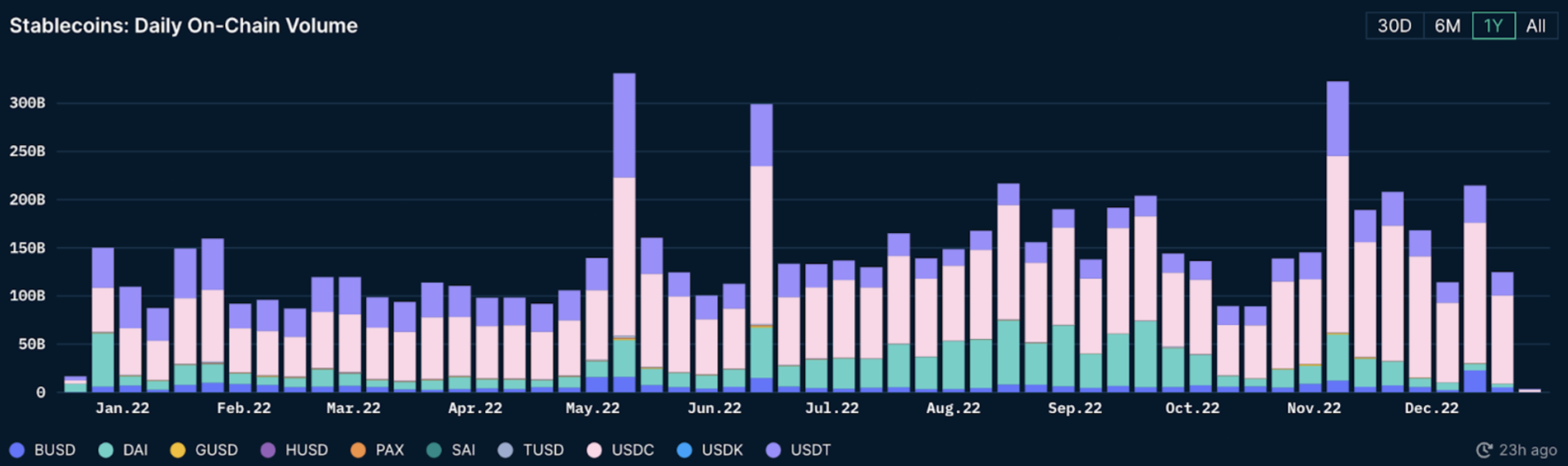
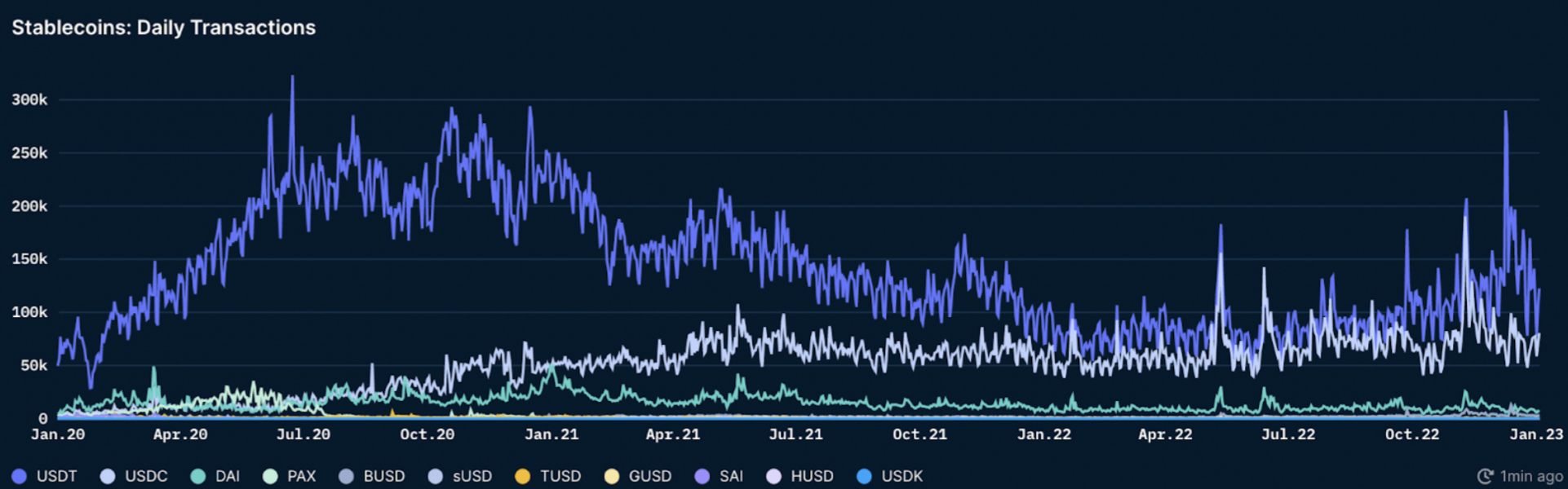
Stablecoins: daily transactions and on-chain volume
As seen in the charts above, data from Nansen reveals a steady increase in on-chain volume and daily transactions in Tether’s competitors BUSD and USDC. BUSD grew alongside the world’s largest crypto exchange Binance and positioned itself as the most compliant and safest fiat-backed stablecoin in the market.
Author

Ekta Mourya
FXStreet
Ekta Mourya has extensive experience in fundamental and on-chain analysis, particularly focused on impact of macroeconomics and central bank policies on cryptocurrencies.



