Pro Ripple attorney John Deaton finds legal provision that could have avoided SEC lawsuit
- John Deaton says the Safe Harbor proposal could have set guidelines for cryptocurrency projects in the US.
- The proposal could have given time to firms like LBRY and Ripple to meet the conditions for a crypto token to be a commodity.
- Ripple has paid over $200 million in legal fees, funds that could have been used to reduce ownership and avoid litigation.

John Deaton, a pro Ripple attorney, said Tuesday that a legal provision called the Safe Harbor proposal could have avoided the US financial regulator’s lawsuit against the cross-border remittance firm, saving millions of dollars that could have been invested in increasing XRP’s decentralization.
The Securities and Exchange Commission’s lawsuit against Ripple resulted in XRP delisting from several exchange platforms, partly fueling its price decline. The Safe Harbor proposal, Deaton says, could have saved firms like LBRY and Ripple the legal trouble and better protect interests of XRP holders.
Also read: XRP price recovers, could reach $30 if Ripple wins SEC, hedge fund manager says
SEC vs Ripple lawsuit could have been avoided
Attorney John Deaton, founder and host of CryptoLaw, cited in a Twitter thread documents that contain details of a meeting between representatives from venture capital firm Andreessen Horowitz (a16z) and William Hinman, former SEC director of Corporation Finance.
The team of a16z representatives gave Hinman a lengthy memo along with a Safe Harbor proposal, a document that helped facilitate former SEC Commissioner Hester Pierce’s Safe Harbor proposal, Deaton says.
A Safe Harbor proposal is a legal provision that provides a grace period to an entity or an individual from circumstances that hold them liable or penalize them providing that they satisfy certain conditions. While Ethereum (ETH) was the only token listed in the proposal, Deaton says it could have been applied to other tokens as well, including XRP.
Recently on @scottmelker @cryptomanran and @MarioNawfal’s Crypto Town Hall Spaces, @WarrenDavidson made a very accurate statement. Although no one is as bad as @GaryGensler, the Congressman stated some blame must be placed on Clayton and Hinman’s tenure at the SEC.
— John E Deaton (@JohnEDeaton1) June 20, 2023
READ THIS: pic.twitter.com/TNon5nmxPb
If the Safe Harbor proposal would have come into effect, firms like LBRY and Ripple would have been given three to five years to meet certain markers for a token to be considered a commodity.
Former SEC director Hinman said that owning anything over 30% to 40% of the outstanding would be “substantial”, according to the documents shared by Deaton. Accordingly, a lower percentage could be one of the conditions to be fulfilled so an asset can be declared a commodity.
However, the former SEC Director did not draw the line at any percentage ownership and the proposal did not come into effect.
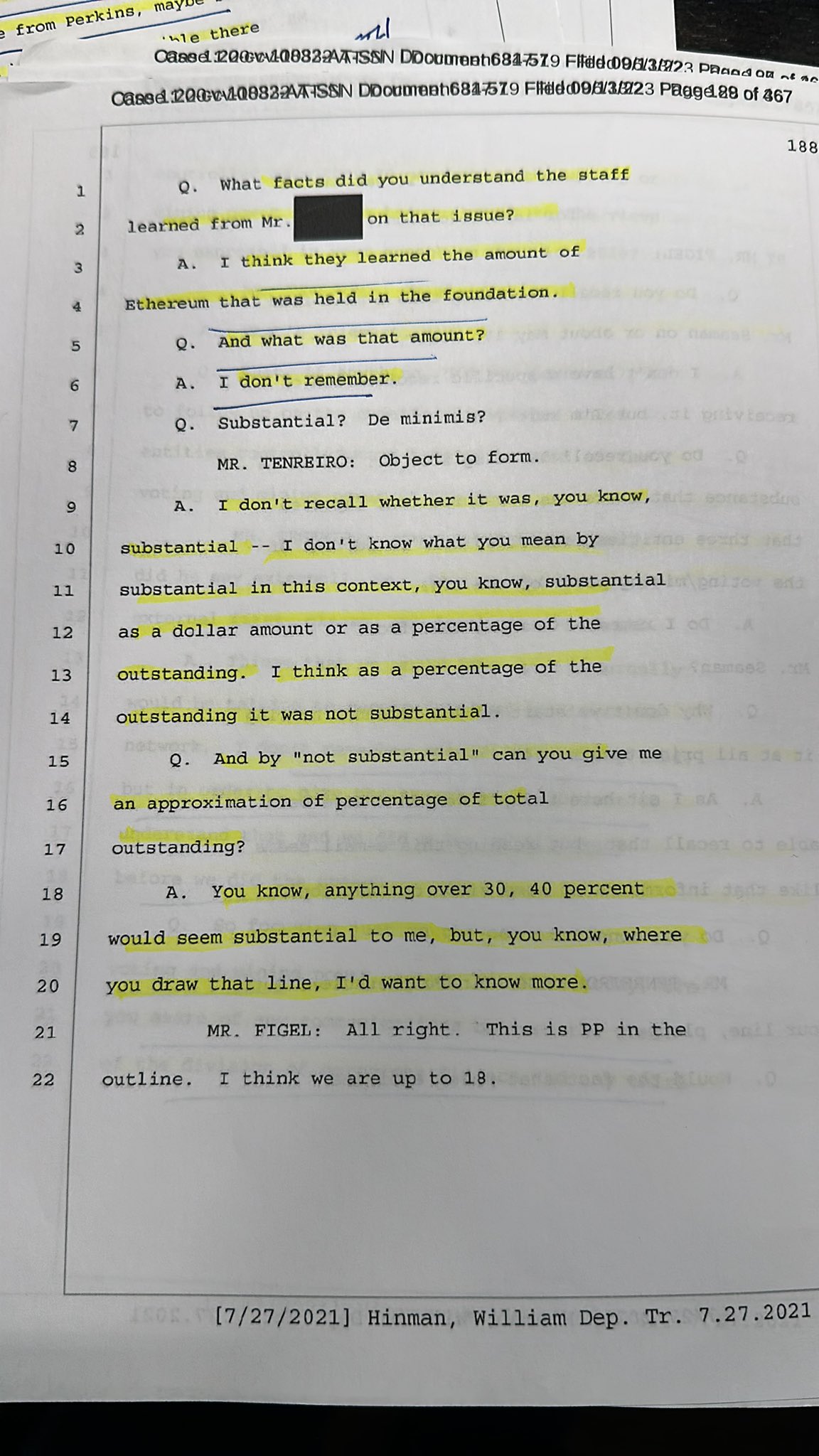
Documents outlining Hinman’s views on token ownership
Deaton says Ripple could have used the $200 million spent on litigation to reduce their token ownership and comply with an outlined framework to avoid the lawsuit. To know more about the SEC’s lawsuit against Ripple and impact on XRP, check this post.
Author

Ekta Mourya
FXStreet
Ekta Mourya has extensive experience in fundamental and on-chain analysis, particularly focused on impact of macroeconomics and central bank policies on cryptocurrencies.