Fed balance sheet adds $393B in two weeks – Will this send Bitcoin price to $40K?

As of March 22, the Fed's balance sheet surged by nearly $94.5 billion — a $297 billion increase from the last week when the banking crisis started.
New QE hopes boost Bitcoin price
Overall, the U.S. central bank's liabilities increased by $393 billion in the last two weeks to $8.734 trillion. That is closer to the all-time high of $8.95 trillion a year ago when the Fed started its quantitative tightening program and reduced its assets by $600 billion.
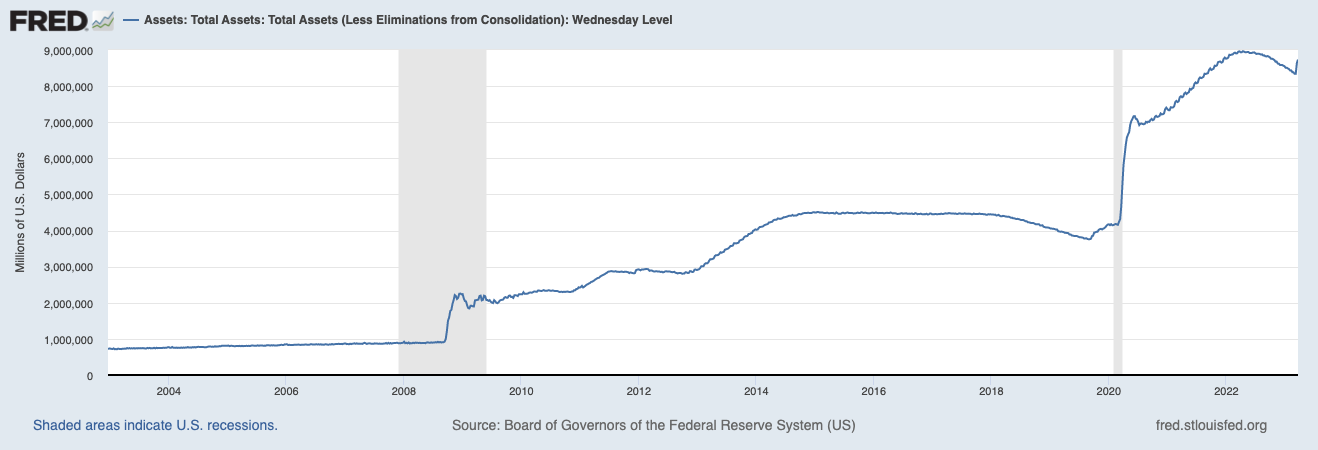
Federal Reserve balance sheet as on March 24. Source: FRED
The Fed released the data on March 23, coinciding with Bitcoin (BTC $28,052) price rallying 5.5% toward $29,000. The rise occurred amid speculations that the Fed's expanding balance sheet results from quantitative easing (QE).
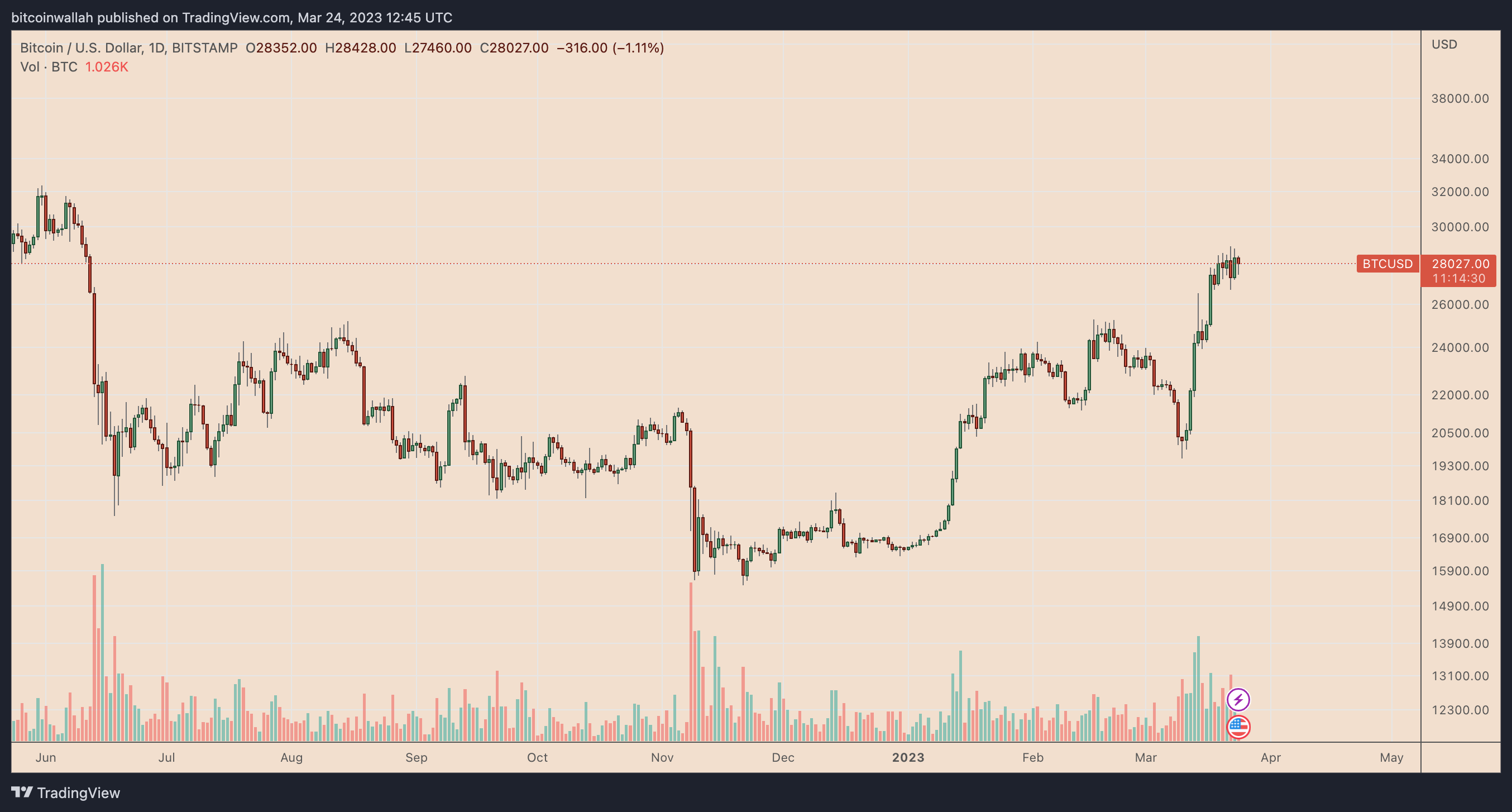
BTC/USD daily price chart. Source: TradingView
But the Fed did not use new dollar reserves to purchase long-term treasuries. Instead, the central bank dropped its U.S. Treasury holdings by $3.5 billion to $7.937 trillion, suggesting that quantitative tightening is still in place to curb inflation.
On the other hand, Fed's balance sheet grew because it dispatched short-term loans to the ailing banking sector.
Notably, as of March 22, the Fed slashed the usage of its "discount window," which helps commercial banks manage short-term liquidity needs, by $42 billion. Instead, it allocated the same $42 billion to its brand new Bank Term Funding Program (BTFP).
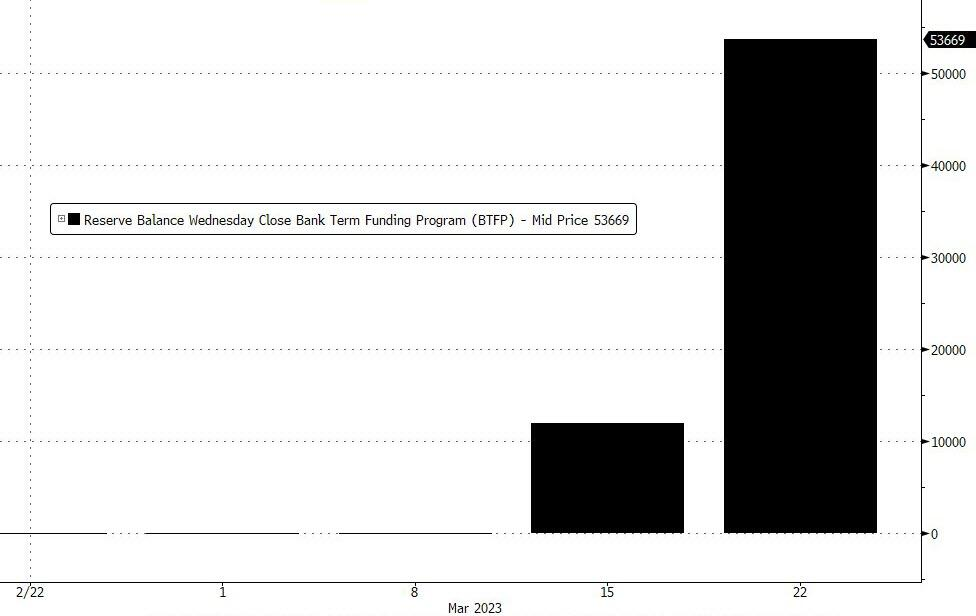
Federal Reserve BTFP funding reserves. Source: FRED
The other $60 billion went to the Fed's swaps facility that provides liquidity to offshore banks.
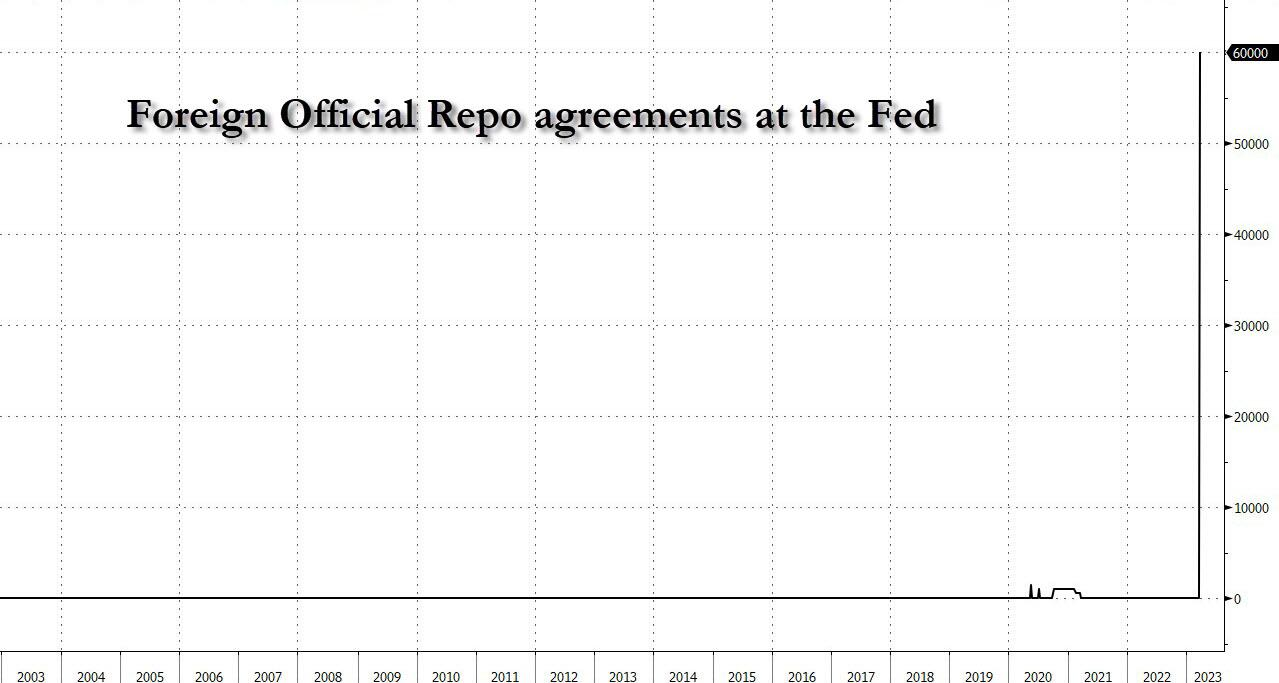
Foreign official repo agreements at the Fed. Source: FRED
The Fed's tightening policy and lending facilities to regional and offshore banks risk drying up cash liquidity. This may boost the dollar's valuation versus other top foreign currencies, which, in turn, could push Bitcoin's price lower in the short term.
Interestingly, the U.S. dollar index has gained 1.5% since the Fed's balance sheet update.
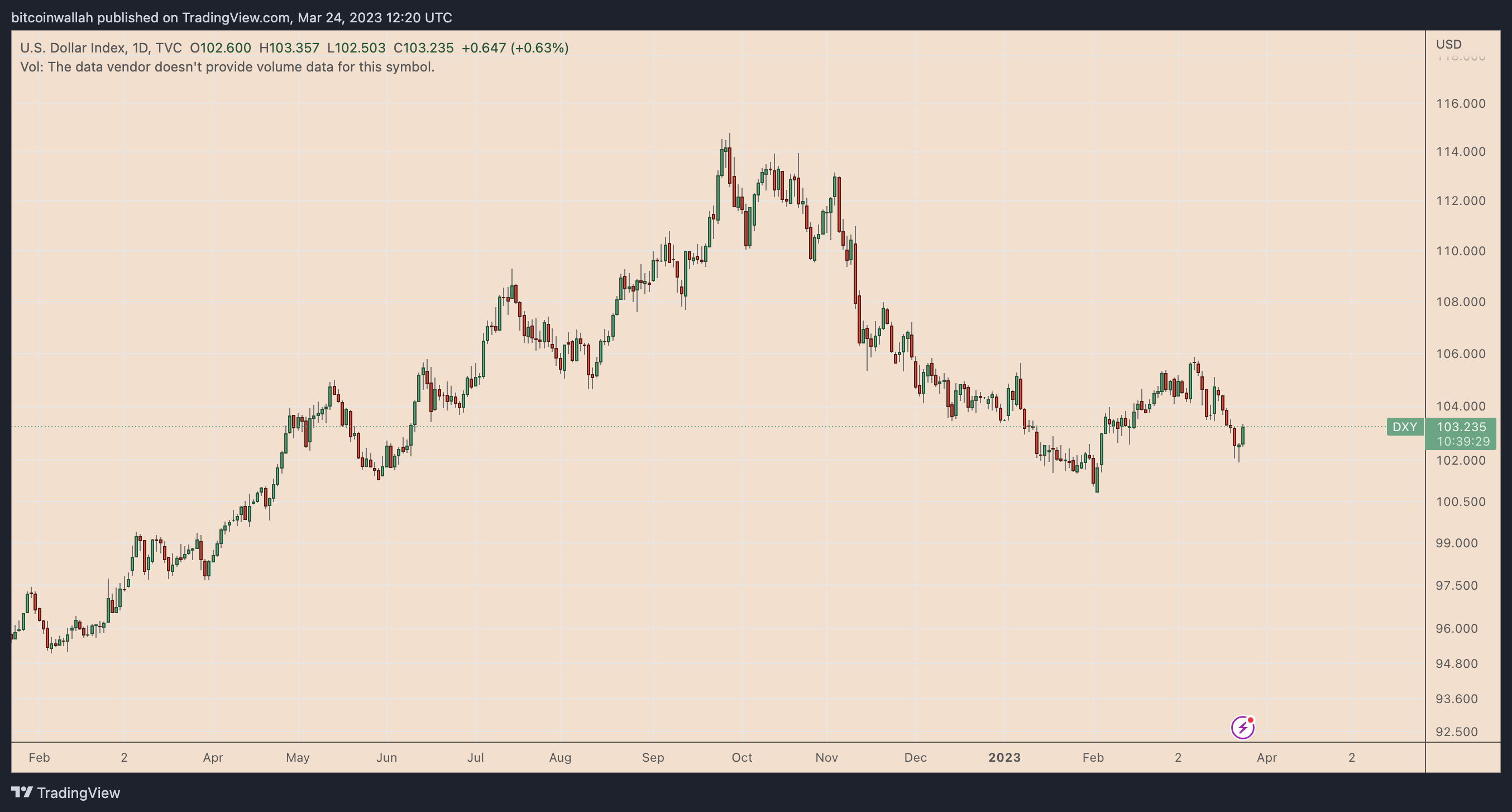
DXY daily price chart. Source: TradingView
Has the banking crisis peaked?
The ongoing credit crisis may not have peaked despite Fed's $393 billion emergency lending to banks, however, if one considers Janet Yellen's blurred outlook on depositors' insurance.
On March 21, the U.S. Treasury Secretary confirmed protecting uninsured depositors over $250,000 "if smaller institutions suffer deposit runs" such as those witnessed in Silicon Valley Bank and Signature Bank.
But Yellen did a U-turn the next day in her statements to the Senate that she had not considered “blanket insurance or guarantees of deposits.” The bank stocks tanked in response to her statement, resulting in another U-turn.
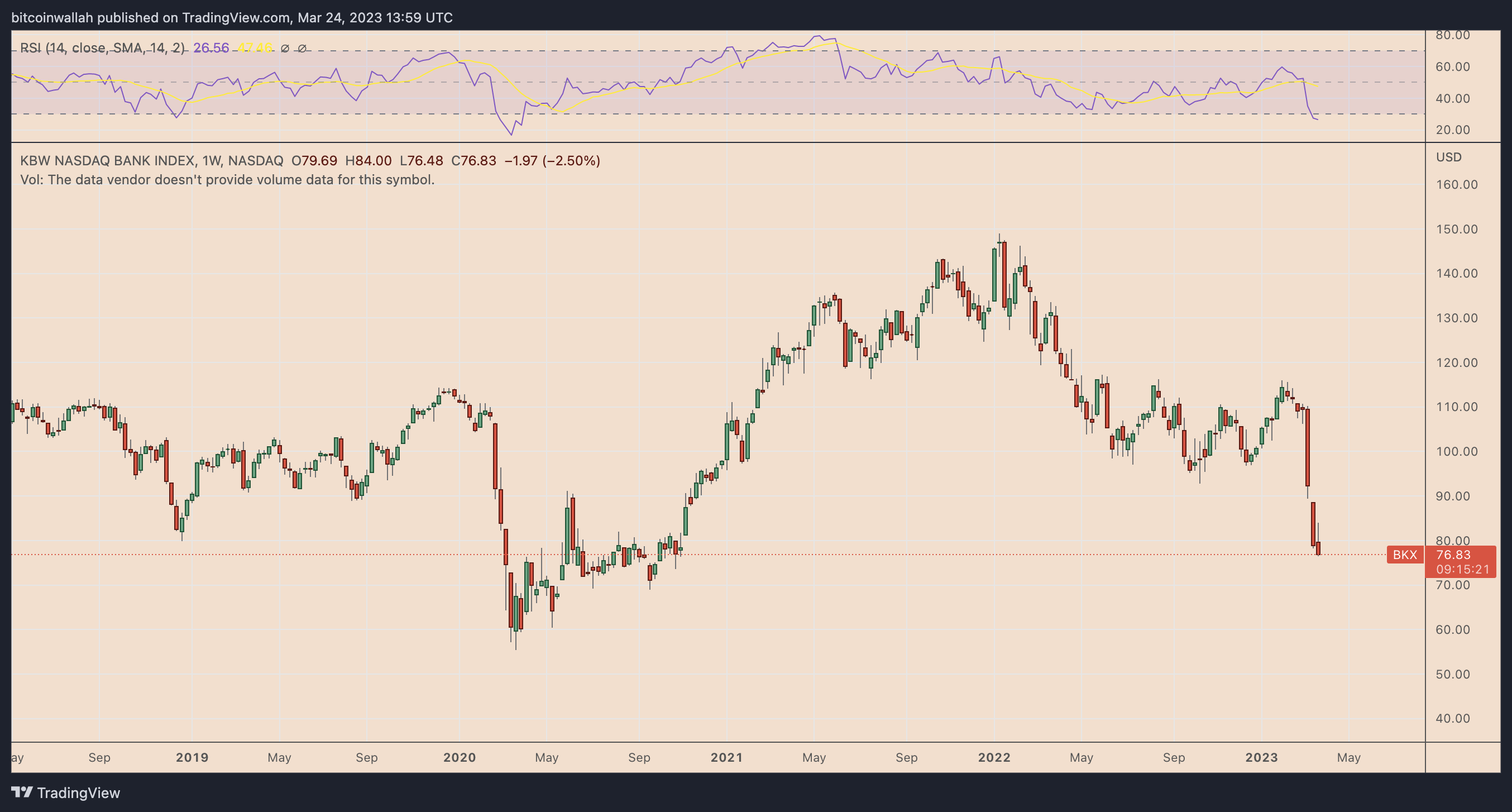
KBW Nasdaq Bank Index weekly performance chart. Source: TradingView
Yellen then told the House on March 23 that the authorities "would be prepared to take additional actions if warranted."
In any case, the market will need to wait for the balance sheet data next week to determine whether or not the Fed's liabilities are declining.
But if these emergency lending facilities keep rising after more bank collapses, then QE will be inevitable, similar to what happened after the 2008 global financial crisis.
BTC price technicals hint at $40K
An expanding balance sheet — with or without QE — has proven bullish for Bitcoin in the past. This correlation will continue if the banking crisis deepens, according to Stack Hodler, the author of crypto-focused Stack Macro newsletter.
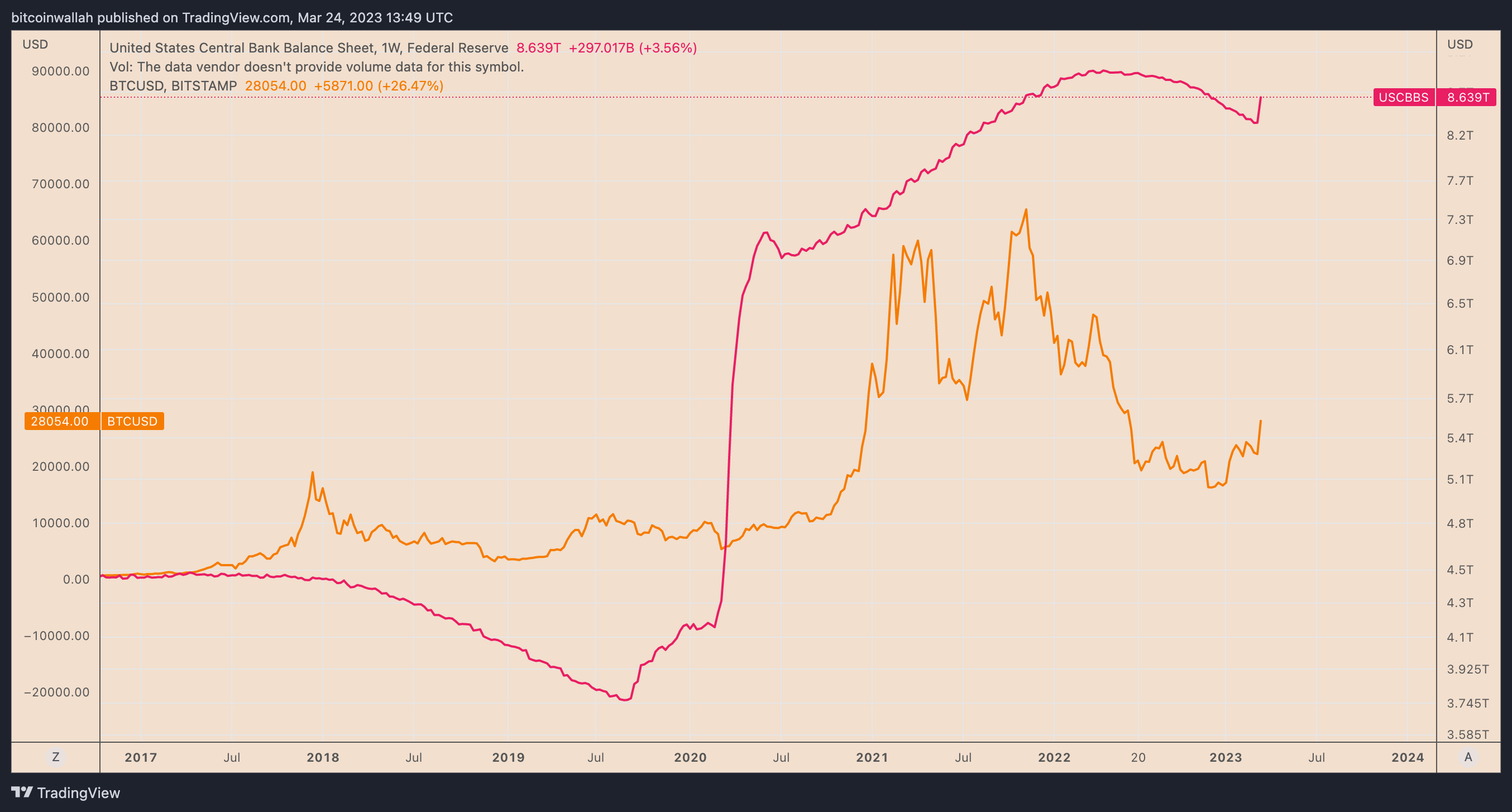
Fed balance sheet versus Bitcoin price performance. Source: TradingView
"BTFP, Swap Lines, TPI - It's All QE," the analyst noted, adding:
It all leads to balance sheet expansion and fiat currency dilution despite plenty of Central Bank fans that will tell you otherwise.
From a technical perspective, Bitcoin price is well-positioned for a run-up toward $40,000 by June, or 50% higher from today's price.
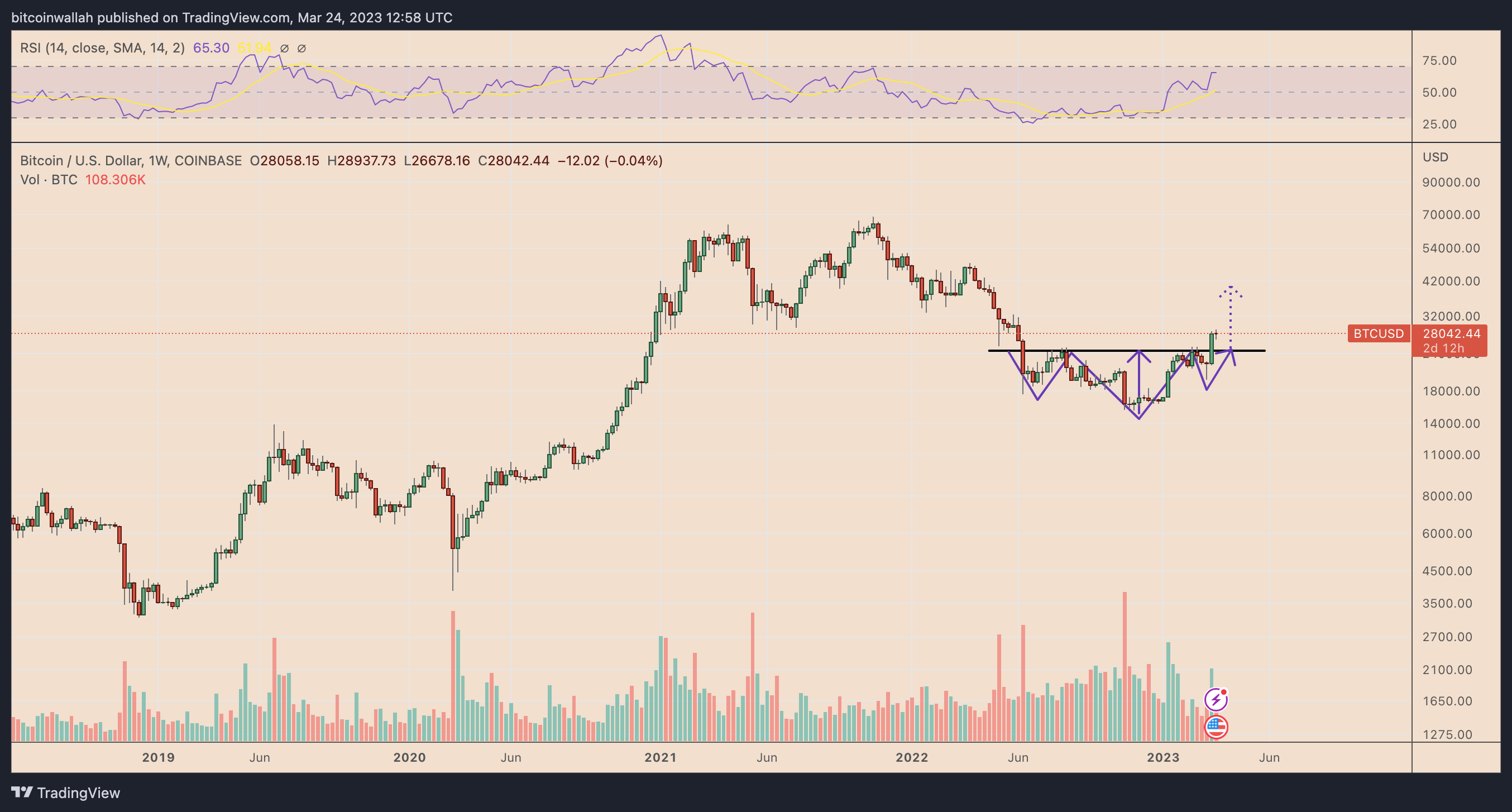
BTC/USD weekly price chart. Source: TradingView
As illustrated above, the upside target originates from Bitcoin's inverse-head-and-shoulders (IH&S) breakout setup on the weekly chart.
Author
Cointelegraph Team
Cointelegraph
We are privileged enough to work with the best and brightest in Bitcoin.