Bitcoin price drops to $20.8K as regulatory and macroeconomic pressure mounts

BTC margin and options markets are steady, even as investors run for cover as crypto and stock prices fall.
Bitcoin traders saw continued downward pressure after the 5.5% decline in BTC price on March 7. Higher odds of further interest rate increases by the U.S. Federal Reserve and regulatory pressure in the cryptocurrency space explain some of the movement.
Financial markets showed signs of stress as the inverted bond curve reached its highest level since the 1980s. Longer-term dated yields have stalled at 4%, while two-year treasury notes traded above 5% yield in March.
Since July, longer-dated treasury yields have failed to keep pace with the surging two-year benchmark, resulting in the inverted curve distortion that typically precedes economic downturns. According to Bloomberg, the indicator reached a full percentage point on March 7, the highest level since 1981, when Fed Chair Paul Volcker faced double-digit inflation.
This week, BlackRock, the world's largest asset manager, increased its forecast for U.S. federal funds to 6%. Rick Rieder, chief investment officer of global fixed income at BlackRock, believes the Fed will keep interest rates high for "an extended period to slow the economy and get inflation down to near 2%."
Fear of cryptocurrency regulation grows
According to a Wall Street Journal report, the Biden administration wants to apply the wash sale rule to crypto, which would put an end to a strategy in which a trader sells and then immediately buys digital assets for tax purposes.
Furthermore, the Public Company Accounting Oversight Board, an organization that keeps an eye on audits of public companies in the United States, recently put out a warning to investors about proof-of-reserves reports that auditing firms send out.
The organization, backed by the U.S. Securities and Exchange Commission, said that “Investors should note that PoR engagements are not audits and, consequently, the related reports do not provide any meaningful assurance.”
Let's look at derivatives metrics to better understand how professional traders are positioned in the current market conditions.
Bitcoin margin markets have returned to normalcy
Margin markets provide insight into how professional traders are positioned because they allow investors to borrow cryptocurrency to leverage their positions.
For example, one can increase exposure by borrowing stablecoins and buying Bitcoin. Borrowers of Bitcoin, on the other hand, can only take short be
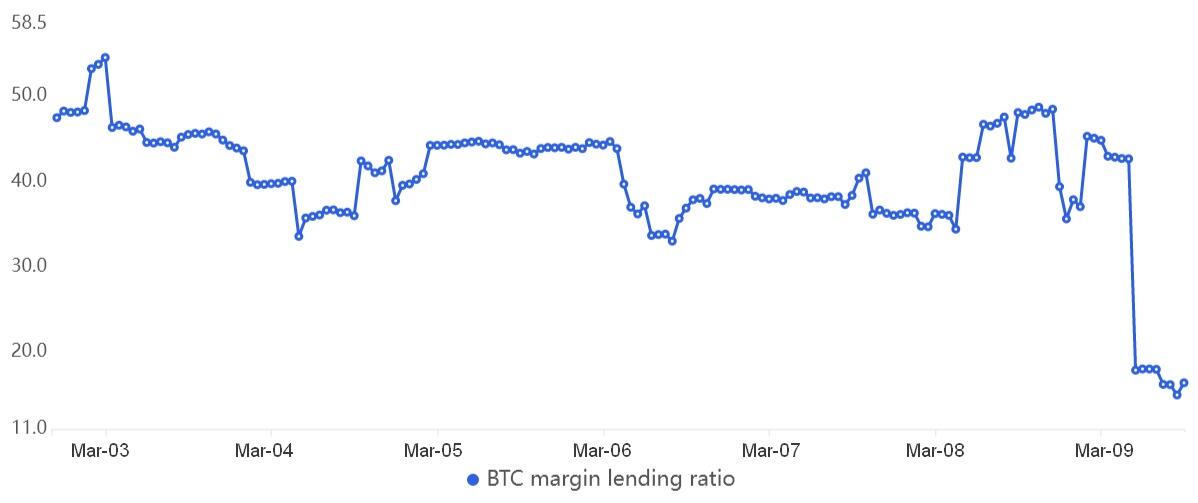
OKX stablecoin/BTC margin lending ratio. Source: OKX
The above chart shows that OKX traders' margin lending ratio dropped dramatically on March 9, moving away from a situation that previously favored leverage long positions. Given the general bullishness of crypto traders, the current margin lending ratio at 16 is relatively neutral.
On the other hand, a margin lending ratio above 40 is very rare, even though it has been the norm since Feb. 22. It is partially driven by a high borrowing cost for stablecoins of 25% per year. Following the recent anomaly, the margin market has returned to a neutral-to-bullish state.
Options traders are pricing in a low risk of extreme price corrections
Traders should also analyze options markets to understand whether the recent correction has caused investors to become more risk-averse. The 25% delta skew is a telling sign whenever arbitrage desks and market makers overcharge for upside or downside protection.
The indicator compares similar call (buy) and put (sell) options and will turn positive when fear is prevalent because the premium for protective put options is higher than the premium for risk call options.
In short, if traders anticipate a Bitcoin price drop, the skew metric will rise above 10% and generalized excitement has a negative 10% skew.
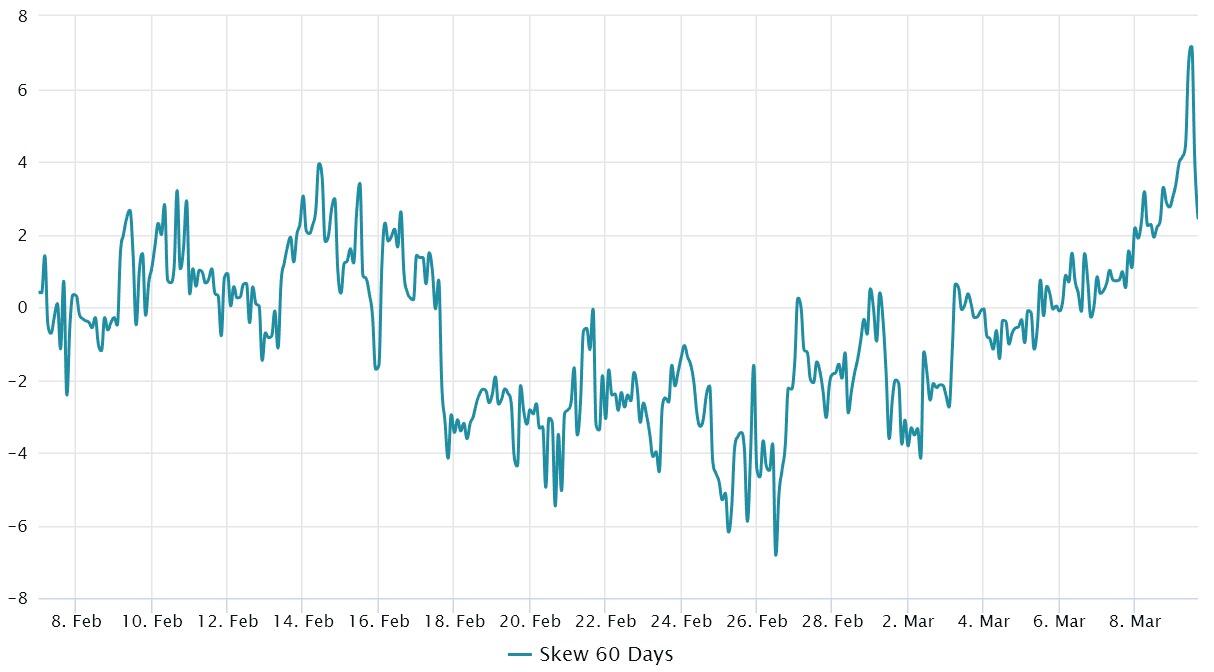
Bitcoin 60-day options 25% delta skew: Source: Laevitas
Even though Bitcoin failed to break the $25,000 resistance on Feb. 21 and then experienced a 14% correction in 16 days, the 25% delta skew remained in the neutral zone for the past month. The current positive 3% skew indicates a balanced demand for bullish and bearish option instruments.
Derivatives data shows that professional traders are unwilling to go bearish, as evidenced by options traders' neutral risk assessment. Furthermore, the margin lending ratio indicates that the market is improving as some demand for bearish bets has emerged, but the structure remains neutral-to-bullish.
Given the enormous downward price pressure from a macroeconomic standpoint, as well as ongoing regulatory pressure in the United States, bulls should probably be content that Bitcoin derivatives have remained solid.
Author

Cointelegraph Team
Cointelegraph
We are privileged enough to work with the best and brightest in Bitcoin.