Bitcoin hash rate continues to rise, but DeFi is under threat: Report


New hardware is revolutionizing the mining industry, while other crypto sectors continue to falter.
The beginning of 2023 raised hopes that the blockchain industry was on the path toward recovery, but weaker-than-hoped financial performance and a bout of negative news in February have cast doubts on this outlook. However, these headwinds do not affect all sectors of the industry uniformly. Nonfungible tokens (NFTs) and security tokens have managed to decouple from the broader environment and showed positive signs in February, but the rest of the market remains cautious.
For those serious about understanding the crypto space’s various sectors, Cointelegraph Research publishes a monthly Investors Insights report that dives into venture capital, derivatives, decentralized finance (DeFi), regulation and much more. Compiled by leading experts on these various topics, the monthly reports are an invaluable tool to quickly get a sense of the current state of the blockchain industry.
Can the mining industry consolidate its finances?
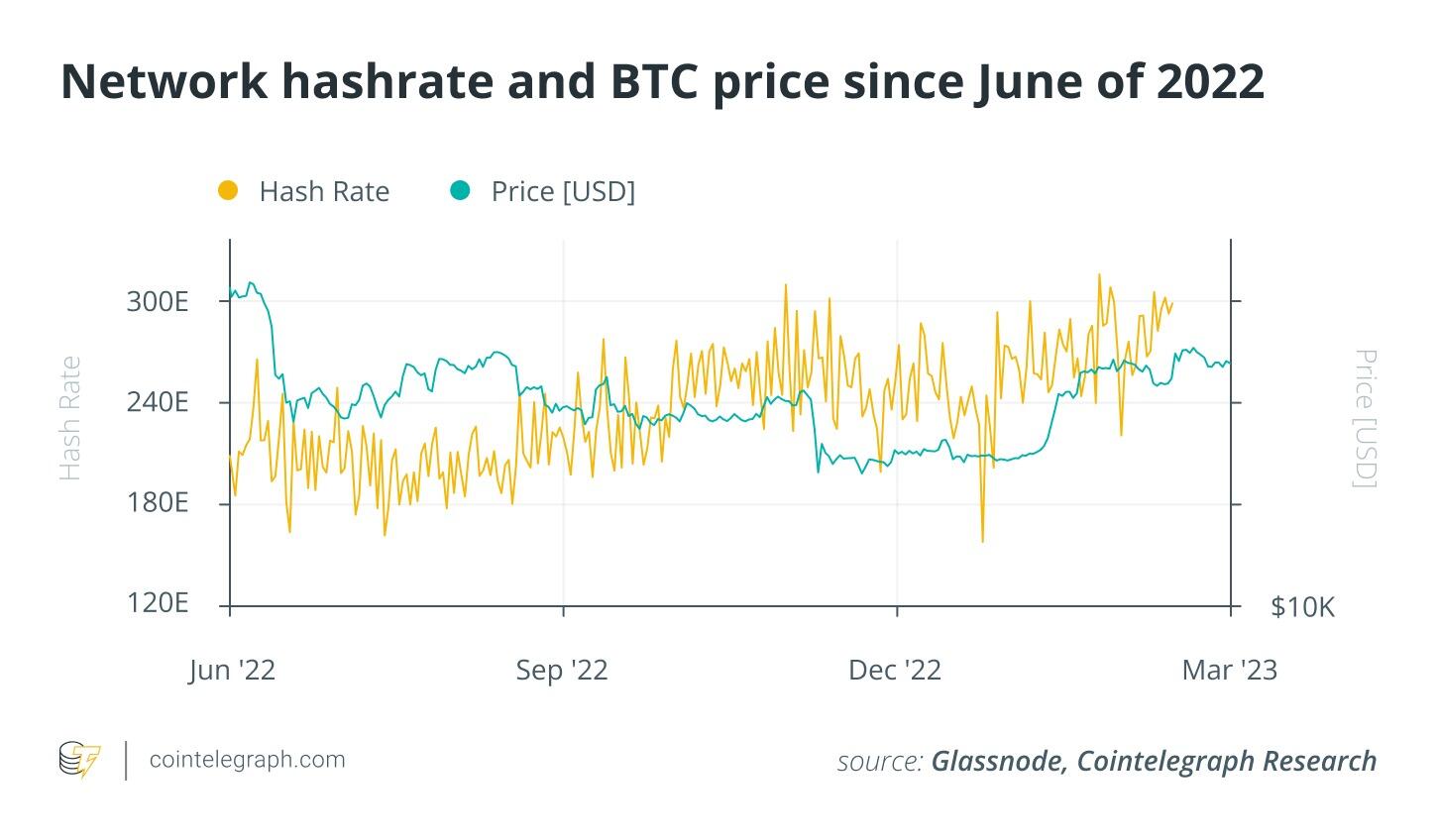
The bear market has witnessed multiple news stories about struggling miners, particularly publicly traded United States mining operations with high levels of debt that correspondingly suffered from lower Bitcoin prices. However, the release of new, highly efficient mining hardware in 2022 — such as Bitmain’s Antminer S19 Pro and S19 XP and Microbt’s WhatsMiner M53 — has resulted in efficiency gains of up to 30%, according to data from Hashrate Index. Cointelegraph Research’s August 2022 trends report pointed investors to the release of this new hardware and projected that the Bitcoin network’s hash rate would rise as a result.
Since August, the hash rate has indeed kept hitting new all-time highs despite the bearish market conditions, which traditionally cause a drop. Iris Energy has purchased 44,000 Antminer S19j Pro miners, with CleanSpark adding 20,000 S19j Pro+ miners to its arsenal as well. This is despite Iris Energy defaulting on debt obligations back in November.
Staying ahead of the rest of the network is critical in the mining sector. Those who manage to raise capital and procure new electricity-saving hardware earlier than others will be able to turn significant profits before the difficulty catches up again. For miners that manage to raise this capital, there may be hope.
Intensifying regulatory pressure on the DeFi sector
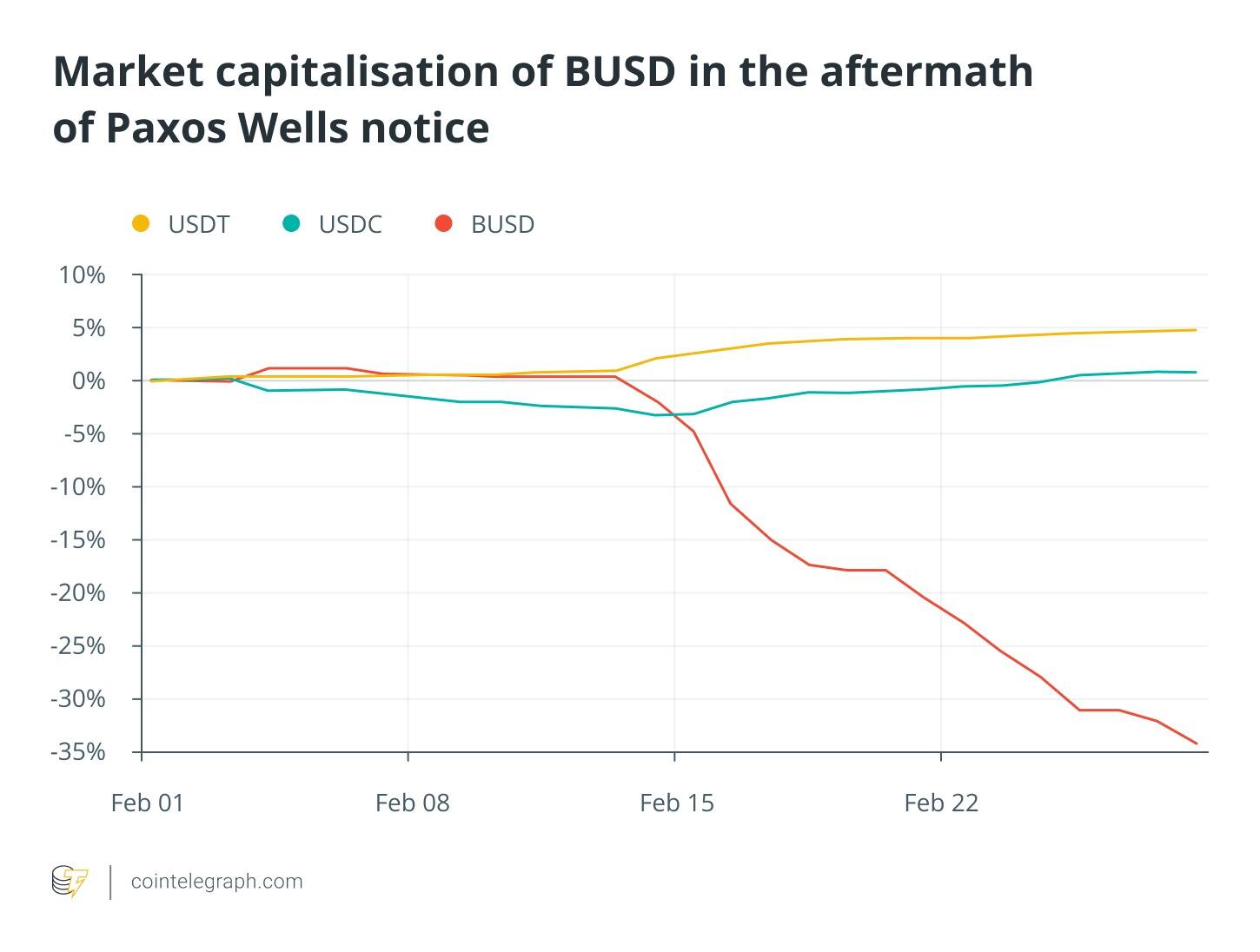
Meanwhile, regulators are stepping up their enforcement actions and threatening the backbone of the DeFi sector. On Feb. 12, it was revealed that the Securities and Exchange Commission had initiated a crackdown on Paxos, a major stablecoin issuer. The SEC sent Paxos a Wells notice, informing the company of the regulator’s intention to file a lawsuit against it for offering unregistered securities — and specifically referring to Binance USD as the security in question. In the aftermath of the notice, BUSD lost over 40% of its market capitalization.
As stablecoins provide safe ways for traders to take profits, this crackdown is a major threat to the industry. Many fear that Paxos will not remain the only target and that these actions will become widespread. Labeling stablecoins as securities is a surprising move by the SEC, given that there are no obvious expectations of profit from them.
It remains to be seen whether the SEC’s action will be followed up with similar steps against Tether and its USDT stablecoin, which is allegedly being used by North Korea and Venezuela to evade sanctions. Other key developments in this area can be found in the Regulation and DeFi sections of this month’s Investor Insights Report from Cointelegraph Research.
Author
Cointelegraph Team
Cointelegraph
We are privileged enough to work with the best and brightest in Bitcoin.