|

What is the Fed Put?
You may have heard the phrase, the “Fed Put’ and wondered what it means. So, here is a quick explanation as to what it is, so you can understand the phrase. Every industry has its own ‘lingo’ which just helps to speed up communication, but can be annoying if you don’t understand the shorthand phrase.

The Fed Put is essentially the belief that the market has around stocks. If stock markets fall a certain amount, say by around 15%, many investors believe that the Federal Reserve will step up and put in policies to ensure equity markets do not keep falling.

What’s the belief based on?

This has its origins during the 1990s by the then Federal Reserve Chairman Alan Greenspan. He was credited with the fact that every time the market faced a tricky crisis, he would step up and cut interest rates and thereby support falling equity markets. His policy was seen as so predictable that it was referred to as the ‘Greenspan put’. There is a practice where investors go long on a stock, but also put in a put option to reduce losses should the price of stocks fall. It is essentially a type of insurance policy against falling stock prices.

What that means now

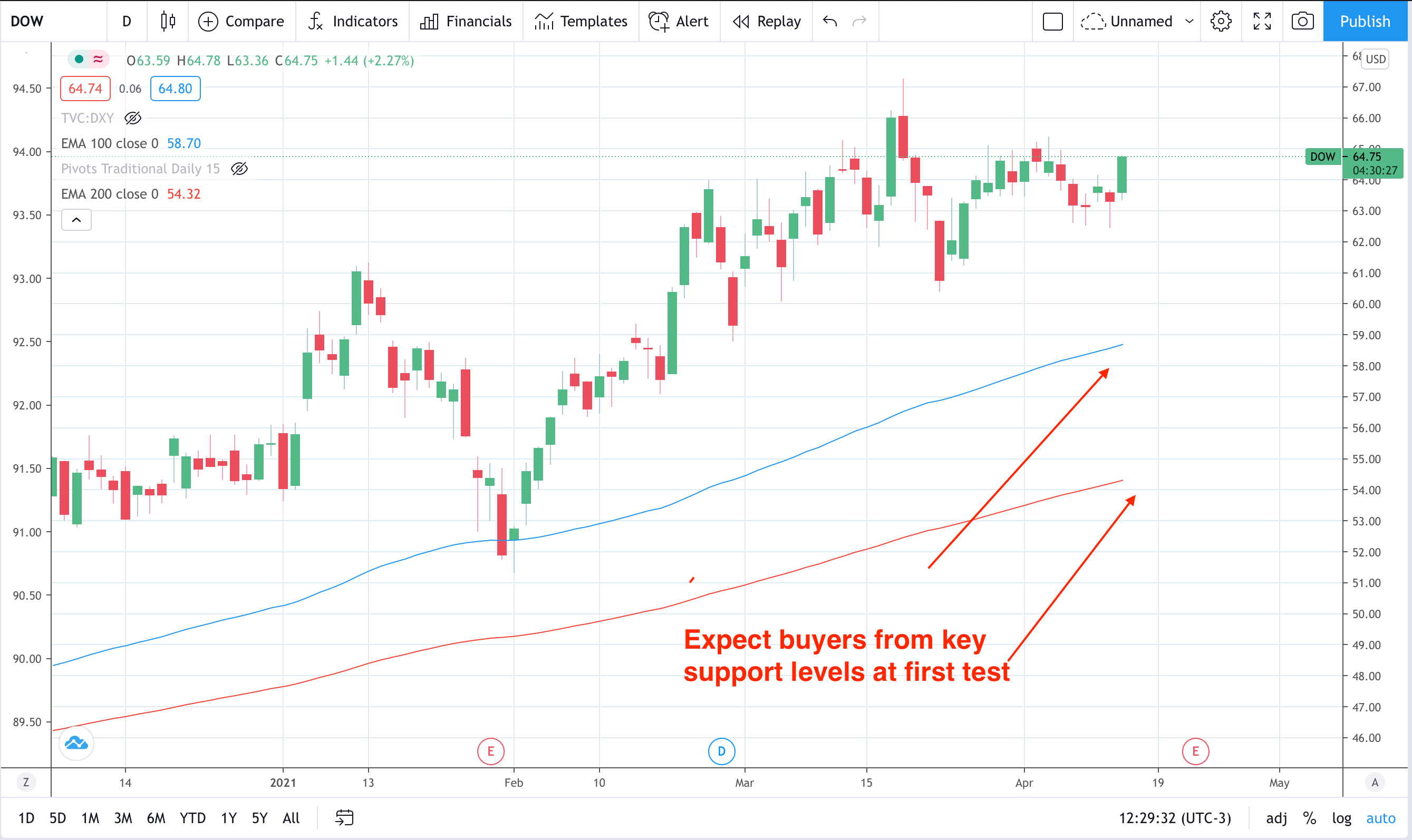
That any serious dips in equity markets should find buyers. However, be aware that the sharp rise in equity markets over the last 12+ months is unusual. Markets are extended and there is a concern amongst seasoned hands that a correction is due followed by a return to a more normal 3-7% increase in stocks. This means the chances are potentially increasing of buying in at the top. Leveraged traders, be nimble and only find decent technical areas to enter.
Chart

Learn more about HYCM


Author

Giles Coghlan LLB, Lth, MA

Giles is the chief market analyst for Financial Source. His goal is to help you find simple, high-conviction fundamental trade opportunities. He has regular media presentations being featured in National and International Press.


More from Giles Coghlan LLB, Lth, MA
Share:

Markets move fast. We move first.

Orange Juice Newsletter brings you expert driven insights - not headlines. Every day on your inbox.

By subscribing you agree to our Terms and conditions.

Editor's Picks

EUR/USD rebounds after falling toward 1.1700

EUR/USD gains traction and trades above 1.1730 in the American session, looking to end the week virtually unchanged. The bullish opening in Wall Street makes it difficult for the US Dollar to preserve its recovery momentum and helps the pair rebound heading into the weekend.

GBP/USD steadies below 1.3400 as traders assess BoE policy outlook

Following Thursday's volatile session, GBP/USD moves sideways below 1.3400 on Friday. Investors reassess the Bank of England's policy oıtlook after the MPC decided to cut the interest rate by 25 bps by a slim margin. Meanwhile, the improving risk mood helps the pair hold its ground.

Gold stays below $4,350, looks to post small weekly gains

Gold struggles to gather recovery momentum and stays below $4,350 in the second half of the day on Friday, as the benchmark 10-year US Treasury bond yield edges higher. Nevertheless, the precious metal remains on track to end the week with modest gains as markets gear up for the holiday season.

Crypto Today: Bitcoin, Ethereum, XRP rebound amid bearish market conditions

Bitcoin (BTC) is edging higher, trading above $88,000 at the time of writing on Monday. Altcoins, including Ethereum (ETH) and Ripple (XRP), are following in BTC’s footsteps, experiencing relief rebounds following a volatile week.

How much can one month of soft inflation change the Fed’s mind?

One month of softer inflation data is rarely enough to shift Federal Reserve policy on its own, but in a market highly sensitive to every data point, even a single reading can reshape expectations. November’s inflation report offered a welcome sign of cooling price pressures. 

XRP rebounds amid ETF inflows and declining retail demand demand

XRP rebounds as bulls target a short-term breakout above $2.00 on Friday. XRP ETFs record the highest inflow since December 8, signaling growing institutional appetite.














