USD/JPY Price Forecast: Seems vulnerable amid BoJ-Fed policy divergence, US CPI in focus
- USD/JPY dives to fresh YTD low in reaction to hawkish remarks by BoJ’s Junko Nagakawa.
- A softer risk tone further benefits the JPY and contributes to the slide amid a weaker USD.
- Bears turn cautious and now look forward to the US CPI report before placing fresh bets.


The USD/JPY pair drifts lower for the second successive day – also marking the sixth day of a negative move in the previous seven – and weakens below the 141.00 mark for the first time since December 2023. The Japanese Yen (JPY) gains strong positive traction after the Bank of Japan (BoJ) board member Junko Nagakawa indicated that the central bank will raise interest rates further if the economic outlook aligns with the forecasts. This comes on top of BoJ Governor Kazuo Ueda's hawkish outlook and reaffirms bets that the Japanese central bank will lift borrowing costs again in 2024.
This marks a big divergence in comparison to market expectations that the Federal Reserve (Fed) will start its policy-easing cycle in September and prompts unwinding of the JPY carry trades. In fact, the CME FedWatch Tool indicates that the markets have fully priced in a 25-basis-points Fed rate cut move at the upcoming policy meeting on September 17-18 and the possibility of a 50-bps reduction stands at around 30%. This triggers a modest US Dollar (USD) pullback from the vicinity of the monthly peak and turns out to be another factor that contributes to the offered tone surrounding the USD/JPY pair.
Meanwhile, investors' nervousness ahead of the crucial US consumer inflation figures takes its toll on the global risk sentiment and benefits the JPY's relative safe-haven status. This, along with some technical selling below the 142.00 mark, aggravates the bearish pressure surrounding the USD/JPY pair. Traders, however, turn cautious and prefer to wait for the release of the key US Consumer Price Index (CPI) report before positioning for any further depreciating move. Any further signs of cooling inflation would increase market bets for aggressive policy easing by the Fed and weigh on the buck.
In contrast, the reaction to a stronger CPI print is more likely to be limited amid dovish Fed expectations, suggesting that the path of least resistance for the Greenback and the USD/JPY pair remains to the downside. Hence, any meaningful recovery attempt might still be seen as a selling opportunity and run the risk of fizzling out rather quickly.
Technical Outlook
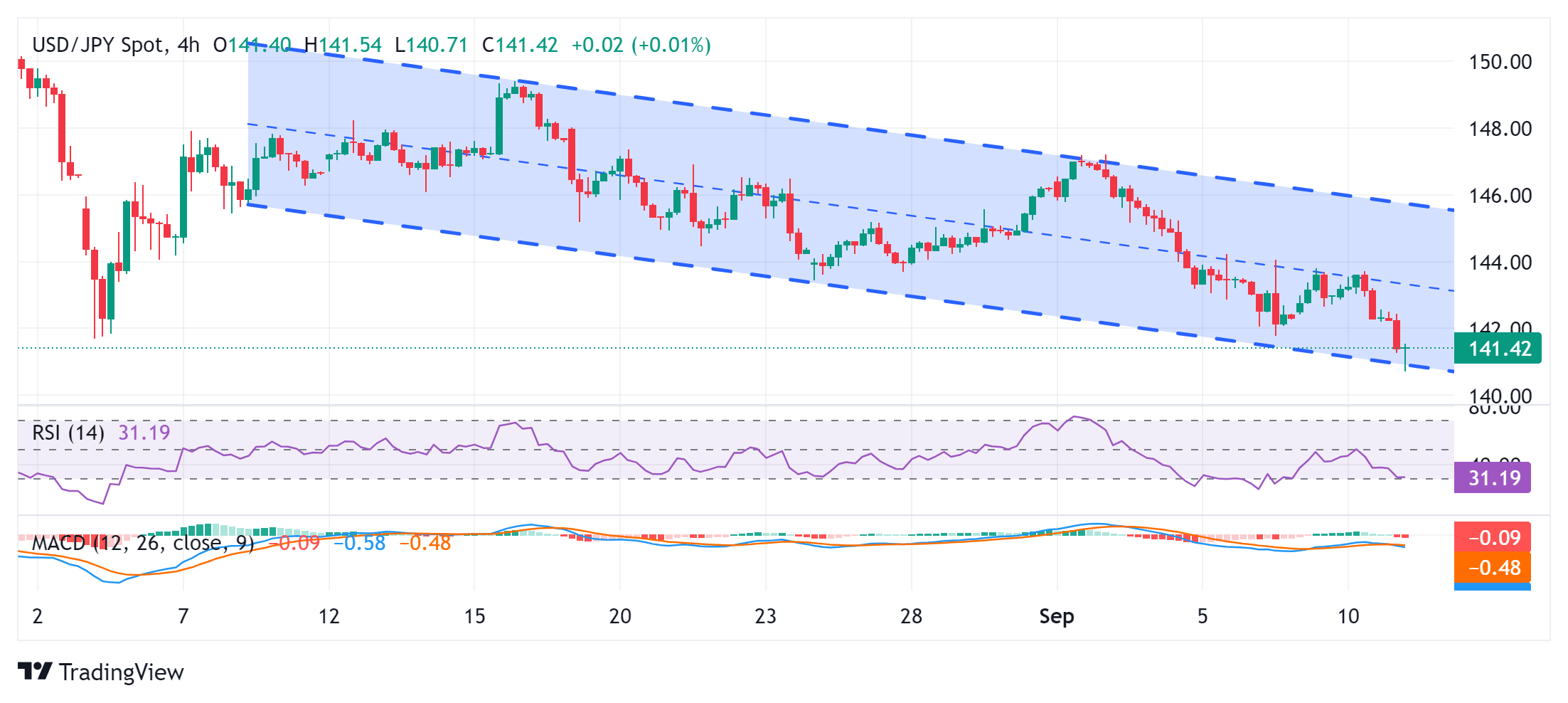
From a technical perspective, spot prices manage to rebound around 70 pips from the 140.70 area, or the lower boundary of a downward-sloping trend channel. The said support should now act as a key pivotal point for short-term traders, which if broken decisively should pave the way for an extension of a two-month-old downtrend. The USD/JPY pair might then fall to the December 2023 swing low, around the 140.25 area, before eventually dropping to the 140.00 psychological mark.
On the flip side, any further recovery is likely to confront stiff resistance near the 142.00 horizontal support breakpoint. That said, a sustained strength beyond might trigger a short-covering rally and lift the USD/JPY pair to the Asian session peak, around the 142.45 region. The momentum could extend further towards reclaiming the 143.00 round figure en route to the weekly top, around the 143.70 supply zone. Some follow-through buying would suggest that spot prices have formed a near-term bottom and set the stage for a further appreciating move.
USD/JPY 4-hour chart
Premium
You have reached your limit of 3 free articles for this month.
Start your subscription and get access to all our original articles.
Author
Haresh Menghani
FXStreet
Haresh Menghani is a detail-oriented professional with 10+ years of extensive experience in analysing the global financial markets.