US ADP private employment rises, Treasury yield fall and recover
- ADP ‘s private clients hired 690,000 in June, beating the 600,000 forecast .
- Treasury yields fell as pressure on wages may lessen.
- Nonfarm Payrolls expected to gain 690,000 in June.
- Dollar gains continue despite stationary US Treasury rates.

In a sign that credit markets may consider weak hiring the primary threat for inflation, US Treasury rates fell after private payrolls added more positions than predicted in June.
Automatic Data Processing (ADP), the largest US payroll services company, reported 690,000 new positions for its US clients last month.
ADP

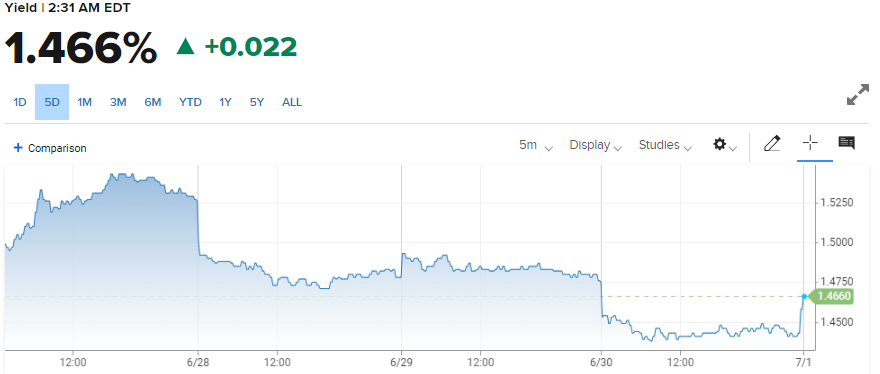
The 10-year interest rate dropped from 1.48% to as low as 1.44% after the release.The 2-year return slipped 1 basis point to 0.24% Yields on both securities recovered to close unchanged on Wednesday.
10-year Treasury yield
CNBC
Markets would normally view stronger than expected job creation as a precondition for wage increases leading to higher inflation and eventually a Federal Reserve rate hike. In the current case, that means a reduction in the bond purchase program.
Consumer inflation
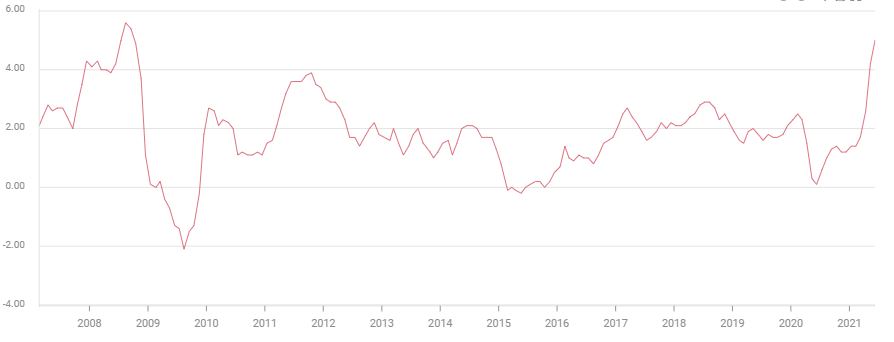
American consumer inflation is already soaring. The annual Consumer Price Index tripled from 1.4% in January to 4.2% in April and jumped to 5% in May. The Core Personal Consumption Expenditure Price Index (PCE) has more than doubled in the same period, from 1.5% in January to 3.4% in May.
CPI
FXStreet
The Federal Reserve maintains that the rapid price gains this year are a result of the lockdown collapse in prices and demand last year. There is little doubt that the reversal of the 2020 decline is a major reason for the surge this year.
Several other factors are alos dding to the price pressures Raw material and component shortages left over from the economic closures are inhibiting production for some consumer products forcing prices higher. Automobiles are a good example. A global shortage of computer chips has curtailed or halted production for some manufacturers, driving the cost of used cars higher.
Labor shortages
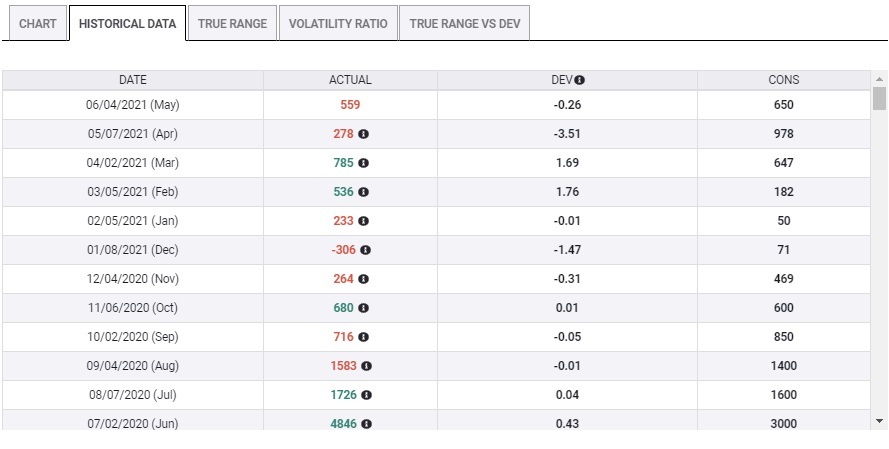
Hiring in April and May was about half of expectations, 837,000 vs 1.628 million. In April there were 9.3 million unfilled positions, up a million from March and the highest total on record.
Nonfarm Payrolls
Analysts suspect that the increase and extension of federal unemployment benefits may have convinced many lower paid workers to remain on the sidelines until their benefits expire.
Purchasing Managers’ Indexes for the past several months and the Federal Reserve Beige Book have noted extensive anecdotal confirmation that labor shortages are forcing companies to compete for workers with wages and bonuses. Once offered those pay increases will be difficult to rescind. Higher wages are one of the key factors in changing inflation expectations.
Conclusion
A pickup in hiring is not a standard prelude to declining interest rates.
However, in the unusual current circumstances, with employers offering higher pay to attract reluctant workers, gains in employment may mean that wage increases will not be needed in the future. If that is the case, one of the sources of inflation could ease as hiring becomes widespread. That in turn, will reduce the expectation for a Fed bond taper.
Falling Treasury yields in an improving labor market is sign of just how much the past 18 months have twisted the US economy. That the dollar has continued to rise despite the drop in Treasury rates is yet another indicator that normality is still far away.
Author

Joseph Trevisani
FXStreet
Joseph Trevisani began his thirty-year career in the financial markets at Credit Suisse in New York and Singapore where he worked for 12 years as an interbank currency trader and trading desk manager.