The economic impact of Brexit will be less dangerous than anticipated


Assessing the potential damage to the UK economy from Brexit is speculation. There are no guidelines. No one has ever tried to rewrite the rules of economic and political interaction for two modern industrial economies at one fell swoop.
The EU and the UK are attempting to codify in a few months a relationship that has evolved over 40 years with the Union and over hundreds of years between the UK and individual nations on the continent. There will necessarily be mistakes, omissions and bad decisions.
There are however several factors that, when considered dispassionately, render the judgment far more positive than is generally realized.
The most telling is the simple fact that the EU and the UK must remain each other’s main economic partners. The companies and individuals that have traded and travelled across the narrow seas will continue their relationships. A change in rules will not end affinities. England will still buy her wine on the continent and London will still be the largest financial and trading center in Europe.
These economic imperatives will drive businesses and governments on both sides of the new regulations to seek efficiencies similar to the ones enjoyed now. All the pressures exerted by companies and individuals in the UK and the EU on regulators will be to make the new rules accommodate existing business relations.
It will be in both side’s interest to have the regulations evolve quickly into standardized practice. The customs and financial bureaucracies that administer the current rules will enforce the new system. If customs services are not the popular image of reliable execution they are least experienced and familiar with the idea of trade facilitation.
With the EU and UK governments very aware of the electoral dangers of a botched separation supervision of the initial implementation should be strict and careful cooperation will be encouraged. Such attention will not eliminate problems but as neither Paris nor London wants pictures of endless truck lines and customs queues and reports of unavailable medicine, the press for performance on the bureaucracies will be high.
A second indicator that Brexit may be less troublesome is that the many predictions of the dire effects of Brexit have had little impact on the economic performance of the UK.
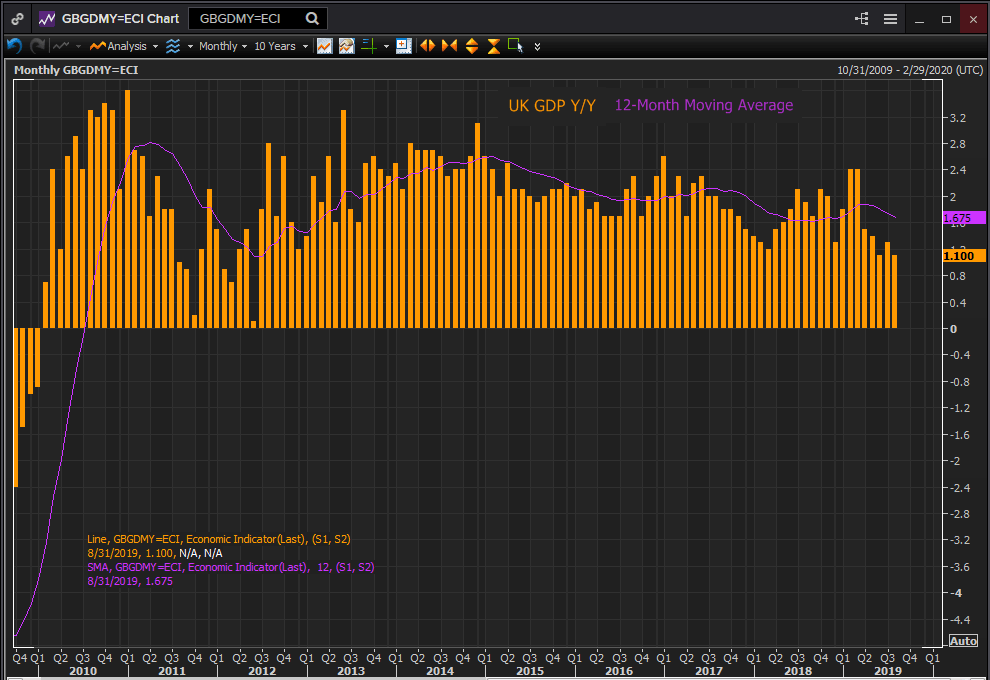
In the three years since the Brexit vote the British economy has held up remarkably well. Annual growth has declined from 1.958% in June 2016 to 1.625% in August 2019. That compares favorably with German GDP which has dropped from 1.8% in the second quarter of 2016 to 0.4% in the second quarter of this year.
Reuters
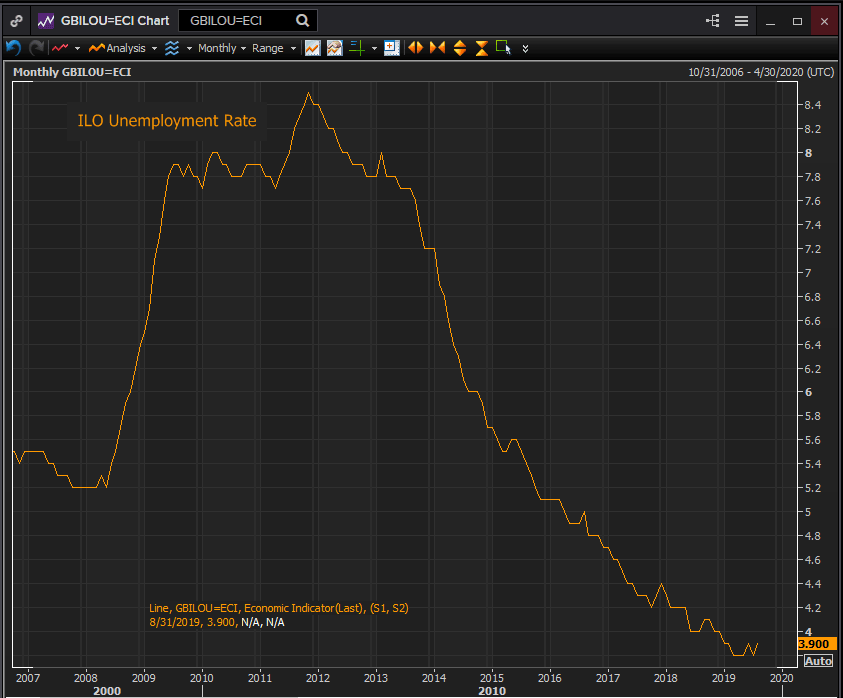
British unemployment has fallen from 4.9% in the month of the Brexit vote to 3.9% in August. Average annual earnings without bonus have increased from 2.6% in June 2016 to 3.8% in August. Retail sales have be stable across the period. The 3-month moving average was 0.25% in June 2016 and the same last month.
Reuters
Consumer impact has been limited to confidence. The GfK consumer sentiment index 3-month moving average has skidded from -1.667 in June 2016 to -12.333 in September 2019 with the lowest levels coming this year.
The largest effects have been in in the industrial sector where the 3-month moving average for production has slipped from 0.033 at the June vote to -0.133 in August 2019.
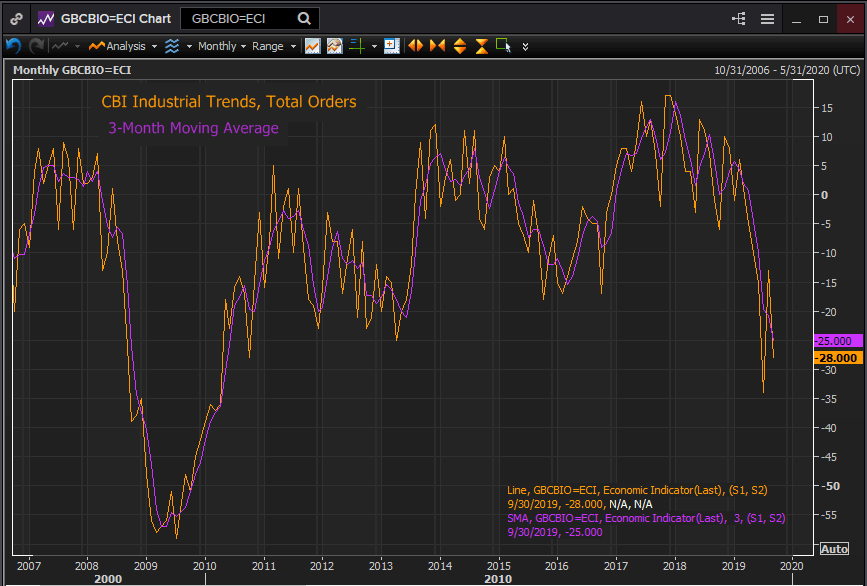
Industry trends have also been stricken. The Confederation of British Industry total orders index has collapsed from -7 in June 2016 to -25 in August. The Distributive Trades Volume of Sales index has gone from -0.667 that June to -27 in September of this year. For both of these gauges the steepest declines have come in the past year.
Reuters
While the activity of the British economy over the past three years hardly guarantees an uneventful exit it does show a degree of ease with the process, even if the industrial sector is showing signs of deeper concerns.
It is no doubt true that British industry as a whole would prefer to stay within the EU, but that does not mean it contemplates departure in the same apocalyptic tones as much of the press. The most likely response of many executives is probably the pragmatic one, if it has to be let’s make it work.
There is another aspect to Brexit that has received almost no notice. The exit will create economic activity. All of the effort that will be needed to recast businesses and their supply and distribution chains into the new regulatory modes and the search for material and market replacements, domestically and internationally, will generate economic growth.
Finally, the third sign that Brexit may be a more moderate choice than imagined has been the reaction of the credit markets.
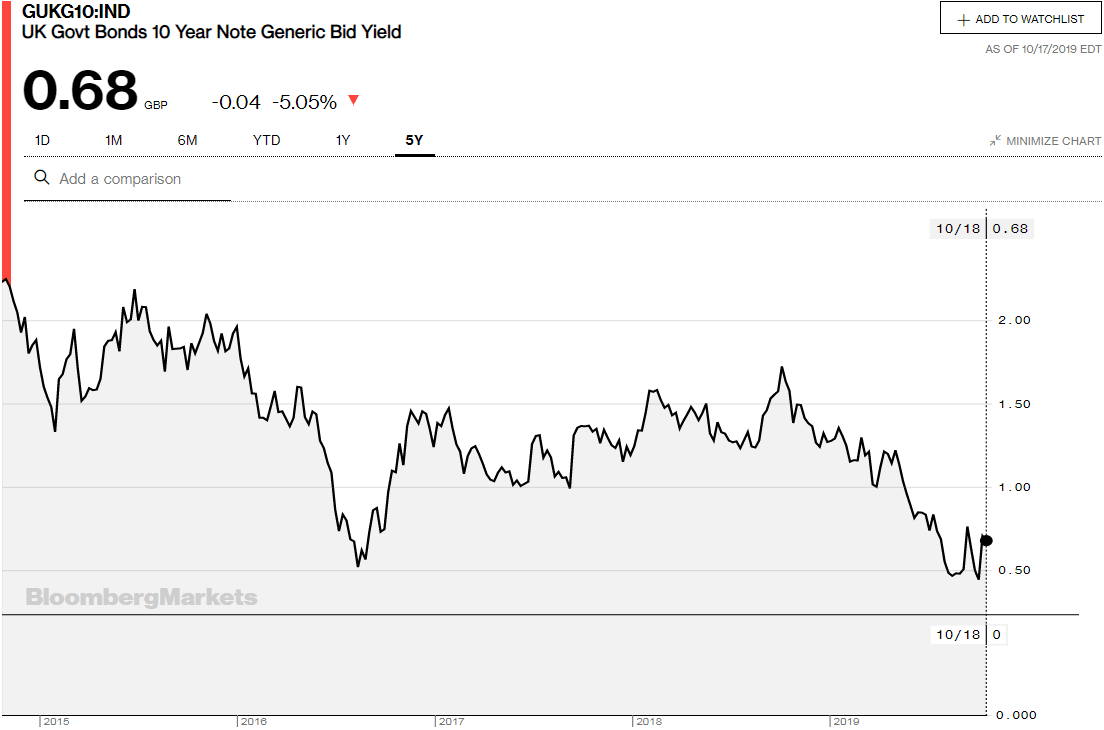
The yield on the 10-year generic Gilt was 1.09% on June 24, 2016. It is currently 0.68%, off 41 basis points. The German 10-year Bund has lost 41 points to -0.41% in the same time frame and the French equivalent has shed 50 points to -0.11%.
Over the three year period of Brexit the credit markets have not exacted any penalty for the pending exit of the UK. The disparity in yields largely reflects the past and current efforts by the ECB to support the monetary union economies with low rates enacted by bonds purchases.
It must be said that the equity markets have a different opinion. The 17% gain in the FTSE from the referendum is among the lowest in Europe. The German Dax and the French CAC rose 30% and 38% in the same period. The US S&P 500 is up 47% and the Dow has soared 55%.
The unique situation of the British exit from the European Union has generated different reactions in markets and constituencies.
The UK economy seems to be the least troubled in Europe with stronger growth, lower unemployment and better consumption figures than its major competitors on the continent. Credit markets appear unmoved demanding no premium from British debt. Equities are the most concerned shaving 10% and 18% from the FTSE return in comparison to the German and French gains over the time of Brexit.
Perhaps the most optimistic sign is necessity. The UK trade, financial and economic relationship with the continent is permanent. It is not too much to think that it will continue to benefit both parties.
Author
Joseph Trevisani
FXStreet
Joseph Trevisani began his thirty-year career in the financial markets at Credit Suisse in New York and Singapore where he worked for 12 years as an interbank currency trader and trading desk manager.