The commodities feed: Druzhba pipeline concerns

Energy
Quite a bit which has changed in the oil market over the past two weeks. Two weeks ago sentiment was fairly negative, given the continued demand concerns. This negative sentiment appears to have only intensified, with Brent last week trading to as low as US$92.78/bbl- its lowest levels since February and Russia’s invasion of Ukraine. However, what is noticeably different from the flat price weakness seen in June and early July compared to early August is that previously the timespreads held up relatively well. This time around, the weakness in the flat price has been accompanied by weakness in the timespreads. While the forward curve is still in backwardation, it certainly isn’t as wide as it was a month or so ago. In addition, refinery margins, whilst historically still high, have come off considerably from their highs seen in June.
On the supply side, several factors have helped. Libya appears to be seeing a recovery in supply following months of disruptions. There will be question marks around how reliable Libyan supply will be in the months ahead. In addition, there could also be a breakthrough in Iranian nuclear talks. The EU has submitted its final draft for a deal, which will need to be approved by the US and Iran. If approved, this would open the door for an increase in Iranian oil exports. This is a big "if". Negotiations have been going on for over a year, with parties failing to come to an agreement so far. In our balance sheet we are still assuming that Iranian supply will only start to edge higher from early next year. Clearly, there is a risk that this supply starts making a return to the market quicker than we are currently anticipating.
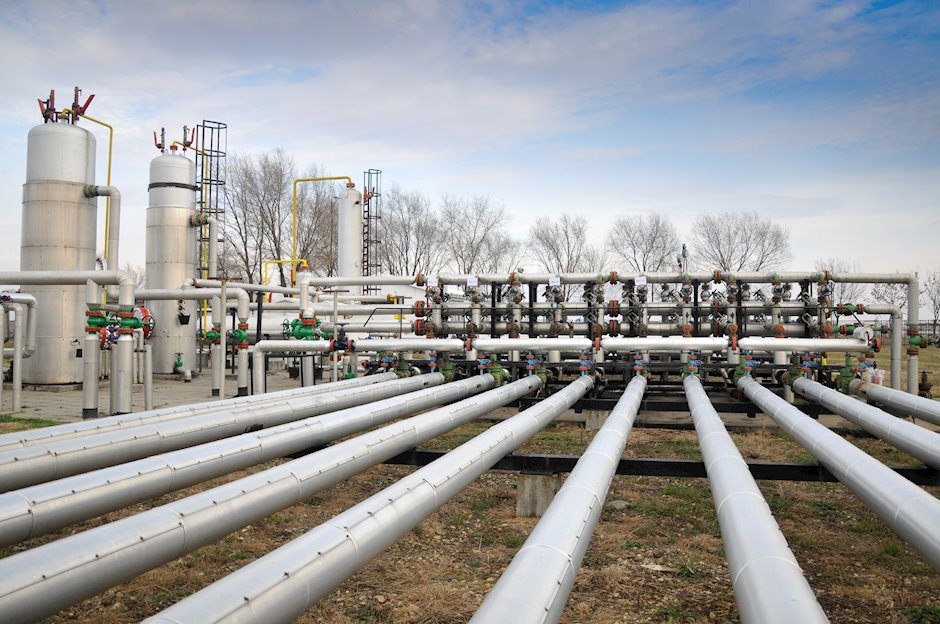
Clearly it is not all great news for the supply side at the moment. There is still plenty of uncertainty as highlighted yesterday, with oil flows along the southern section of the Druzhba pipeline coming to a halt. Russia’s Transneft has blamed the stoppage on the fact that sanctions have prevented it from paying transit fees to Ukraine. The Southern leg of the Druzhba pipeline supplies Slovakia, Hungary and the Czech Republic, with flows transiting through Ukraine. This section of the pipeline supplies in the region of 250Mbbls/d of crude oil. Flows along the northern route of the pipeline, which supplies Poland and Germany, remain unaffected. The Czech pipeline operator expects that flows along the southern route will resume in the coming days, which has provided some comfort to the market. Clearly there is uncertainty over this and the market will be eagerly awaiting for confirmation of a restart in flows.
On the demand side, growing recession risk has weighed on the demand outlook. This is reflected in a number of agencies having revised lower their demand growth forecasts several times this year. The higher prices seen for much of this year would have also led to some demand destruction. EIA weekly data shows that implied gasoline demand in the US has been seasonally weak so far this summer, given the higher pump prices. The more recent weakness in prices may limit the demand destruction that some may feel is needed in order to keep the market balanced.
What is clear is that the oil market is still struggling with both supply and demand uncertainty, and as a result the market is struggling to convincingly find direction. This uncertainty, combined with the lower traded volumes over the summer months, means that prices remain fairly volatile.
Metals
Despite reports yesterday of an accident at a Chinese aluminium smelter, LME aluminium prices have come under some pressure this morning. According to Shanghai Metals Market an accident at a 200ktpa aluminium smelter in Sichuan province has disrupted about 190kt of its capacity. Meanwhile inventories continue to tighten, with LME aluminium inventories declining for a fifth straight session - total stocks fell by 3.2kt to 284.3kt as of yesterday. Stocks have dropped by around 650kt since the start of the year.
China locked down urban areas in Guixi city yesterday due to Covid. The region is a major hub for copper smelting facilities. Jiangxi Copper Co., the nation’s largest copper producer is also located in Guixi. The details of the lockdown and its potential impact on copper smelting in the region are scarce for now - the uncertainty could offer some support to prices in the short term.
Read the original analysis: The commodities feed: Druzhba pipeline concerns
Author
Warren Patterson
ING Economic and Financial Analysis
Warren Patterson is a commodities strategist at ING. He joined the bank in April 2016 and covers the entire commodities complex. Previously, he worked at a commodities trade house in London.

















