Stocks: Prepare for the coming first bear market in the new bull market


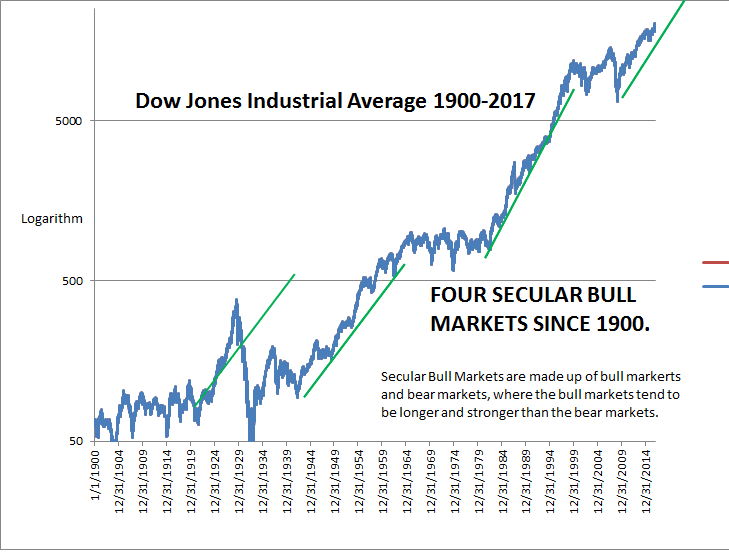
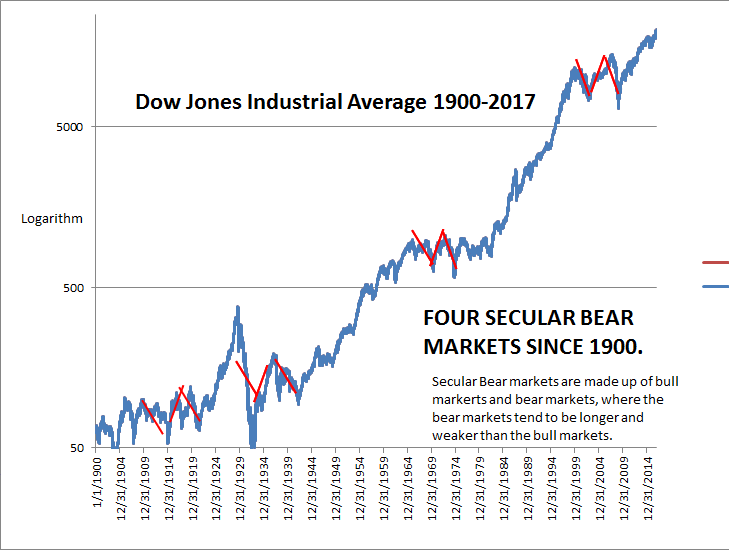
SECULAR BULL MARKETS are 20+ year long term periods that consist of bull markets and bear markets where the bull markets are generally stronger and longer then the bear markets. Stated another way, in SECULAR BULL MARKETS, the bear markets tend to be a fraction of the previous bull market in both price and time.
Bottom line: Based on comparisons to past SECULAR BULL MARKETS, we should prepare for the coming bear market that will likely be a fraction of the 8 year, 14,000 Dow point advance. (6,440 to 20,540)
An inflationary bear market would likely pull back a third to a half the 14,000 point rise and recover to new highs in 3 to 5 years.
A deflationary bear market could terminate the new SECULAR BULL and fall below the previous secular bear market low and take many years to recover to new highs.
Bottom bottom line: Adjust your stock market exposure because history shows a one out of three chance of the new SECULAR BULL market terminating.
History shows that the stock market has SECULAR BULL MARKETS (long term) and SECULAR BEAR MARKETS.
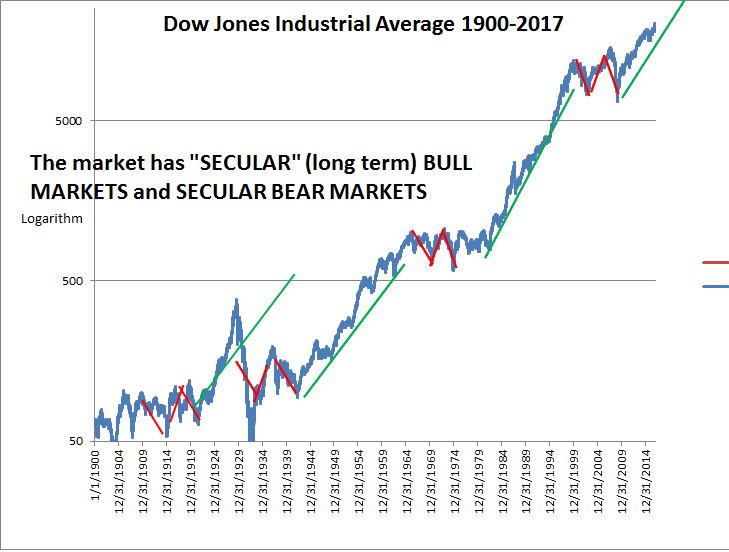
My view is that we are completing the "first bull market" in the new SECULAR BULL MARKET, and will soon be moving into the "first bear market" of the new SECULAR BULL.
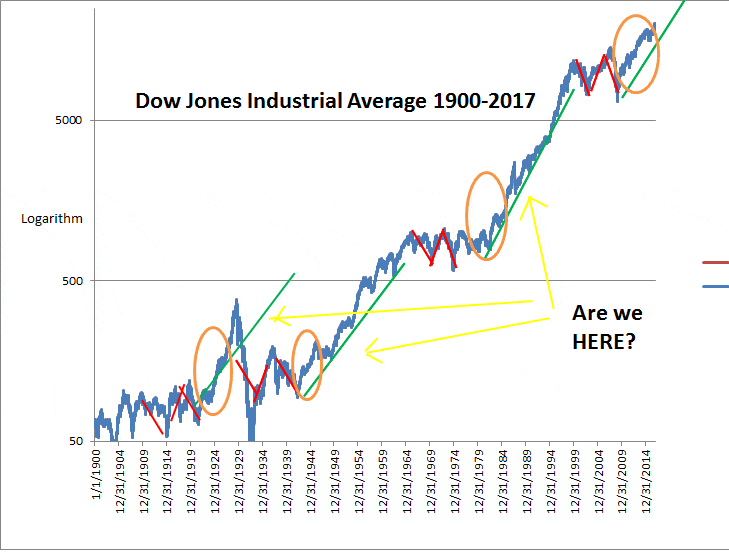
We are now in the FOURTH SECULAR BULL MARKET since 1900.
We have had FOUR SECULAR BEAR MARKETS since 1900.
The current "first bull market" of the new SECULAR BULL MARKET, can be compared to past "first bull markets."
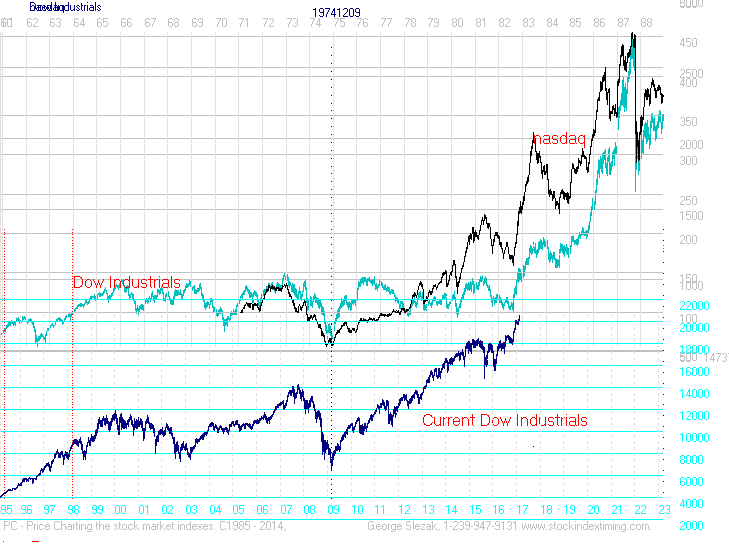
Out of the 1974 market bottom, I am showing the comparison to the Nasdaq Composite, which suggests we could see a bear market like the 1983 - 1984, 31% bear decline.
The 1983-1984 decline got to it's bottom in about a year, and it took more than another year to recover back above the previous highs.
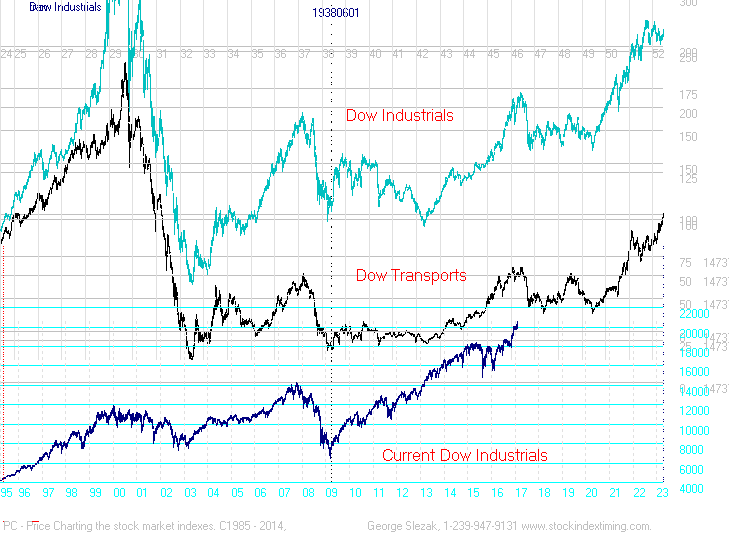
Out of the 1938 market bottom, I am showing the comparison to the Dow Transports, which suggests we could see a bear market like the 1946-1949, 40% bear decline.
In that bear market, in 1946 the market dropped almost 40% in the first four months, then chopped up and down about half the decline for almost three years. The market did not recover to highs above the 1946 peak until 1950.
In the following chart I am showing a comparison of the current bull market to the bull market out of the 1921 secular bear market bottom. The comparison suggests if there is a failure in economic policies the new SECULAR BULL could terminate and we could fall into a NEW SECULAR BEAR MARKET
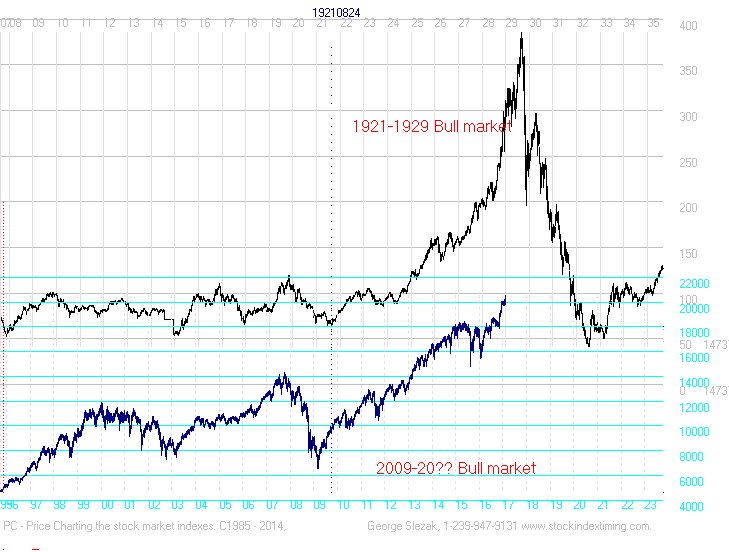
BOTTOM LINE: I look for an "inflationary" bear market like 1983-1984, and 1946-1949. I am NOT looking for the next bear market to extend into a new "deflationary SECULAR BEAR MARKET" like 1929-1937.
Author
George Slezak
Stock Index Timing
More than thirty years as a member of the Chicago Stock, Option, and Commodity Exchanges as an active professional trader, trading for his own account. Past registrations as a Registered Representative, Commodity Trading Advisor,