NFP: Wage gains and labor force participation excellent prognosis for US economy
- The 3.2% annual jump in average annual earnings ties with October as the best since April 2009.
- Labor force participation rate up 0.2% to 63.1%, 0.4% since September
- 419,00 new workers joined the workforce

New hires boost GDP
The surge in December hiring with 312,000 workers joining the employed may gain most of the market’s attention but it is the increase in consumption from the wages of those new paychecks that promises the most for the US economy.
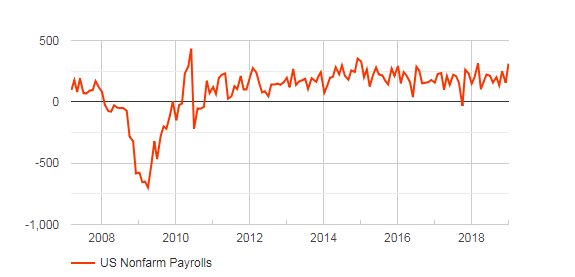
Chart: FXStreet
Annual wages have increased 0.5% since July as labor shortages in many industries have finally induced employers to supplement pay in order to attract workers. Those incremental gains in purchasing power will help many households spend and save more but they represent a percentage gain to the economy not a new salary.
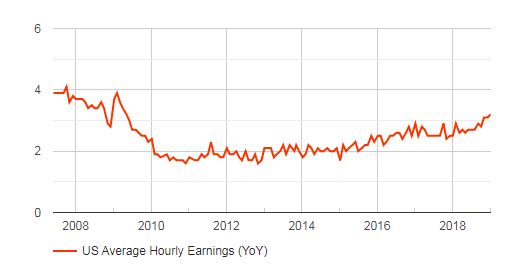
Chart: FXStreet
The 419,000 new entrants in the labor force, people who have begun to look for work and the statistical reason the unemployment rate rose to 3.9%, are potentially that many new salaries, compensation and consumption that did not exist before. Their addition to the economy, presumably some are among the newly hired in December, are exponentially more important to GDP than wage increases, however welcome those may be to their individual recipients. With such low general unemployment any new workers likely come from the long term unemployed
Historically the labor force participation rate, the percentage of working age people in the labor force that is either working or looking for a job, has been declining as the early years of the post-war baby boom generation enters retirement. But the precipitate decline during and after the financial crisis, far greater than the demographic mandate, represents a huge amount of lost wages, purchasing power, consumption and GDP for the US economy.
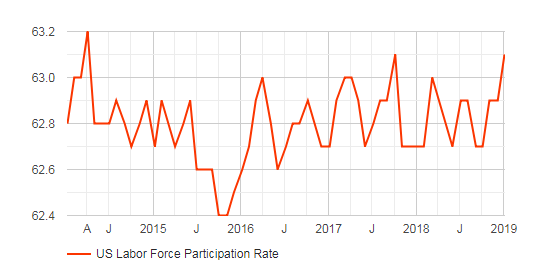
Chart: FXStreet
If the booming economy can continue to entice workers back to productive endeavors with all of the attendant personal and societal benefits then the long term growth rate for the US may resume its historical average above 3%. The US is no more fated to 2% growth than it was to the economic policies that produced it.
Three months are not a trend but a return to historical rates of labor participation promises an addition to economic activity that could provide a long term boost to GDP.
Author

Joseph Trevisani
FXStreet
Joseph Trevisani began his thirty-year career in the financial markets at Credit Suisse in New York and Singapore where he worked for 12 years as an interbank currency trader and trading desk manager.