Gold Price Forecast: Will XAU/USD sustain the break above $2,300?
- Gold price hits a new record high above $2,300 in Asian trading on Thursday.
- Revival of June Fed rate cut expectations smashed the US Dollar and the US Treasury bond yields on Wednesday.
- Highly overbought RSI conditions continue to warrant caution for Gold buyers.
- More Fedspeak and US employment data are next in focus for fresh trading impetus.
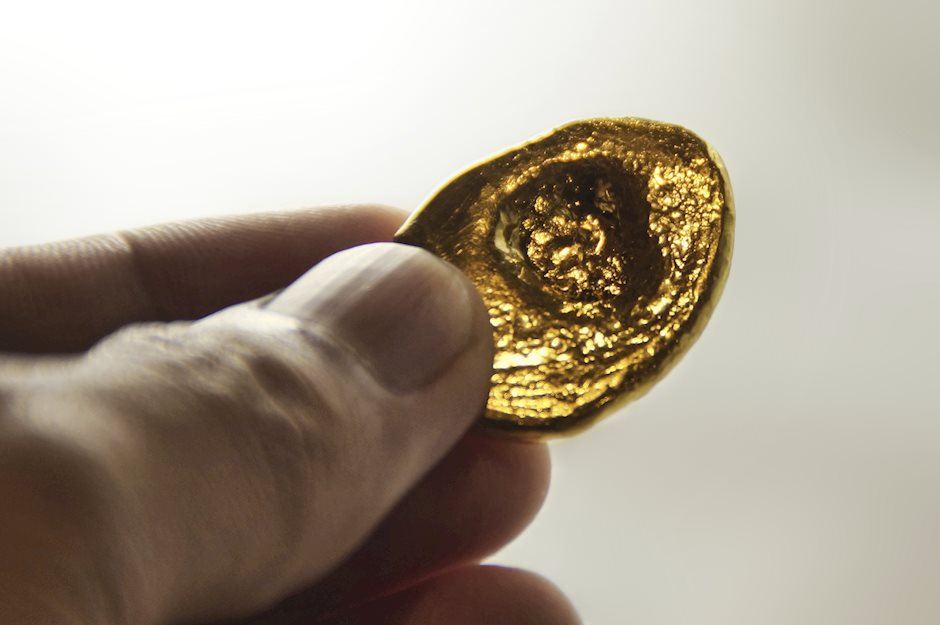

Gold price is flirting with $2,300 after refreshing a lifetime high at $2,305 earlier this Thursday. Persistent US Dollar (USD) softness along with the extended retreat in the US Treasury bond yields keep pushing Gold price through the roof.
Gold price extends its record-setting rally
Expectations of a dovish policy pivot by the US Federal Reserve (Fed) this year regained momentum on Wednesday after the US ISM Services PMI and the Price Paid sub-index dropped to 51.4 and 53.4 in March respectively, smashing the US Treasury bond yields across the curve. Markets cheered the renewed optimism and added to the US Dollar downfall, which was fuelled by sliding US Treasury bond yields.
The Greenback suffered more after Fed Chairman Jerome Powell reassured of the likelihood of interest rate cuts this year, during his appearance at the Stanford Graduate School of Business on Wednesday. Powell said that "if the economy evolves broadly as we expect," he and his Fed colleagues largely agree that a lower policy interest rate will be appropriate "at some point this year." Amidst renewed dovish Fed expectations, Gold price gathered strength and tested the $2,300 threshold.
On Thursday, Asian traders hit their desks and reacted positively to Fed policymakers’ dovish remarks, triggering a fresh leg up in the Gold price to a new record high. Federal Reserve (Fed) Governor Adriana Kugler said that she expects the disinflation trend will continue, which will pave the way for the central bank to cut interest rates.
However, it remains to be seen if Gold price sustained the upside, as the technical picture shows that the bright metal is highly overbought. Traders could resort to profit-taking on Gold longs, adjusting their positions ahead of Friday’s US Nonfarm Payrolls data release.
If geopolitical tensions in the Middle East resurface, it could once again act as a tailwind for the Gold price upsurge. Meanwhile, Gold price will remain at the mercy of more commentary from Fed officials and the US weekly Jobless Claims data, which could offer fresh cues on the market’s pricing of a June Fed rate cut (currently standing at 62%).
Gold price technical analysis: Daily chart

As mentioned above, the extremely overbought 14-day Relative Strength Index (RSI) conditions on the daily chart continue to warrant caution for Gold buyers.
However, acceptance above the $2,300 round level on a daily closing basis could reinforce the bullish interest in Gold price, exposing the next target at the $2,350 psychological level.
On the other hand, any corrective move lower could find initial support at $2,281, the April 2 high, below which the psychological $2,250 level will come into play.
A breach of the latter could fuel a sharp drop toward the $2,200 threshold.
Gold FAQs
Gold has played a key role in human’s history as it has been widely used as a store of value and medium of exchange. Currently, apart from its shine and usage for jewelry, the precious metal is widely seen as a safe-haven asset, meaning that it is considered a good investment during turbulent times. Gold is also widely seen as a hedge against inflation and against depreciating currencies as it doesn’t rely on any specific issuer or government.
Central banks are the biggest Gold holders. In their aim to support their currencies in turbulent times, central banks tend to diversify their reserves and buy Gold to improve the perceived strength of the economy and the currency. High Gold reserves can be a source of trust for a country’s solvency. Central banks added 1,136 tonnes of Gold worth around $70 billion to their reserves in 2022, according to data from the World Gold Council. This is the highest yearly purchase since records began. Central banks from emerging economies such as China, India and Turkey are quickly increasing their Gold reserves.
Gold has an inverse correlation with the US Dollar and US Treasuries, which are both major reserve and safe-haven assets. When the Dollar depreciates, Gold tends to rise, enabling investors and central banks to diversify their assets in turbulent times. Gold is also inversely correlated with risk assets. A rally in the stock market tends to weaken Gold price, while sell-offs in riskier markets tend to favor the precious metal.
The price can move due to a wide range of factors. Geopolitical instability or fears of a deep recession can quickly make Gold price escalate due to its safe-haven status. As a yield-less asset, Gold tends to rise with lower interest rates, while higher cost of money usually weighs down on the yellow metal. Still, most moves depend on how the US Dollar (USD) behaves as the asset is priced in dollars (XAU/USD). A strong Dollar tends to keep the price of Gold controlled, whereas a weaker Dollar is likely to push Gold prices up.
Premium
You have reached your limit of 3 free articles for this month.
Start your subscription and get access to all our original articles.
Author
Dhwani Mehta
FXStreet
Residing in Mumbai (India), Dhwani is a Senior Analyst and Manager of the Asian session at FXStreet. She has over 10 years of experience in analyzing and covering the global financial markets, with specialization in Forex and commodities markets.