German Q3 GDP Preview: EUR/USD set to decline on worsening Eurozone malaise
- Initial German GDP data for Q3 is set to confirm another recession in Europe's largest economy.
- Eurozone GDP may also be dragged down by Germany’s subdued performance, showing that the drop in inflation is symptomatic of a worse outcome.
- The contrast with US solid growth may exacerbate pressure on EUR/USD.


The sick man of Europe – that not-so-flattering nickname to Germany's economy has resurfaced. It was first coined in the early 2000s, when the old continent's largest economy struggled with high unemployment, low productivity and ongoing struggles with reunification.
This time, Germany suffers from other issues – overreliance on Russian Gas, exports to China, and a struggling automotive industry. For the first time in its nine-decade history, Volkswagen is set to close three factories in its home country, and tens of thousands of workers will be laid off.
The economic calendar points that Germany faced a second consecutive quarter with negative growth – the common definition of a recession. This is not the first time that Germany would suffer a shrinking economy in the post-covid era. Times of expansion have proved limited.
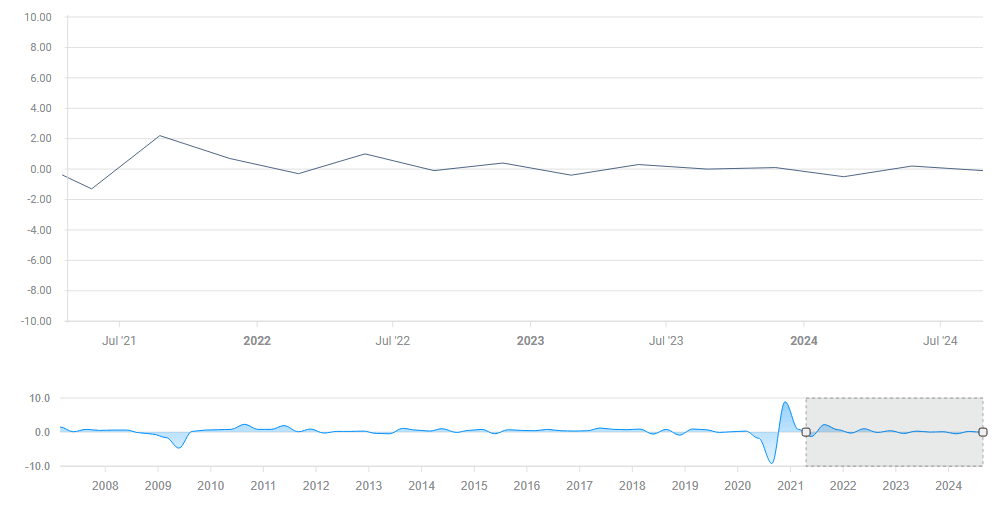
German GDP. Source: FXStreet
A 0.1% drop in output, as economists expect, would weigh on the Euro (EUR), even if it would merely match expectations. Even a no-change figure would fail to inspire because barely avoiding an official recession is uninspiring and it doesn’t change the big picture of a struggling economy.
German data feeds into the 20-strong Eurozone output figures, which will be released shortly afterward on Wednesday. Economists expect a growth rate of 0.2%, driven by expectations of a 0.4% growth rate in France, the second- largest economy, 0.2% in Italy, the third, and 0.6% in Spain, the fourth.
While Germany is roughly only a quarter of the 20-strong Eurozone, its malaise gets attention and influences the Euro. The fight against inflation, directed by the European Central Bank's (ECB) headquarters in Frankfurt, seems to be over. Price rises have almost disappeared, and in large part due to meager growth.
EUR/USD has been on the back foot in recent weeks, owing to concerns that contrast the strength of the US economy. On the same day that German and Eurozone GDP data come out, officials in Washington also publish their first estimates for US growth, putting the two in sharp relief.
The US is expected to report an annualized growth rate of 3%, roughly equivalent to 0.7% QoQ expansion. That would beat projected results from Spain, the fastest-growing large Eurozone economy.
What if Germany reports surprising growth? A 0.1% expansion rate would not only imply no recession but also boost the Euro. However, I expect a limited upside for EUR/USD. Skeptics would see this as a temporary bump in a wider slowdown for the old continent.
All in all, I expect German and Eurozone GDP data to weigh on the Euro, either sooner or later.
Premium
You have reached your limit of 3 free articles for this month.
Start your subscription and get access to all our original articles.
Author
Yohay Elam
FXStreet
Yohay is in Forex since 2008 when he founded Forex Crunch, a blog crafted in his free time that turned into a fully-fledged currency website later sold to Finixio.

















