Five Fundamentals for the week: Two central bank decisions, the Fed's favorite inflation measure and more
- Central banks in Australia and Switzerland may surprise in different directions.
- Jobless claims and consumer confidence set to provide updates on US economic sentiment.
- The core PCE – the Fed's preferred inflation gauge – provides an exciting end to the week.


Rally until year-end? Not so fast. Volatility and uncertainty remain high after the dovish decision by the Federal Reserve (Fed), which remains data-dependent. Moreover, other central banks have yet to fully react.
1) RBA may surprise with rate cut after the Fed
Tuesday, 4:30 GMT. The Reserve Bank of Australia (RBA) may enjoy the country's latest jobs report and has no urge to cut with inflation standing at 3.5% YoY. The economic calendar points to the bank leaving borrowings costs unchanged at 4.35%. However, there are also reasons to cut.
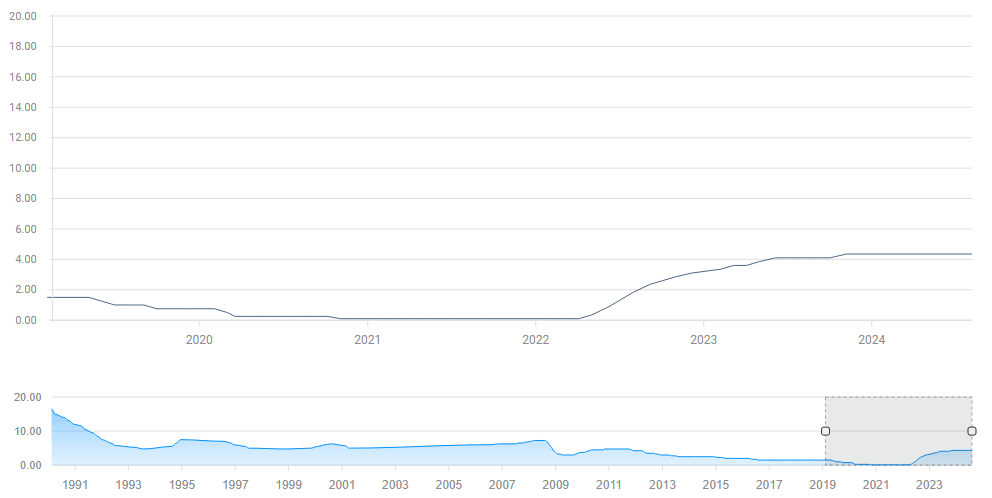
First, inflation is forecast to fall to 2.8% in the upcoming report. Second, China's economy is struggling to pick up steam, and that means less demand for Australian metals.
Third, and perhaps most importantly, the Fed's double-dose cut means the RBA may want to follow. While central bankers are reluctant to admit their dependence on the Fed, Washington impacts the global economy.
There is room for a surprise cut by the RBA, which would reverberate across the world and weigh on other currencies. In case of a no-change decision, the Aussie would hold up.
2) CB Consumer Confidence eyed for growth prospects
Tuesday, 14:00 GMT. The Conference Board's Consumer Confidence gauge rose to 103.3 points in August and may hold up around this level for another month. That would support the soft-landing narrative, boosting markets.
On the other hand, a consumer who is wary of prospects will hesitate before buying. A low figure would imply a harder landing, which is adverse for stocks, but bullish for the US Dollar and Gold.
I expect an upbeat figure, as gasoline prices are falling – and these billboards have a significant impact on consumer sentiment.
3) SNB may surprise by holding rates
Thursday, 7:30 GMT. The Swiss National Bank (SNB) meets only once per quarter, and these decisions can provide significant surprises.
The Alpine country's central bank is to cut interest rates by 25 bps, which seem in line with the trend among its peers. However, the SNB's interest rate is at 1.25%, an already depressed level. That puts it significantly below the European Central Bank (ECB) and seems unjustified.
Will the SNB surprise by leaving rates unchanged? Outgoing SNB Chairman Thomas Jordan may keep rates unchanged in his last decision.
Going ahead with the cut would imply a worry about the strength of the Swiss Franc (CHF), and a desire to depress it. Such a "currency war" approach would have ramifications beyond Switzerland and may lead other central banks to rush to cut rates faster.
4) Jobless claims stand out with fresh jobs focus
Thursday, 12:30 GMT. While Gross Domestic Product (GDP) is the over-encompassing measure of the economy, the upcoming publication is the last release for the quarter that ended in June – three months ago.
At the same time, weekly Jobless Claims are for the week that ended on September 20. More importantly, the Fed focuses on the labor market, and weekly claims' data may serve as the "canary in the coalmine" – an early indicator of a faster deterioration.
The economic calendar points to a small increase from 219K last time to 225K in the upcoming publication. A bigger increase to previous levels – around 230K-235K – would already cause some worries, weighing on stocks and the US Dollar, while supporting Gold.
5) Core PCE carries high expectations, may fall short
Friday, 12:30 GMT. Late but critical – the Personal Consumption Expenditure (PCE) Price Index report, which comes out after the Consumer Price Index (CPI) one. However, the Fed focuses on PCE when it targets inflation, making it a significant market mover.
The Fed aims to get core PCE – which excludes volatile food and energy costs – down to 2%, and at 2.6% YoY, it is near "mission accomplished."
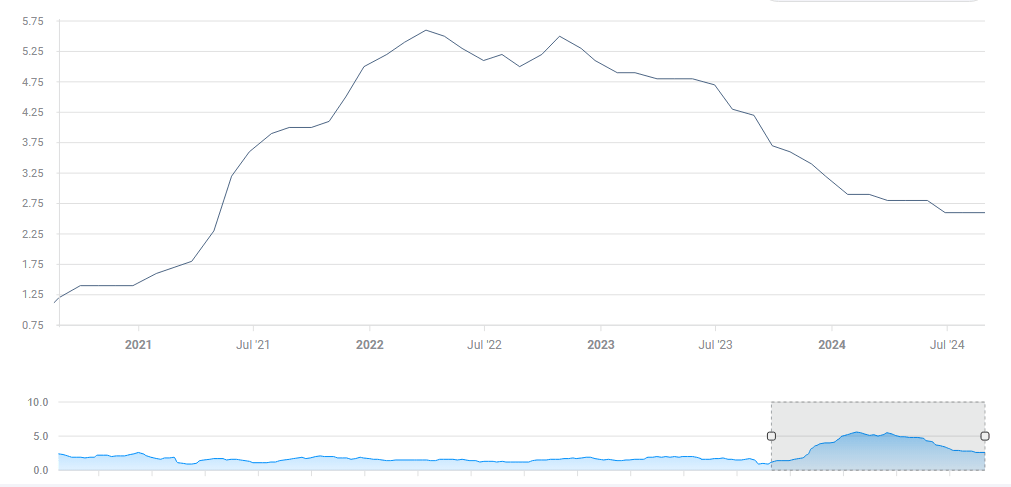
US core PCE. Source: FXStreet
The economic calendar points to a minor rise to 2.7% in August, while core PCE MoM is projected to repeat the 0.2% increase reported in July.
Any 0.1% deviation may rock markets. Last month, core PCE YoY surprised to the downside with 2.6%. I think another downside surprise cannot be ruled out. That would boost stocks and Gold, while hurting the US Dollar.
An increase of core PCE YoY to 2.7% would weigh on equities and precious metals, giving the Greenback a small lift.
Premium
You have reached your limit of 3 free articles for this month.
Start your subscription and get access to all our original articles.
Author
Yohay Elam
FXStreet
Yohay is in Forex since 2008 when he founded Forex Crunch, a blog crafted in his free time that turned into a fully-fledged currency website later sold to Finixio.

















