Eurozone inflation preview: Small miss may trigger more ECB stimulus, accelerate EUR/USD correction
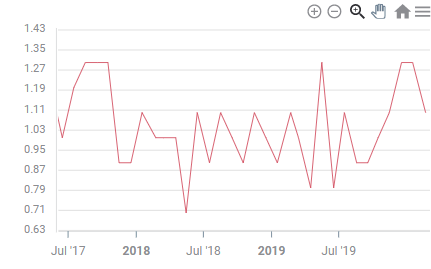
- Core eurozone inflation is set to advance from 1.1% to 1.2%.
- The ECB may enact stimulus in response to coronavirus, and inflation may have an impact.
- EUR/USD's rise may be dented by a miss on expectations.

Can anything compete with coronavirus? EUR/USD is moving on expectations for a response – or lack thereof – from the European Central Bank to the impact of the illness. The ECB has one mandate – price stability, and any change to inflation figures for February can also move the euro.
Luis de Guindos, the Frankfurt-based institution's Vice President, has said that the ECB is coordinating its response with other central banks. That is a hint that is ready to act. The Federal Reserve, the Bank of England, and the Bank of Japan have made more public pledges of that sort. Policymakers in the old continent have limited room to act and may consider the scale of their response while taking their mandate into account.
Headline Consumer Prices Index is projected to drop from 1.4% to 1.2% amid falling energy prices, and markets will likely see through that and eye Core CPI – which the central bank also monitors closely. Here, a small increase from 1.1% to 1.2% is on the cards. The ceiling in 2019 was 1.3%, which underlying inflation hit several times.
EUR/USD positioning and scenarios
Euro/dollar has been on the rise, taking advantage of the dollar's weakness. It is in the overbought territory in several timeframes and prone to a downside correction. And while the ECB has limited room to act, Europe's economic situation is worse than in America. Overall, there is room for a fall in the currency pair.
Here are three scenarios
1) As expected – If Core CPI comes out at 1.2%, EUR/USD has room to edge lower, as it would still leave the common currency exposed to a correction. However, the reaction may be limited as coronavirus headlines remain in the spotlight.
2) Below expectations – A disappointing level of 1.1% or lower could serve as the spark a more significant correction as it would allow the ECB to add more stimulus. The bank would be responding to economic data and not only fear.
3) Above expectations: If underlying inflation rises to 1.3% – the ceiling mentioned earlier – it could keep the bank on the sidelines as economic data would not warrant action. EUR/USD could extend its gains within overbought conditions.
Conclusion
While coronavirus news is hogging the headlines and moving the ECB – inflation still matters. EUR/USD may be vulnerable after rising rapidly.
Author

Yohay Elam
FXStreet
Yohay is in Forex since 2008 when he founded Forex Crunch, a blog crafted in his free time that turned into a fully-fledged currency website later sold to Finixio.