|

Britons tighten their belts
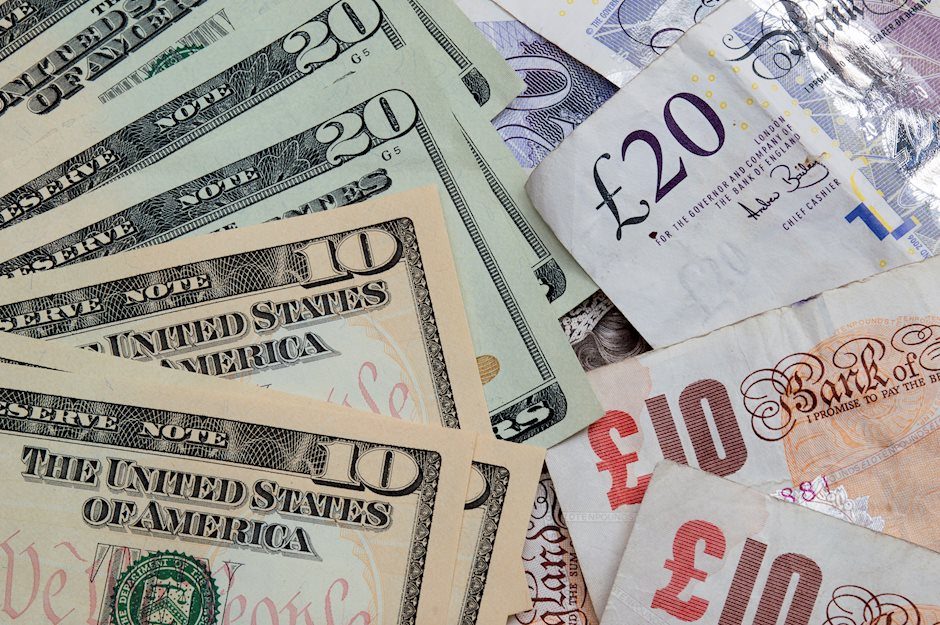
UK retail sales fell by 1% in December, excluding fuel by 1.1%. The data surprised analysts who had, on average, expected an increase of 0.5% last month. Sales were 5.8% lower than in the same month a year earlier, when they were 0.7% below December 2020.

The retail sales index has been on a downward trend since April 2021 and, in that time, has returned to pre-pandemic levels, breaking a natural multi-year upward trend with such a sharp decline that Britain did not even see during the Great Recession. Other reports from the Office for National Statistics also point to a steady decline in industrial production, although it is smoother now than in some episodes from 2007 to 2011.

Surprisingly, the labour market remains strong. A similar picture can be seen in the USA, for which we received news earlier this week. In both countries, central bankers are signalling further rate hikes and preparing for a "mild recession".

This similarity in macroeconomic conditions makes the GBPUSD dynamics a tug-of-war. However, there are more downside risks in the pair now, given how it has stalled on the approach to the highs of December and the pressure on the stock indices with which the pound has a direct correlation. GBPUSD may correct into the 1.20-1.21 range before the end of the month. This would return the pound to a test of its 200-day average, where it could either get support from long-term buyers or return to the downtrend.

Author

Alexander Kuptsikevich

Alexander Kuptsikevich, a senior market analyst at FxPro, has been with the company since its foundation. From time to time, he gives commentaries on radio and television. He publishes in major economic and socio-political media.


More from Alexander Kuptsikevich
Share:

Markets move fast. We move first.

Orange Juice Newsletter brings you expert driven insights - not headlines. Every day on your inbox.

By subscribing you agree to our Terms and conditions.

Editor's Picks

EUR/USD falls to near 1.1700 due to safe-haven demand

EUR/USD extends its losses, trading around 1.1710 during the Asian hours on Monday. The pair loses ground as the US Dollar strengthens on safe-haven demand, driven by a renewed rise in geopolitical risks following the United States’ capture of Venezuelan President Nicolas Maduro.

GBP/USD trades with modest losses below mid-1.3400s as geopolitical tensions lift USD

The GBP/USD pair opens with a modest bearish gap at the start of a new week and trades just below mid-1.3400s during the Asian session, down 0.10% for the day. Spot prices, however, lack follow-through selling and manage to hold above last week's swing low amid mixed fundamental cues.

Gold jumps over 1.5% to near $4,400 on US-Venezuela tensions

Gold holds sizeable gains near $4,400 in the Asian trading hours on Monday. The traditional safe-haven metal capitalizes on escalating geopolitical risks after the United States' capture of Venezuelan President Nicolas Maduro. Traders will closely monitor developments surrounding the US seizure of Maduro and await the US ISM Manufacturing Purchasing Managers' Index data later on Monday. 

Powerful guide to ISM, building permits, NFP and Silver technicals

Next week is important for U.S. markets. We get key economic data that can move stocks, bonds, and the dollar. The main reports are ISM Manufacturing, ISM Services, Building Permits, and Non-Farm Payrolls. Traders will watch these closely.

Economic outlook 2026-2027 in advanced countries: Solidity test

After a year marked by global economic resilience and ending on a note of optimism, 2026 looks promising and could be a year of solid economic performance. In our baseline scenario, we expect most of the supportive factors at work in 2025 to continue to play a role in 2026.

Crypto market outlook for 2026

Year 2025 was volatile, as crypto often is.  Among positive catalysts were favourable regulatory changes in the U.S., rise of Digital Asset Treasuries (DAT), adoption of AI and tokenization of Real-World-Assets (RWA).














