Australian Dollar following RBA hike

AUD/USD approaching resistance
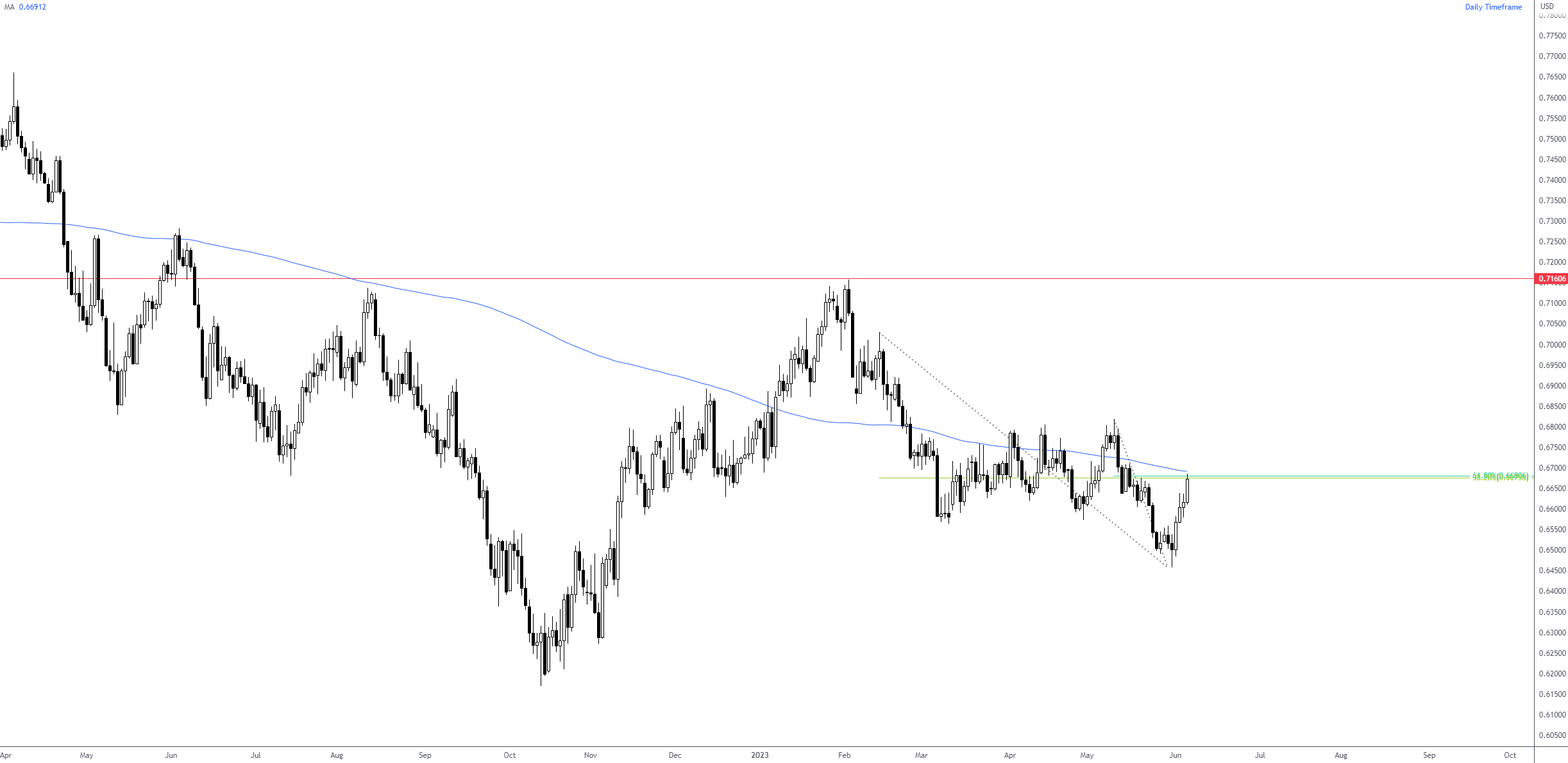
The Australian dollar is a clear outperformer in the G10 space today, underpinned by the Reserve Bank of Australia (RBA) defying market consensus (once again) and pulling the Official Cash Rate 25 basis points higher to 4.1%.
The AUD/USD, however, is nearing the underside of its 200-day simple moving average (currently fluctuating around $0.6691). Fibonacci enthusiasts may also acknowledge that the dynamic value, which may serve well as resistance if challenged, is accompanied by a moderate Fibonacci cluster around $0.6681 (38.2% and 61.8% Fibonacci retracement ratios). Therefore, technically, this could prove a problematic headwind.
AUD/NZD showing room to extend gains
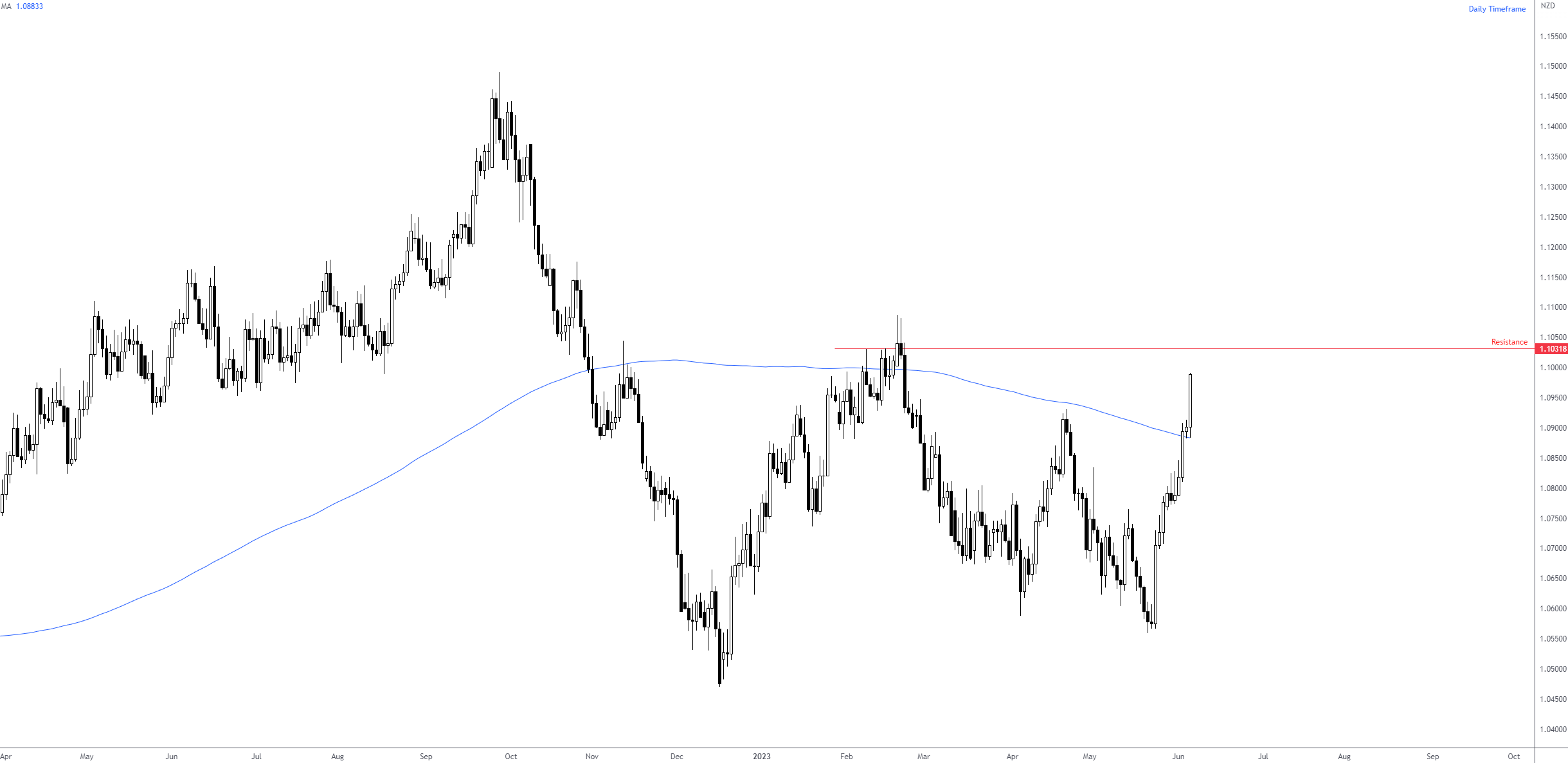
The AUD/NZD is +0.7% in current trading, on track to print a fifth consecutive daily session in positive territory, which pulled the currency pair comfortably north of the 200-day simple moving average (currently fluctuating at NZ$1.0883). Many technicians will recognise this as a potential trend reversal to the upside. Unlike the RBA, the Reserve Bank of New Zealand (RBNZ) indicated a pause at their meeting at the end of May after raising the Official Cash Rate another 25 basis points to 5.5%, with RBNZ Governor Orr commenting that ‘the committee was confident in the level of restrictiveness of interest rates at the present point’. He also added that aggregate demand was easing. Consequently, the policy divergence between the RBA and the RBNZ presents a potential tailwind for AUD/NZD, emphasised further by the RBA hiking earlier today.
Unlike the AUD/USD, the AUD/NZD also exhibits scope to explore higher territory after retesting the upper side of the 200-day simple moving average, targeting resistance at NZ$1.1032. Therefore, the noted currency pair may be a market encouraging bullish setups on the lower timeframes, targeting the aforementioned daily resistance.
Author
Aaron Hill
FP Markets
After completing his Bachelor’s degree in English and Creative Writing in the UK, and subsequently spending a handful of years teaching English as a foreign language teacher around Asia, Aaron was introduced to financial trading,

















