|

AUD/JPY Downside Risks Remain Whilst Trade Tensions Continue To Escalate

Escalated trade tensions saw AUD/JPY hit its lowest level since January’s flash crash, yet dominant forces likely point lower still, without a trade deal in sight.
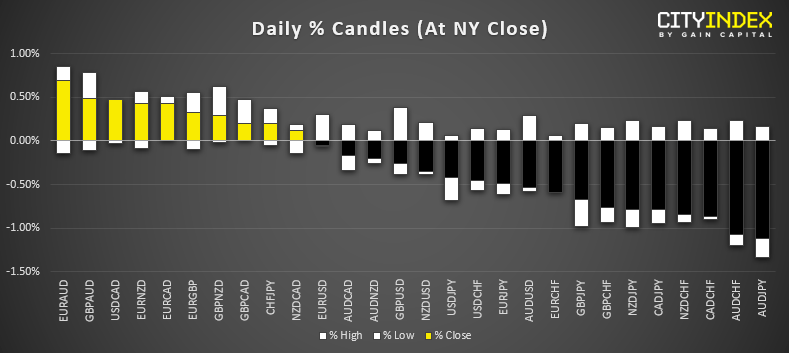
China’s retaliation kept sentiment on the back ropes, seeing USD/JPY hit a 3-month low and FX traders flock back to the yen. AUD/JPY was the largest FX mover of the day, plummeting -1.3% at the low and closing -1.1% on its third most bearish session this year. Whilst NZD also feels the weight from trade wars, the AUD is taking the bigger hit as Australia is the bigger trade partner with China. Furthermore, continued weak domestic data (in particular the housing market) and the growing expectation for RBA to cut rates adds to a short-bias, whereas RBNZ cut rates last week yet provided no further easing bias, which has made AUD the better short of the two. Case in point, AUD/NZD has shed -1.5% since last week’s high.
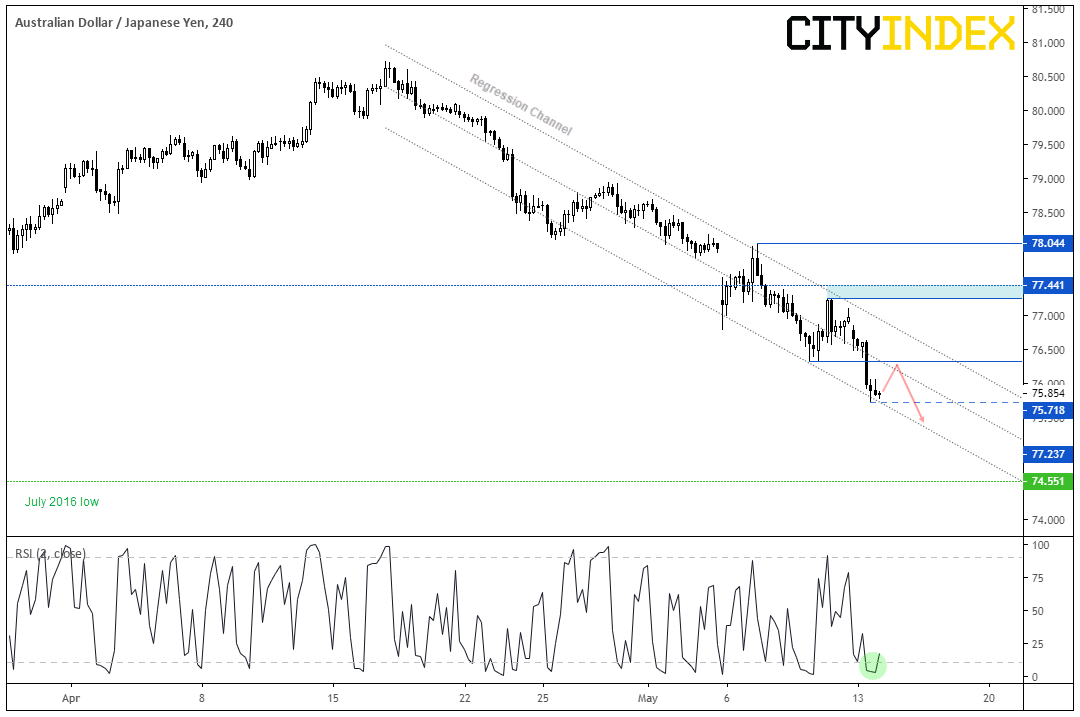
We can see on the four-hour chart that AUD/JPY continues to trend lower, although we’re seeing signs of consolidation at the lows. Given the negative sentiment and strong bearish trend, we’d expect bears to sell into rallies around key resistance levels. That said, RSI(2) is oversold and we’ve tested the lower band of the regression channel, so a rebound form current levels would be nice before looking for areas of weakness.

As we saw large moves overnight and the calendar is quiet today, it could allow for prices to pause for breath. Perhaps China’s plunge protection team can give markets a little boost and help provide a timely retracement. Yet with US and China remining in tit for tat trade war, we doubt it will turn the tide, so downside risks remain whilst trade tensions continue to escalate.

Author

Matt Simpson, CFTe, MSTA

Matt Simpson is a certified technical analyst who combines charts and fundamentals to generate trading themes.


More from Matt Simpson, CFTe, MSTA
Share:

Editor's Picks

EUR/USD holds ground near 1.1550 ahead of US Inflation data

EUR/USD is holding ground at around 1.1550 in the European session on Wednesday. The pair takes advantage of the profit-taking pullback in the US Dollar as traders reposition ahead of the critical US CPI inflation data. However, any upside attempts could be limited amid renewed US-Iran tensions.

GBP/USD keeps range near 1.3400, with eyes on US CPI

GBP/USD clings to minor recovery gains near 1.3400 in Wednesday's European trading, though it remains in a familiar range heading into the US CPI event risk. Traders keep an eye on developments around the Middle East crisis, which could ramp up volatility in the major.

Gold languishes near March low, below $4,200 as traders await US CPI report

Gold maintains its heavily offered tone through the first half of the European session and currently trades near its lowest level since March 23, around the $4,180-$4,175 region. Renewed hostilities between the US and Iran fuel inflationary concerns and bolster bets for more hawkish central banks.

Cardano's downtrend deepens despite on-chain bottoming signals

Cardano edges lower to $0.1600 signaling a potential extension of the 30% loss from last week. The altcoin remains under intense selling pressure, weighing on its retail support. Still, a spike in dormant supply re-entering circulation signals that the selling pressure has run its course, a pattern that often precedes a rebound.

US CPI data set to show inflation at three-year high in May, backing Fed hawkish tilt

The US Bureau of Labor Statistics will publish the May Consumer Price Index (CPI) data on Wednesday. The report is expected to show another step up in consumer inflation, driven by the persistently high Oil prices due to the ongoing crisis in the Middle East.

The US economy defies the rules: 100 days into the Oil shock and the recession signal is still missing

More than three months after the start of the Iran war and the resulting disruption to global energy markets, the US economy continues to display remarkable resilience. The conflict has triggered a sharp rise in Oil prices, reignited inflationary pressures and fueled widespread concerns about a potential economic slowdown.