USD/PLN continues to shoot higher on surprisingly deep NBP rate cut, breaching 4.3200
- Polish central bank cuts interest rates deeper than expected, draws criticisms.
- Politics appear to be influencing central bank action rather than the economy.
- Polish inflation is still in double-digit territory despite recent declines.

The USD/PLN is pushing higher following an interest rate cut from the National Bank of Poland (NBP), sending the Polish Zloty (PLN) into a tailspin. The NBP cut their reference rate from 6.75% to 6% on Wednesday, and the move is sending the PLN to five-month lows, erasing much of 2023’s gains.
Polish annual inflation remains slightly above 10%, far below the peak of 18% from earlier this year but still well above the NBP’s target of 2.5%. The Polish economy is also showing signs of a deepening slowdown, and too much movement from the NBP could exacerbate problems for the Polish economy.
Polish central bank accused of political motivations
NBP Governor Adam Glapinski, an open supporter of the governing Law and Justice conservative party, has been criticized for the poorly timed rate cut. Marek Tatala, vice president of the Economic Freedom Foundation, publicly stated that the central bank has “joined the election campaign” using his position at the NBP to try and stoke popularity for the ruling party by easing borrowing costs.
Reductions to the inflation rate will help to make lending rates cheaper in the short term, but Polish politician Ryszard Petru noted in a statement that cutting rates will be “pro-inflationary”, which could make life harder for the Polish population moving forward.
USD/PLN technical outlook
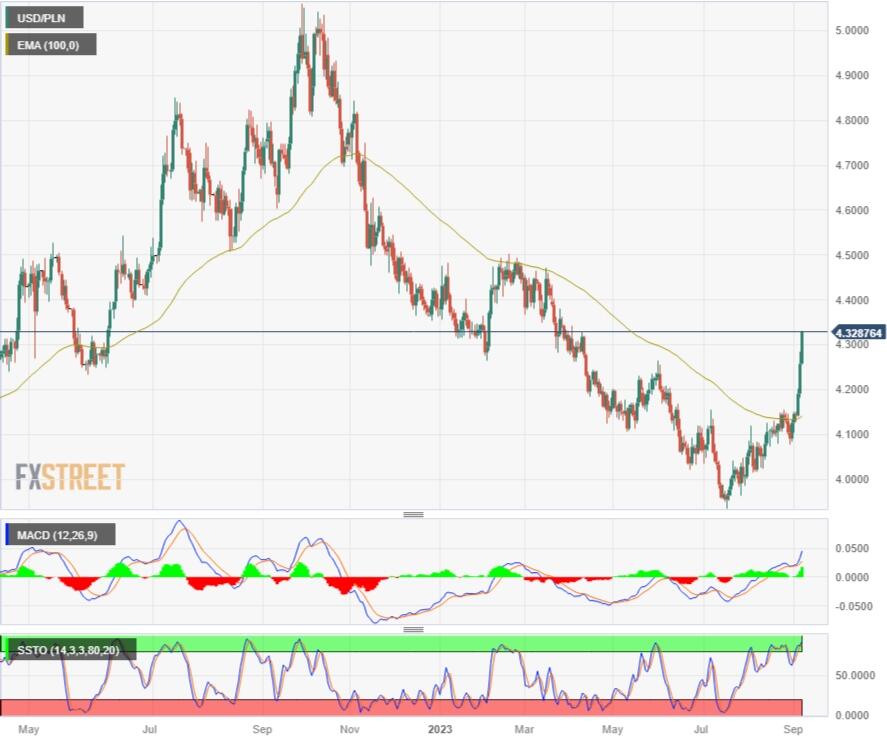
The USD/PLN has broken well above the 100-day EMA on the daily candles and appears set to continue breezing past the 4.3000 psychological level as the PLN eats away at the progress made through the year. The USD peaked against the Zloty in late 2022 near 5.000, reaching a floor of 3.9354 in July.
Technical resistance currently rests at the upper bound of April’s consolidation zone, just below 4.5000, and any bearish resurgence will face dynamic support from the 100-day EMA that is beginning to rotate bullish from 1.4500.
USD/PLN Daily chart
Author

FXStreet Team
FXStreet
Composed of a group of economic journalists and FX experts, the FXStreet content team produces and oversees all content published on FXStreet. It provides a purely journalistic approach to the Forex market.