USD/CNH rises to near 7.3500 due to a hawkish shift in Fed’s policy outlook
- The USD/CNH pair strengthens as the US Dollar gains support from the Federal Reserve's hawkish policy shift.
- The latest ISM services report indicated higher activity and rising prices, fueling concerns about persistent inflation in the United States.
- PBoC official Peng Lifeng announced that the central bank will support banks in expanding loans under the trade-in initiative.
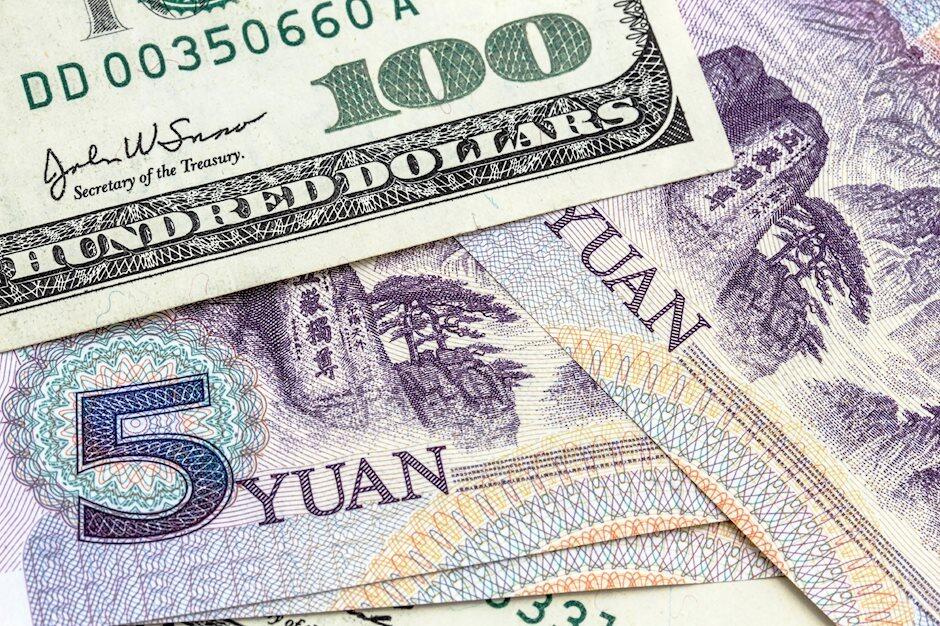
USD/CNH, the offshore Yuan, retraces its recent losses from the previous two days, trading around 7.3490 during the early European hours on Wednesday. The People’s Bank of China (PBoC) set the USD/CNY central rate for the trading session ahead at 7.1887 as compared to the previous day's fix of 7.1879 and 7.3435 Reuters estimates.
The upside of the USD/CNH pair could be attributed to the strength of the US Dollar (USD), driven by a hawkish shift in investor sentiment regarding the Federal Reserve's (Fed) interest rate outlook, following robust US economic data.
The latest ISM services report suggested increased activity and rising prices in the United States (US), intensifying concerns about persistent inflation. Traders are now focusing on upcoming US jobs data, including the Nonfarm Payroll (NFP) report, as well as the latest FOMC Minutes, for further policy insights.
Meanwhile, the Chinese Yuan faced downward pressure after President-elect Donald Trump dismissed reports claiming that his aides were considering a targeted strategy aimed at sectors vital to US national and economic security.
The People’s Bank of China (PBoC) is collaborating with the State Planner to bolster the country's economy. PBoC official Peng Lifeng announced that the central bank will assist banks in expanding loans under the trade-in initiative.
Commerzbank’s FX analyst, Volkmar Baur, noted in a report that the interest rate market remains unconvinced that China’s economic situation will improve in the near future. Over recent weeks, the yield on 10-year government bonds has declined further to 1.58%, while the yield on 2-year government bonds briefly dipped below 1% on Monday. This suggests that the market anticipates additional significant easing measures from the PBoC and the continuation of low interest rates in China.
Traders shift their focus to China’s upcoming economic data releases later this week, including inflation figures, which are anticipated to offer greater insight into the health of the world’s second-largest economy.
Central banks FAQs
Central Banks have a key mandate which is making sure that there is price stability in a country or region. Economies are constantly facing inflation or deflation when prices for certain goods and services are fluctuating. Constant rising prices for the same goods means inflation, constant lowered prices for the same goods means deflation. It is the task of the central bank to keep the demand in line by tweaking its policy rate. For the biggest central banks like the US Federal Reserve (Fed), the European Central Bank (ECB) or the Bank of England (BoE), the mandate is to keep inflation close to 2%.
A central bank has one important tool at its disposal to get inflation higher or lower, and that is by tweaking its benchmark policy rate, commonly known as interest rate. On pre-communicated moments, the central bank will issue a statement with its policy rate and provide additional reasoning on why it is either remaining or changing (cutting or hiking) it. Local banks will adjust their savings and lending rates accordingly, which in turn will make it either harder or easier for people to earn on their savings or for companies to take out loans and make investments in their businesses. When the central bank hikes interest rates substantially, this is called monetary tightening. When it is cutting its benchmark rate, it is called monetary easing.
A central bank is often politically independent. Members of the central bank policy board are passing through a series of panels and hearings before being appointed to a policy board seat. Each member in that board often has a certain conviction on how the central bank should control inflation and the subsequent monetary policy. Members that want a very loose monetary policy, with low rates and cheap lending, to boost the economy substantially while being content to see inflation slightly above 2%, are called ‘doves’. Members that rather want to see higher rates to reward savings and want to keep a lit on inflation at all time are called ‘hawks’ and will not rest until inflation is at or just below 2%.
Normally, there is a chairman or president who leads each meeting, needs to create a consensus between the hawks or doves and has his or her final say when it would come down to a vote split to avoid a 50-50 tie on whether the current policy should be adjusted. The chairman will deliver speeches which often can be followed live, where the current monetary stance and outlook is being communicated. A central bank will try to push forward its monetary policy without triggering violent swings in rates, equities, or its currency. All members of the central bank will channel their stance toward the markets in advance of a policy meeting event. A few days before a policy meeting takes place until the new policy has been communicated, members are forbidden to talk publicly. This is called the blackout period.
Author

Akhtar Faruqui
FXStreet
Akhtar Faruqui is a Forex Analyst based in New Delhi, India. With a keen eye for market trends and a passion for dissecting complex financial dynamics, he is dedicated to delivering accurate and insightful Forex news and analysis.

















