|

Pound Sterling Price News and Forecast: GBP/USD scales higher amid some repositioning

GBP/USD moves away from multi-month low, retakes 1.2900 ahead of BoE/Fed

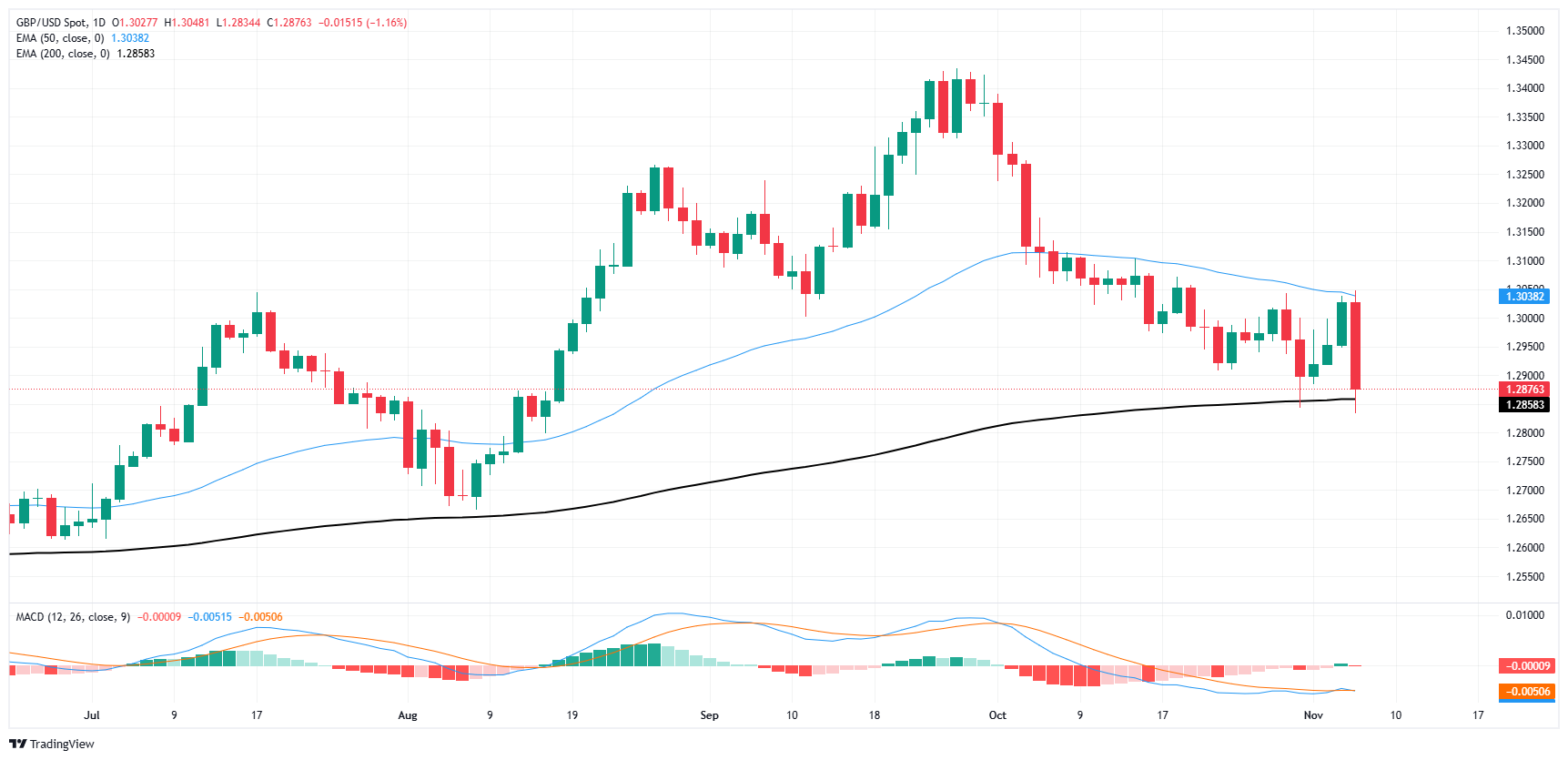
The GBP/USD pair attracts some buyers during the Asian session on Thursday and moves away from its lowest level since mid-August, around the 1.2835-1.2830 region touched the previous day. Spot prices now look to build on the momentum beyond the 1.2900 mark as the market attention shifts to key central bank event risks. 

The Bank of England (BoE) will announce its policy decision later today and is widely expected to lower interest rates for the second time this year on the back of slowing inflation. That said, expectations that UK Finance Minister Rachel Reeves' first budget would boost inflation, and cause the BoE to cut interest rates more slowly, offering some support to the British Pound (GBP). This, along with a modest US Dollar (USD) downtick, turn out to be key factors pushing the GBP/USD pair higher. Read more...

GBP/USD backslides in broad-market Greenback rally

GBP/USD tumbled back below the 1.2900 handle on Wednesday as markets splurged on Greenback bids following the one-sided outcome of the US presidential election. The Bank of England (BoE) and the Federal Reserve (Fed) are both due to deliver matching quarter-point rate cuts on Thursday.

The US presidential election still isn’t over, and some key battlegrounds will take some time before a final call is made. Still, markets are confident that the outcome has been decided, with Republican candidate and former President Donald Trump set to win 276 electoral votes. With the Republicans also set to win back both the US Senate and Congress, investors are anticipating a pro-growth environment with more deregulation as well as additional or extended business tax cuts. Read more...
Author

FXStreet Team

Composed of a group of economic journalists and FX experts, the FXStreet content team produces and oversees all content published on FXStreet. It provides a purely journalistic approach to the Forex market.


More from FXStreet Team
Share:

Editor's Picks

AUD/USD falls to near 0.7100 after slipping below 50-day EMA

AUD/USD depreciates after registering minor gains in the previous day, trading around 0.7120 during the Asian hours. The technical analysis of the daily chart shows the pair consolidating sideways within a rectangle pattern, as neither bulls nor bears gain control. The AUD/USD pair is holding a slight bearish tone however as it sits beneath both the nine-day and 50-day EMAs.

160.00: USD/JPY back near intervention territory after upbeat US jobs report

US Nonfarm Payrolls beat expectations by a wide margin in May, with 172K jobs added. The US Dollar rebounds after the release, helping USD/JPY recover from its intraday lows. Warnings from Japanese authorities continue to limit upside potential near the 160.00 threshold.

Gold remains offered below $4,500 following US Payrolls

Gold prices trade with a bearish bias and still remain below the key $4,500 mark per troy ounce at the end of the week. The slighlty softer tone in the US Dollar alongside mixed US Treasury yields across the curve also keep the yellow metal’s downside somewhat contained.


Cardano hits five-year low even as Hoskinson clarifies "break" isn't an exit

Cardano (ADA) price is down 10% at press time on Friday, extending losses over 30% so far this week amid Charles Hoskinson's clarification that "break" isn't an exit.

Week ahead – Fed countdown begins amid US inflation data and geopolitical risks

Fed Chair Warsh’s first meeting approaches as key US inflation data could reshape expectations. Oil prices remain elevated as US-Iran talks continue; tariffs also return to the spotlight. ECB is expected to hike; will it be a one-off move or is July live?

The US economy defies the rules: 100 days into the Oil shock and the recession signal is still missing

More than three months after the start of the Iran war and the resulting disruption to global energy markets, the US economy continues to display remarkable resilience. The conflict has triggered a sharp rise in Oil prices, reignited inflationary pressures and fueled widespread concerns about a potential economic slowdown.