Gold price gains positive traction as USD continues losing ground on Fed rate cut bets
- Gold price struggles to gain any meaningful traction, though the downside seems cushioned.
- The Fed projected three rate cuts in 2024 continue to undermine the USD and lend support.
- Tuesday’s US macro data to provide some impetus ahead of the US PCE Price Index on Friday.
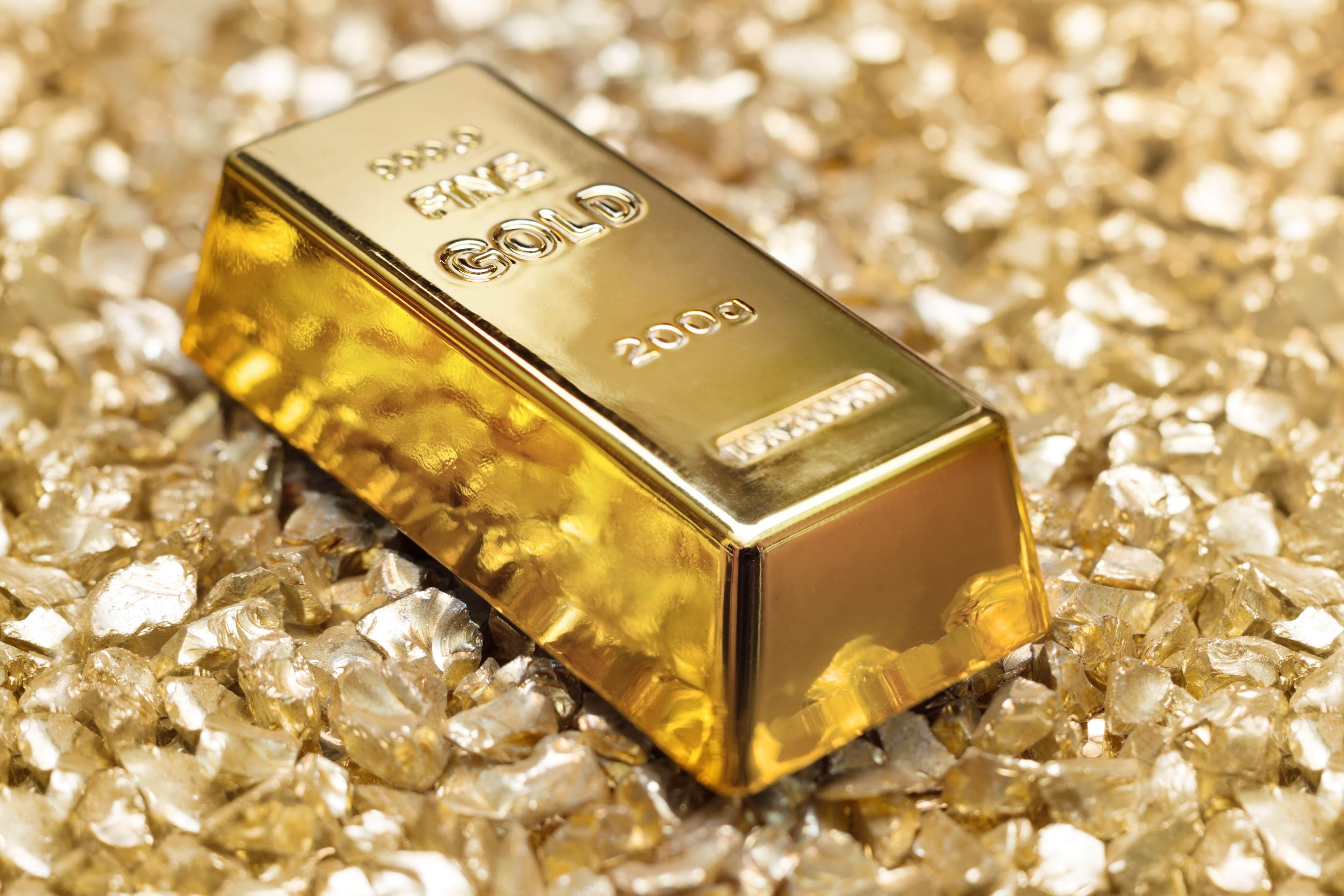
Gold price (XAU/USD) attracts some buyers for the second straight day on Tuesday and builds on its steady ascent through the first half of the European session. Growing acceptance that the Federal Reserve (Fed) will begin its rate-cutting cycle in June keeps the US Treasury bond yields depressed and drags the US Dollar (USD) away from a multi-week high touched last Friday. This, along with persistent geopolitical risks stemming from the protracted Russia-Ukraine war and conflicts in the Middle East, turn out to be key factors benefitting the safe-haven precious metal.
Traders, however, might refrain from placing aggressive directional bets and prefer to wait for more cues about the Fed's rate-cut path, which, in turn, will drive the non-yielding Gold price in the near term. Hence, the market focus will remain glued to the release of the US Personal Consumption and Expenditure (PCE) Price Index data – the Fed's preferred inflation gauge on Friday. In the meantime, Tuesday's US economic docket – featuring Durable Goods Orders, the Conference Board's Consumer Confidence Index and the Richmond Manufacturing Index – might provide some impetus.
Daily Digest Market Movers: Gold price bulls might wait for US PCE Price Index on Friday before placing fresh bets
- Traders are pricing in a 70% probability that the Federal Reserve will start cutting rates in June, which keeps the US Dollar bulls on the defensive and acts as a tailwind for the non-yielding Gold price.
- Several Fed officials, however, expressed concern about still-sticky inflation and stronger-than-expected US macro data, helping limit USD losses and capping the precious metal's upside.
- Atlanta Fed President Raphael Bostic said on Monday that he expects the US economy and inflation to slow gradually and anticipates the US central bank to lower the policy rate only once this year.
- Chicago Fed President Austan Goolsbee noted that three cuts in 2024 were in line with his thinking, though the US central bank needs to see progress in inflation and strike a balance with its dual mandate.
- Separately, Fed Governor Lisa Cook said that inflation has fallen considerably, though the path of disinflation, as expected, has been bumpy and uneven, while the labor market has remained strong.
- Traders look to Tuesday's US economic docket – featuring Durable Goods Orders, Conference Board's Consumer Confidence Index and the Richmond Manufacturing Index – for some impetus.
- The market focus, however, will remain glued to the US Personal Consumption Expenditures (PCE) Price Index data, or the Fed's preferred inflation gauge scheduled for release on Friday.
- In the meantime, geopolitical risks stemming from the protracted Russia-Ukraine war and concerns about whether the UN resolution will lead to an actual ceasefire in the Gaza Strip could underpin the XAU/USD.
Technical Analysis: Gold price remains on track to challenge all-time high near the $2,223 region touched last week
From a technical perspective, weakness below the overnight swing low, around the $2,164-2,163 region, is likely to find some support near the $2,156-2,155 area ahead of the $2,147-2,146 horizontal zone. A convincing break below the latter could drag the Gold price further towards the next relevant support near the $2,128-2,127 zone en route to the $2,100 round figure.
Meanwhile, the Relative Strength Index (RSI) on the daily chart has eased from the overbought territory and favours bullish traders. That said, the $2,200 psychological mark could act as an immediate strong barrier hurdle, above which a fresh bout of technical buying should lift the Gold price towards the record high, around the $2,223 zone touched last Thursday.
Gold FAQs
Gold has played a key role in human’s history as it has been widely used as a store of value and medium of exchange. Currently, apart from its shine and usage for jewelry, the precious metal is widely seen as a safe-haven asset, meaning that it is considered a good investment during turbulent times. Gold is also widely seen as a hedge against inflation and against depreciating currencies as it doesn’t rely on any specific issuer or government.
Central banks are the biggest Gold holders. In their aim to support their currencies in turbulent times, central banks tend to diversify their reserves and buy Gold to improve the perceived strength of the economy and the currency. High Gold reserves can be a source of trust for a country’s solvency. Central banks added 1,136 tonnes of Gold worth around $70 billion to their reserves in 2022, according to data from the World Gold Council. This is the highest yearly purchase since records began. Central banks from emerging economies such as China, India and Turkey are quickly increasing their Gold reserves.
Gold has an inverse correlation with the US Dollar and US Treasuries, which are both major reserve and safe-haven assets. When the Dollar depreciates, Gold tends to rise, enabling investors and central banks to diversify their assets in turbulent times. Gold is also inversely correlated with risk assets. A rally in the stock market tends to weaken Gold price, while sell-offs in riskier markets tend to favor the precious metal.
The price can move due to a wide range of factors. Geopolitical instability or fears of a deep recession can quickly make Gold price escalate due to its safe-haven status. As a yield-less asset, Gold tends to rise with lower interest rates, while higher cost of money usually weighs down on the yellow metal. Still, most moves depend on how the US Dollar (USD) behaves as the asset is priced in dollars (XAU/USD). A strong Dollar tends to keep the price of Gold controlled, whereas a weaker Dollar is likely to push Gold prices up.
Author

Haresh Menghani
FXStreet
Haresh Menghani is a detail-oriented professional with 10+ years of extensive experience in analysing the global financial markets.