Gold Price Analysis: XAU/USD slips beneath $1,900 on US dollar rebound
- Gold fell back from the highest level since early January, pounded in London.
- 10-year US Treasury bond yield remains elevated following 3.7% rally on Tuesday.
- Bears are taking on critical 15-min support but bulls are committed.
- Gold Weekly Forecast: XAU/USD bulls not yet ready to give up on additional gains

Update: Gold (XAU/USD) remains on the back foot for the second consecutive day despite a recent bounce-off intraday low, 0.17% on a day around $1,897 ahead of Wednesday’s European session. The yellow metal benefited from the US dollar pullback earlier in Asia before stepping back $1,902.
The gold sellers cheer US dollar rebound, backed by downbeat Treasury yields, amid a sluggish trading session. That said, the US dollar index (DXY) regains the upside momentum, triggered late Tuesday, as the US 10-year Treasury yield struggles around 1.61% by the press time.
Upbeat headlines suggesting the US-China trade deal and covid support from global institutions like the International Monetary Fund (IMF) and the World Health Organization (WHO) seem to cut the safe-haven demand for gold.
Technically, gold sellers attack 50% Fibonacci retracement of the weekly upswing, around $1,899, ahead of the key support comprising late January tops near $1,875.
Previous updates...
Gold (XAU/USD) remains subdued at around $1,900 during early Wednesday. The yellow metal dropped the most in three weeks the previous day, before bouncing off 50% Fibonacci retracement of weekly run-up.
Although firmer Treasury yields test the gold buyers, strong technical support and a lack of market moves seem to challenge the sellers despite US dollar weakness. That said, the US dollar index (DXY) fails to extend Tuesday’s recovery moves, down 0.06% to 89.76 by the press time, as markets remain unconvinced over reflation/tapering woes amid economic optimism. Additionally, news suggesting further stimulus from the US, as well as a group led by the International Monetary Fund (IMF), the World Health Organization (WHO) and other institutions, also weigh on the US dollar and favor the gold prices.
Moving on, a light calendar and cautious sentiment ahead of Friday’s key US Nonfarm Payrolls can keep the metal chained but the Fedspeak may entertain short-term traders.
The gold price was in the hands of the bears in London following an initial spike to score fresh highs at $1,916.61 as per XAU/USD.
Gold ended the North American session down 0.35% resting around the 50% mean reversion mark of the latest daily bullish impulse at $1,899 and slightly higher than the lows for the day of $1,892.44.
At the start of Asia, the gold price is flat and better offered as it tries to cling to the $1,900 psychological level.
Gold was under pressure despite a softer DXY index that was only able to eke out a 0.1% gain by the end of Wall Street after data showed that while US manufacturing activity picked up last month but showed a soft employment segment of the ISM report.
''Employment dropped to 50.9 vs 55.1 previously – with some suggesting that enhanced unemployment benefits are weighing on labour supply,'' analysts at ANZ Bank explained.
Subsequently, DXY dropped to a low of 89.6630, having risen as high as 90.447 on Friday when a measure of US inflation closely watched by the Fed posted its biggest annual rise since 1992.
However, the overall strength in the US manufacturing data weighed on investor demand for gold when the bond market fell which pushed yields on 10-year Treasuries up 2bps to the highs of the day within the 3.7% rally, denting the demand for the non-interest bearing bullion.
Gold technical analysis
As per the Chart of the Week forecasted, the Gold (XAU/USD) price rallied to score a fresh daily high following a retest of the support structure. However, it failed to extend with momentum and has started to carve out a bearish closing candle for the day.
As identified in the prior New York session on Tuesday, the price of gold is being held up at a critical 15-min level of support.
Prior analysis
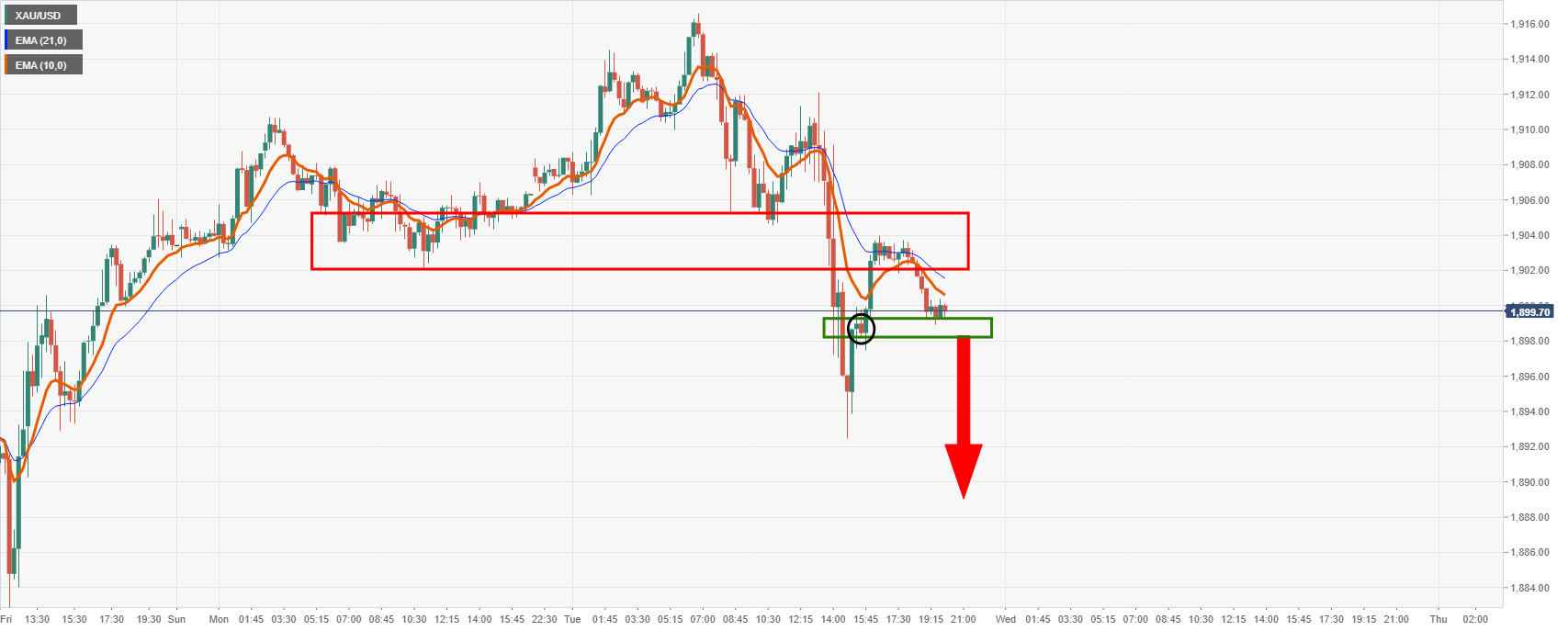
Live market analysis
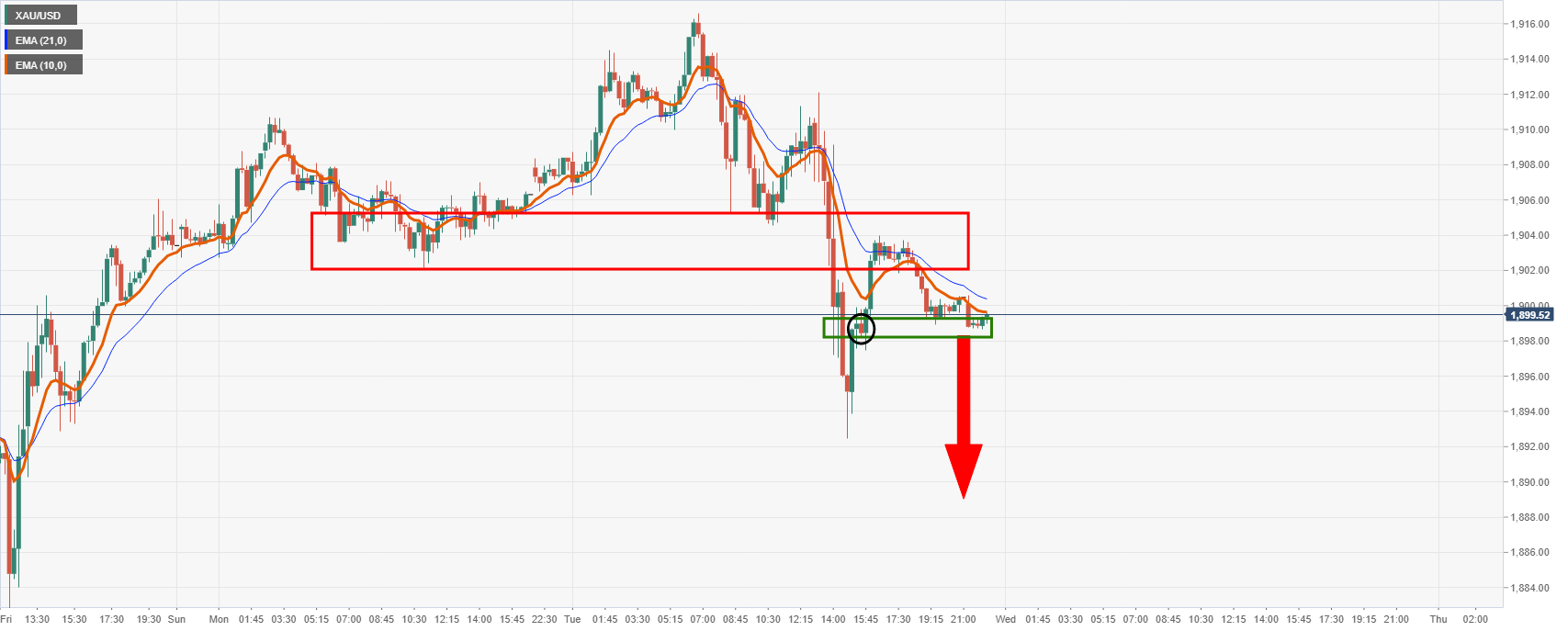
On a break of the support, there are prospects of a downside extension for the day ahead in accordance with the hourly price action:
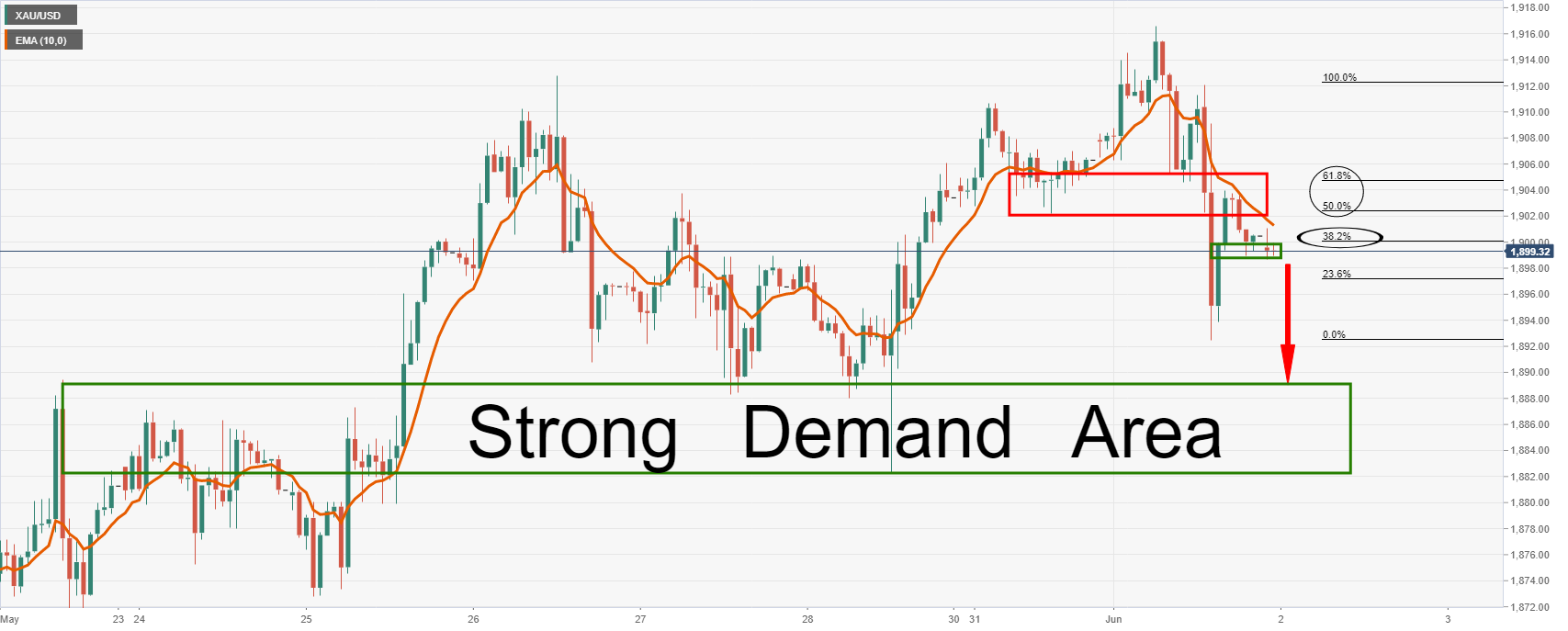
With that being said, the territory below the current support is treacherous for the bears given the level of historic demand over the past week.
Any fresh lows in the current bearish cycle could be short lived.
Author

Ross J Burland
FXStreet
Ross J Burland, born in England, UK, is a sportsman at heart. He played Rugby and Judo for his county, Kent and the South East of England Rugby team.