|

Gold Price Analysis: Bulls back in the game, but resistance is strong

  • Gold bulls are back in the driving seat but may face fierce opposition in coming days. 
  • Bears will be seeking for the daily resistance zone to hold and provide the next shorting opportunity. 

In the following series of analysis, we look at the price action of gold in a top-down illustration and derive where the next bearish opportunity could arise for swing traders. 

Starting with the monthly chart, we can work our way into the daily chart and sketch out the market structure and bias. 

Monthly chart
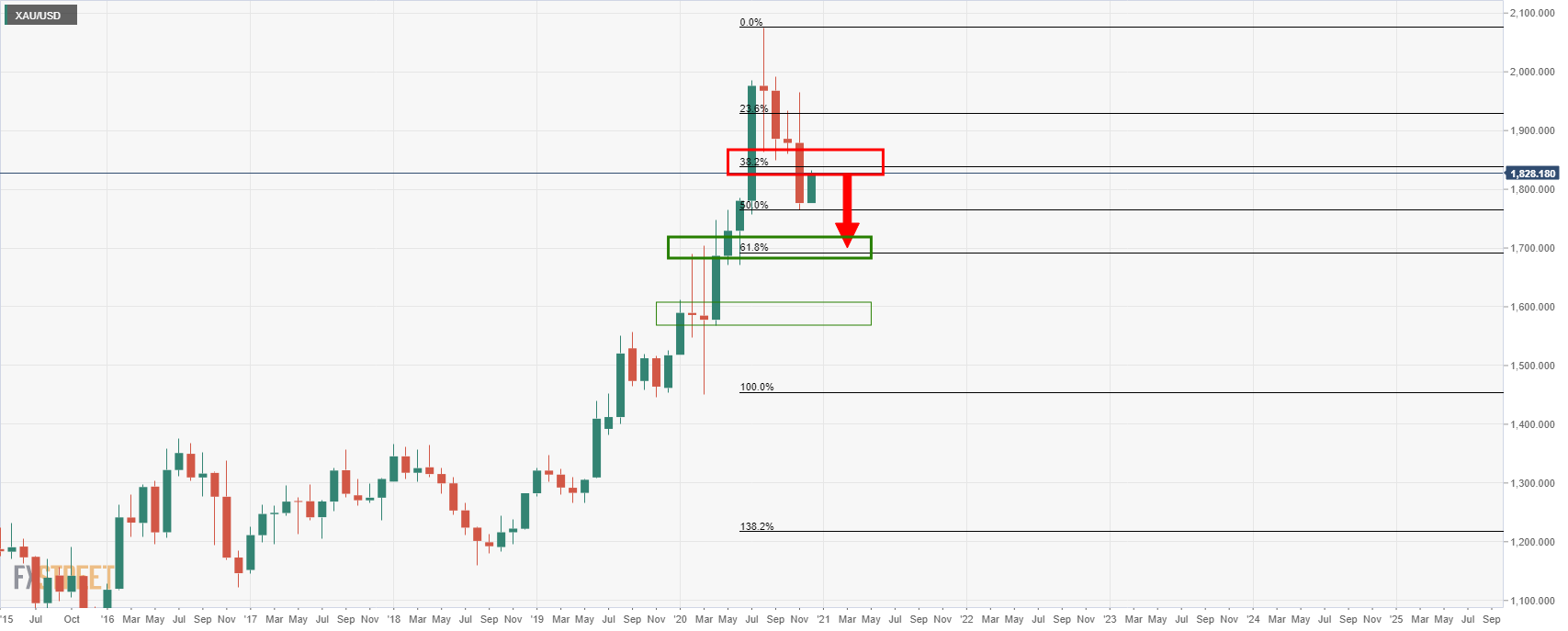
The monthly chart shows that there are prospects of a downside extension following a correction of the first significant bearish impulse. 

The 61.8% Fibonacci retracement of the bullish impulse aligns with monthly resistance and liquidity which offers a high probability target area for the bears to focus on next. 

Weekly chart
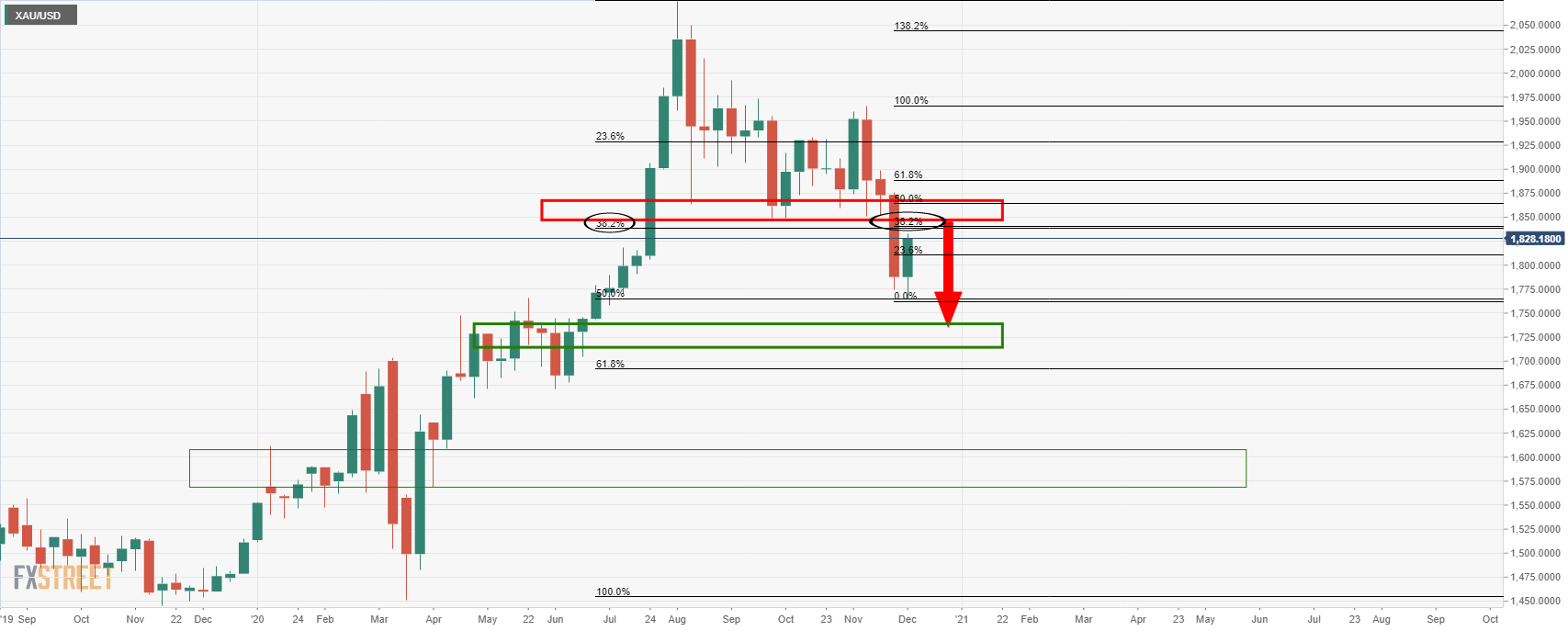
The weekly chart illustrates that the price has yet to complete a 38.2% Fibonacci retracement which meets prior support structure which would be expected to now act as a strong resistance zone. 

Bears would be prudent in waiting to see that this area does indeed deny the bull's from taking back control. 

Daily chart
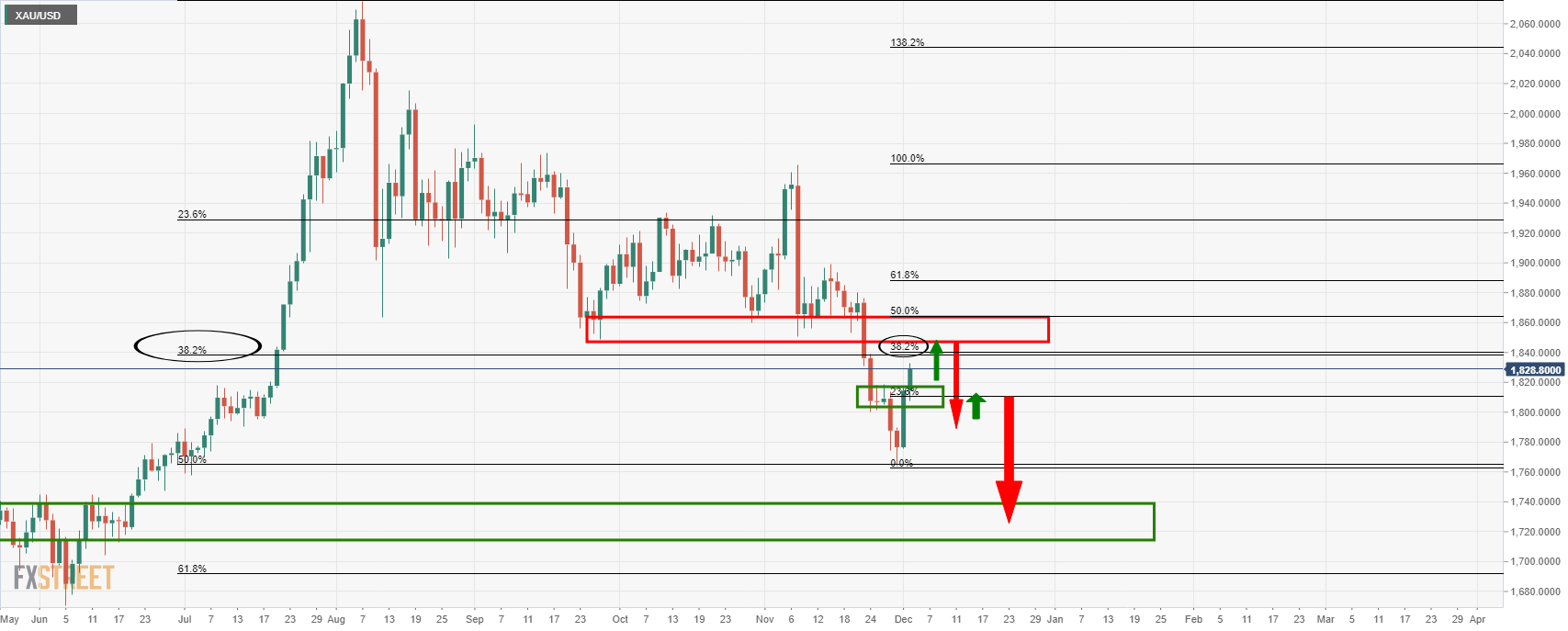
The daily chart shows that the price is now through old support which did not do the job of keeping back the bulls.

It is now likely to act as support again on a restest, but first, we are waiting for a daily close above the structure for initial confirmation.

From here, the bulls can enjoy some time in the driving seat, but the overhead resistance will be a huge hurdle. 

A rejection from the structure will likely put the bears back in the driving seat.

An opportunity could be derived from there to catch the next bearish impulse tat would target the said 61.8% Fibo' retracement of the monthly bullish impulse. 

Author

Ross J Burland

Ross J Burland, born in England, UK, is a sportsman at heart. He played Rugby and Judo for his county, Kent and the South East of England Rugby team.


More from Ross J Burland
Share:

Editor's Picks

AUD/USD consolidates above 0.7200 after hot Chinese CPI data

AUD/USD is extending its consolidative price action above 0.7200 during the Asian session on Wednesday, uninspired by hot Chinese CPI and PPI data. Meanwhile, rising RBA rate-hike bets act as a tailwind for the Aussie amid Yen-inspired US Dollar weakness. Traders await the release of US inflation figures later in the week for fresh impetus.

USD/JPY: Bearish impulse falters around 153.00

USD/JPY remains under pressure, down for the third consecutive day on Wednesday, and trading in levels last seen in mid-February near 153.00. Solid Japanese data earlier in the day seem to have reinforced expectations that the BoJ will continue normalising monetary policy, lending further support to the Yen.

Gold regains balance above $4,400

Gold rebounds on Wednesday, snapping a three-day losing streak and reclaiming the are beyond the key $4,400 mark per troy ounce. The precious metal’s bounce comes amid further selling pressure on the US Dollar and steady uncertainty on the geopolitical front.

XRP extends recovery as ETF inflows, futures interest stabilize
Ripple (XRP) ticks higher, trading at $1.42 on Wednesday while building on a recently confirmed support range between $1.30 and $1.35. The token also sits above major moving averages, reinforcing the bullish outlook. However, upside could remain capped unless the psychological barriers at $1.50 and $1.70 are cleared, paving the way for an extended recovery above $2.00.
Venezuela’s 65-billion-barrel Oil deal could reshape America’s inflation fight
The United States (US) has secured unprecedented access to part of Venezuela’s vast Oil reserves. The timing is particularly significant as the war with Iran is disrupting Middle Eastern supplies, keeping energy prices elevated and reviving concerns about inflation.
Venezuela’s 65-billion-barrel Oil deal could reshape America’s inflation fight
The United States (US) has secured unprecedented access to part of Venezuela’s vast Oil reserves. The timing is particularly significant as the war with Iran is disrupting Middle Eastern supplies, keeping energy prices elevated and reviving concerns about inflation.














