GBP/JPY fails to spark a rebound after a second possible BoJ ‘Yentervention’
- BoJ suspected of stepping into FX markets twice in one week.
- Market estimates suggest BoJ interventions have cost ¥9 trillion.
- Yen markets set for a quiet end to the week with Japan exchanges on holiday.

GBP/JPY has flattened back into recent lows after a second possible intervention on the Yen’s behalf from the Bank of Japan (BoJ). The pair is back down to the 192.00 handle after tumbling over 4% over two days from a 34-year peak of 200.60.
The back half of the first trading week of May sees Japanese markets largely dark for a slew of bank holidays, and markets are reeling after two possible BoJ “Yenterventions” this week, with market research suggesting the Japanese central bank spent around nine trillion Yen to support the battered Japanese Yen (JPY). BoJ market operations came in 5.5 trillion Yen above market expectations on May 1, with an additional 3.5 trillion Yen in excess BoJ financing operations expenses on May 2. No official statements are forthcoming from Japanese officials.
Pound Sterling (GBP) traders will be looking ahead to next week’s upcoming Bank of England (BoE) rate call, slated for Thursday. UK quarterly Gross Domestic Product (GDP) is also due next Friday, and there is little data of note on the Japanese economic calendar.
GBP/JPY technical outlook
The Guppy has been hammered by two possible BoJ interventions, dragging the pair from a three-decade-plus high of 200.60. The pair has tumbled back into a near-term supply zone around the 192.00 handle, with an immediate price floor baked in near 191.00.
Despite potential central bank operations, the GBP/JPY remains firmly in bullish territory in the medium-term, with the pair continuing to trade well above the 200-day Exponential Moving Average (EMA) at 185.58. The pair is still up 6.86% in 2024.
GBP/JPY hourly chart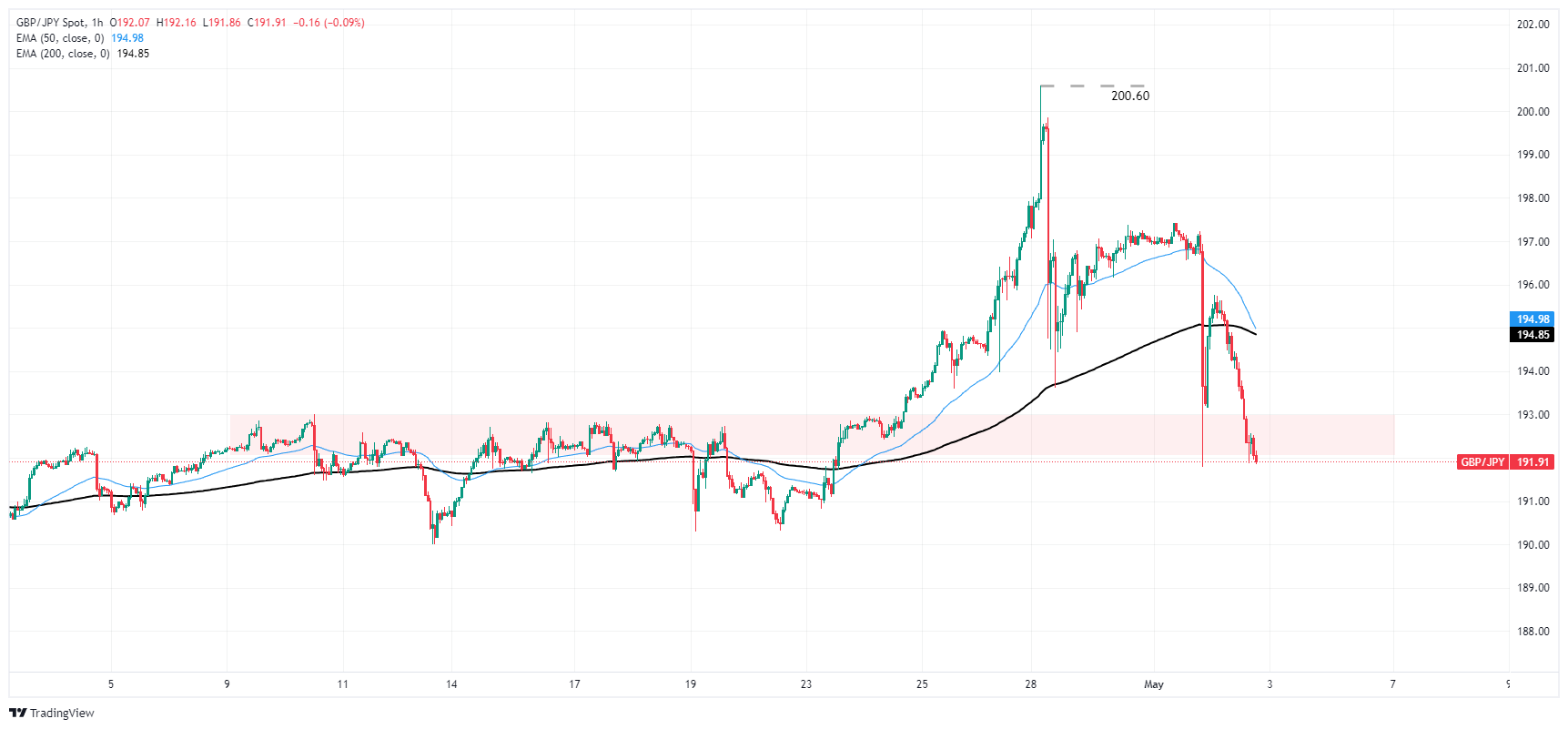
GBP/JPY daily chart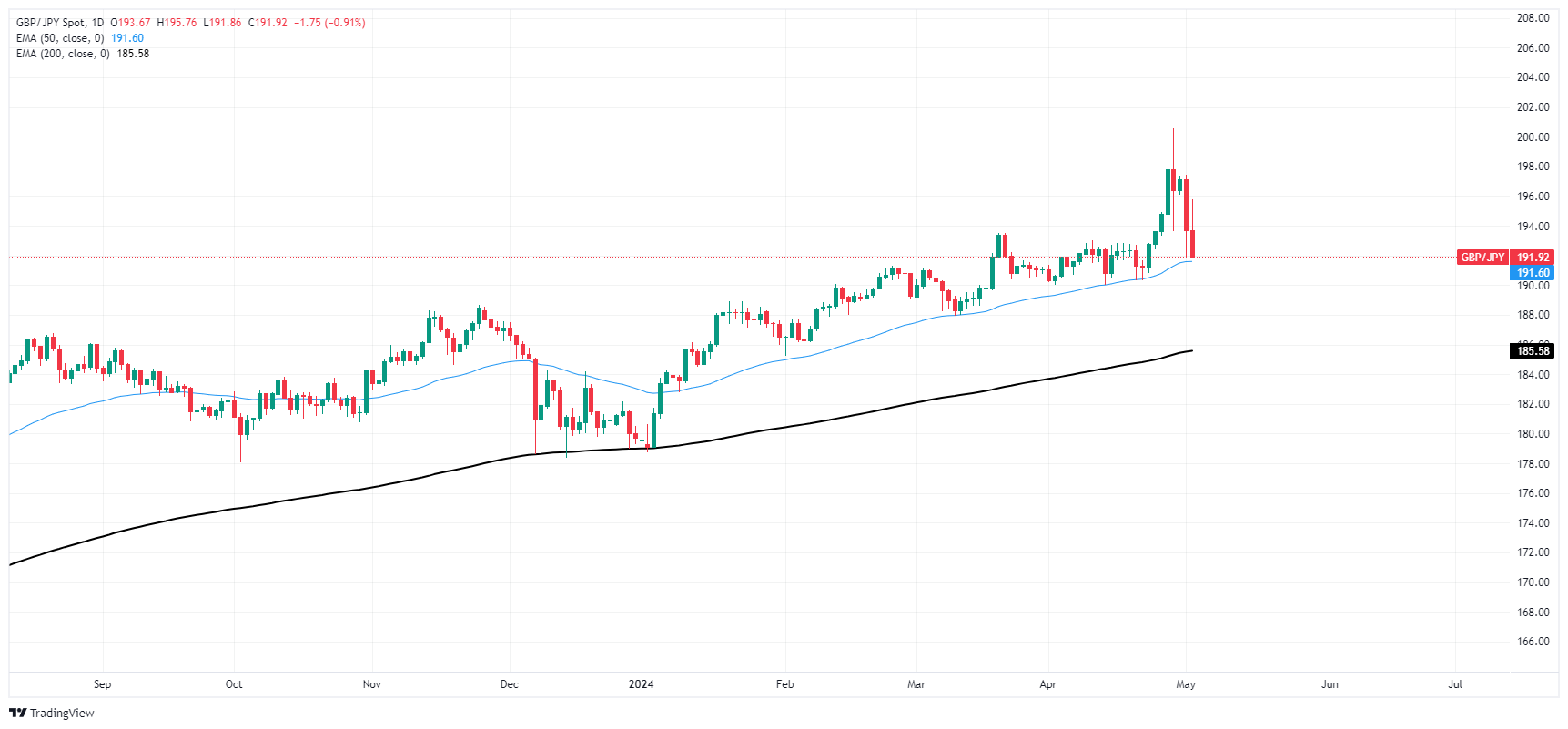
Author

Joshua Gibson
FXStreet
Joshua joins the FXStreet team as an Economics and Finance double major from Vancouver Island University with twelve years' experience as an independent trader focusing on technical analysis.
















