EUR/JPY trades around 165.50 after pulling back from three-month highs
- EUR/JPY rises to a three-month high of 166.07 on Monday.
- The Japanese Yen received downward pressure as the loss of the LDP coalition increased uncertainty regarding the BoJ rate-hike plans.
- ECB’s Pierre Wunsch said that there is no urgency for the central bank to cut interest rates quickly.
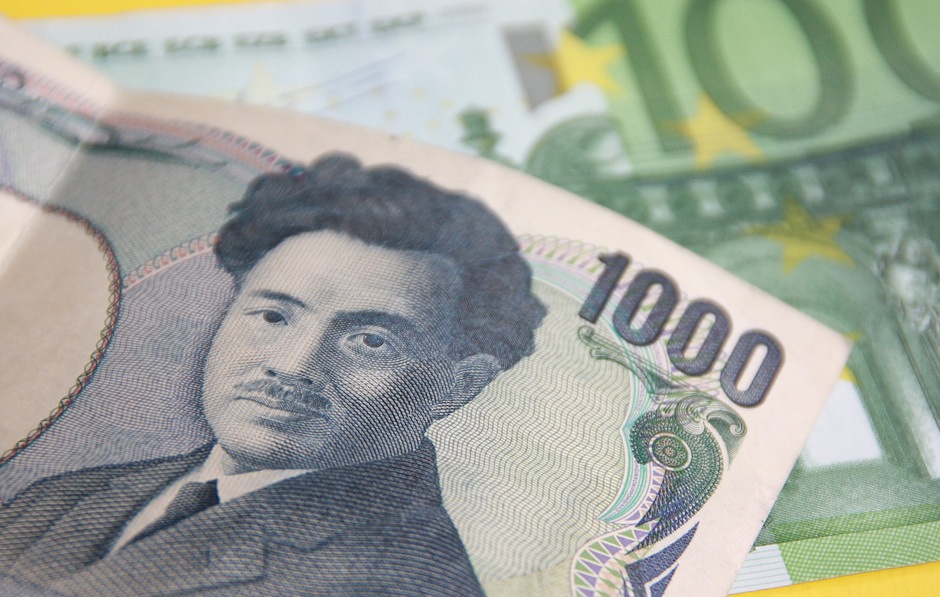

EUR/JPY edges lower around 165.50 during the Asian trading hours on Tuesday, following a three-month high of 166.07 reached on Monday. The Japanese Yen (JPY) has been under pressure due to increasing uncertainty regarding the Bank of Japan's (BoJ) rate-hike plans, particularly after Japan’s Liberal Democratic Party (LDP)-coalition lost its parliamentary majority.
The Bank of Japan’s interest rate decision is set to be the focal point on Thursday, with nearly 86% of economists surveyed by Reuters expecting the central bank to maintain its current rates at the October meeting.
On Tuesday, Japan’s Finance Minister Katsunobu Kato stated that he is “closely watching FX movements, including those driven by speculators, with heightened vigilance,” but refrained from commenting on specific forex levels. Kato emphasized the importance of stable currency movements that reflect economic fundamentals.
On the Euro’s front, policymakers at the European Central Bank (ECB) have expressed differing opinions on monetary policy in recent days. Pierre Wunsch, the Governor of the National Bank of Belgium and a member of the ECB's Governing Council stated on Monday that there is no urgency for the central bank to accelerate interest rate cuts, suggesting it could even tolerate a modest rate.
In contrast, Mario Centeno, Governor of the Bank of Portugal, argued that a 50 basis point rate cut should be considered as a potential option for December. Meanwhile, Governor of the Bank of Italy Fabio Panetta raised concerns about whether the ECB could halt rate cuts once it reaches a neutral level, where monetary policy no longer restricts growth.
Interest rates FAQs
Interest rates are charged by financial institutions on loans to borrowers and are paid as interest to savers and depositors. They are influenced by base lending rates, which are set by central banks in response to changes in the economy. Central banks normally have a mandate to ensure price stability, which in most cases means targeting a core inflation rate of around 2%. If inflation falls below target the central bank may cut base lending rates, with a view to stimulating lending and boosting the economy. If inflation rises substantially above 2% it normally results in the central bank raising base lending rates in an attempt to lower inflation.
Higher interest rates generally help strengthen a country’s currency as they make it a more attractive place for global investors to park their money.
Higher interest rates overall weigh on the price of Gold because they increase the opportunity cost of holding Gold instead of investing in an interest-bearing asset or placing cash in the bank. If interest rates are high that usually pushes up the price of the US Dollar (USD), and since Gold is priced in Dollars, this has the effect of lowering the price of Gold.
The Fed funds rate is the overnight rate at which US banks lend to each other. It is the oft-quoted headline rate set by the Federal Reserve at its FOMC meetings. It is set as a range, for example 4.75%-5.00%, though the upper limit (in that case 5.00%) is the quoted figure. Market expectations for future Fed funds rate are tracked by the CME FedWatch tool, which shapes how many financial markets behave in anticipation of future Federal Reserve monetary policy decisions.
Author
Akhtar Faruqui
FXStreet
Akhtar Faruqui is a Forex Analyst based in New Delhi, India. With a keen eye for market trends and a passion for dissecting complex financial dynamics, he is dedicated to delivering accurate and insightful Forex news and analysis.