Brexit angst is heating-up: GBP traders be warned

The start of the week came with renewed fears of a Brexit showdown as the Uk threatened to trigger emergency unilateral provisions in the Brexit divorce deal known as Article 16.
Article 16 is a clause in the Protocol on Ireland/Northern Ireland, a key part of the Withdrawal Agreement - the deal under which Britain left the European Union. The Article was sought to avoid a hard border between British-ruled Northern Ireland and EU member Ireland by introducing some checks on the movement of goods to Northern Ireland from mainland Britain.
The Article is essentially an emergency brake that will give permissions to either the UK or the EU to take action if the Protocol leads to persistent "serious economic, societal or environmental difficulties". The UK says this threshold has already been reached as a result of the trade frictions caused by the protocol, which requires all goods travelling from Great Britain into Northern Ireland to conform to EU rules.
''The UK government now says it has caused far greater disruption than anticipated at the time and needs to be fundamentally rewritten,'' the Financial Times recently reported. ''UK ministers also argue that the unionist community has lost confidence in the protocol and its continued application could destabilise the already fragile politics of the region.''
The FT explained that ''Brussels argues that without full legal controls on animal and plant products, Ireland’s place in the EU single market is undermined because its goods can no longer be trusted, so may require checks as they enter the EU. The UK would therefore be threatening Ireland’s economic rights as an EU member. This may be seen as intolerable by the 26 other EU member states. For its part, the UK says this concern is overstated.''
However, any UK decision to unravel the NI protocol would create another ‘no deal’ cliff-edge as the Irish foreign minister, Simon Coveney, has warned that the EU could shelve a Brexit trade deal if the UK triggers Article 16. Talks on possible reforms are seemingly deadlocked.
On Tuesday, the latest comments from the Irish Foreign Minister are a stark warning to the UK and should be noted by forex traders seeking investment in currencies vis sterling. He said in recent trade that if the UK sets aside parts of northern Ireland protocol, there will be a 'very robust response' from the EU. He says if the UK continues its current approach to talks, this is a negotiation that is going to run out of road.
GBP/USD daily chart
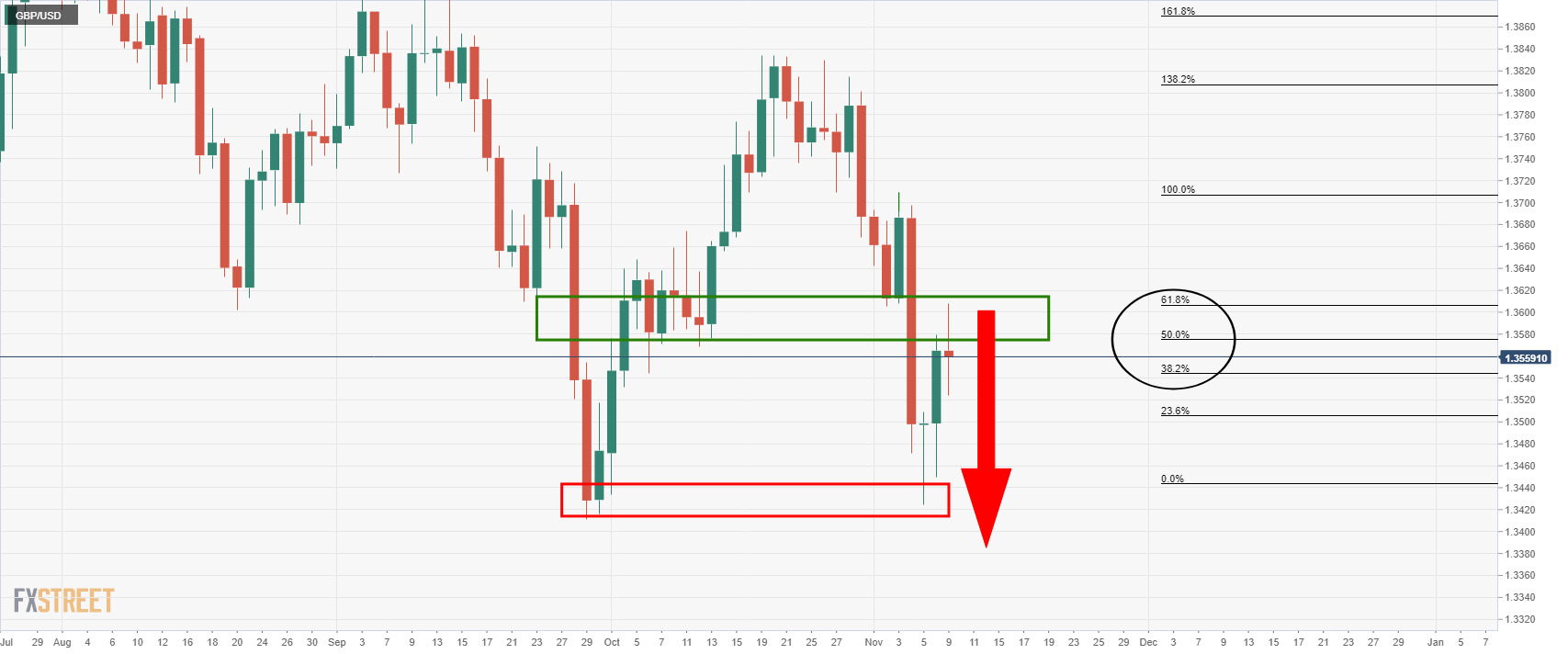
The daily chart shows that the price has been rejected at a 61.8% ratio already. Should the Brexit angst gain traction, then a break of the recent double bottom lows would be expected to put 1.3380 under pressure ahead of a deeper run towards the weekly 1.3180s (21 Dec lows).
Author

Ross J Burland
FXStreet
Ross J Burland, born in England, UK, is a sportsman at heart. He played Rugby and Judo for his county, Kent and the South East of England Rugby team.

















