|

Bank of England leaves policy rate unchanged at 0.75% in November as expected

  • Bank of England (BoE) held policy rate steady at 0.75%.
  • BoE left Asset Purchase Facility unchanged at £435 billion.
  • Two members of the MPC voted in favour of a rate cut.

In a widely expected decision, the Bank of England's Monetary Policy Committee held the policy rate unchanged at 0.75%. The asset purchase facility remained steady at €435 billion as well.

On a dovish note, 2 members of the Monetary Policy Committee voted to cut the policy rate. With the initial market reaction, the GBP/USD pair came under strong bearish pressure and was last down 0.2% on the day at 1.2825. Below are key takeaways from the policy statement.

"Policymakers Saunders and Haskel vote to cut rates to 0.5% from 0.75%."

"Saunders and Haskel say stimulus needed now as data suggest labour market turning, also see downside risks from the global economy and Brexit."

"May need to "reinforce" expected recovery in UK economy through monetary policy if global growth fails to stabilise or if brexit uncertainty remains entrenched."

"If risks do not materialise and economy performs in line with forecast, modest tightening of policy at gradual and limited pace may be needed."

"UK economy likely to be 1% smaller by Q4 2022 than it expected in August forecasts due to global slowdown, asset price changes and new Brexit assumptions."

"Brexit assumption changed to be based on an orderly transition to Canada-style free trade agreement over the next few years."

Author

Eren Sengezer

As an economist at heart, Eren Sengezer specializes in the assessment of the short-term and long-term impacts of macroeconomic data, central bank policies and political developments on financial assets.


More from Eren Sengezer
Share:

Editor's Picks

AUD/USD meets support around 0.6900

AUD/USD remains well on the defensive, bouncing off three-month lows near the 0.6900 level ahead of the opening bell in Asia on Friday. The pair has accelerated its weekly downtrend in response to the marked advance in the Greenback and the widespread selling pressure on the risk-linked assets.


USD/JPY sits at weekly top above 158.00 as bullish USD counters intervention risks

USD/JPY is sitting at the top end of its weekly range above 158.00 in the Asian session on Thursday. Despite the softer US PCE data, oil-driven inflation risks keep US bond yields elevated near multi-year highs. Moreover, the US-Iran standoff benefits the safe-haven US Dollar and supports the pair. Broad US Dollar strength counters hawkish BoJ expectations and Japanese intervention risks.

Gold alternates gains with losses below $4,200

Gold trades without a clear direction on Thursday, always below the key $4,200 mark per troy ounce. The yellow metal’s vacillating price action comes amid the marked advance in the US Dollar coupled with steady effervescence in the Middle East conflict.

Near Protocol slides below $5.00 after Near Intents $4M exploit
Near Protocol (NEAR) uptrend has been cut short, as the price slides below $5.00 on Thursday. The correction comes after an exploit on the network’s Near Intents services, which affected deposits and withdrawals across 11 crypto networks. NEAR is currently trading at $4.88, below the daily high of $5.54, while falling momentum indicators suggest that sellers are gaining the upper hand.
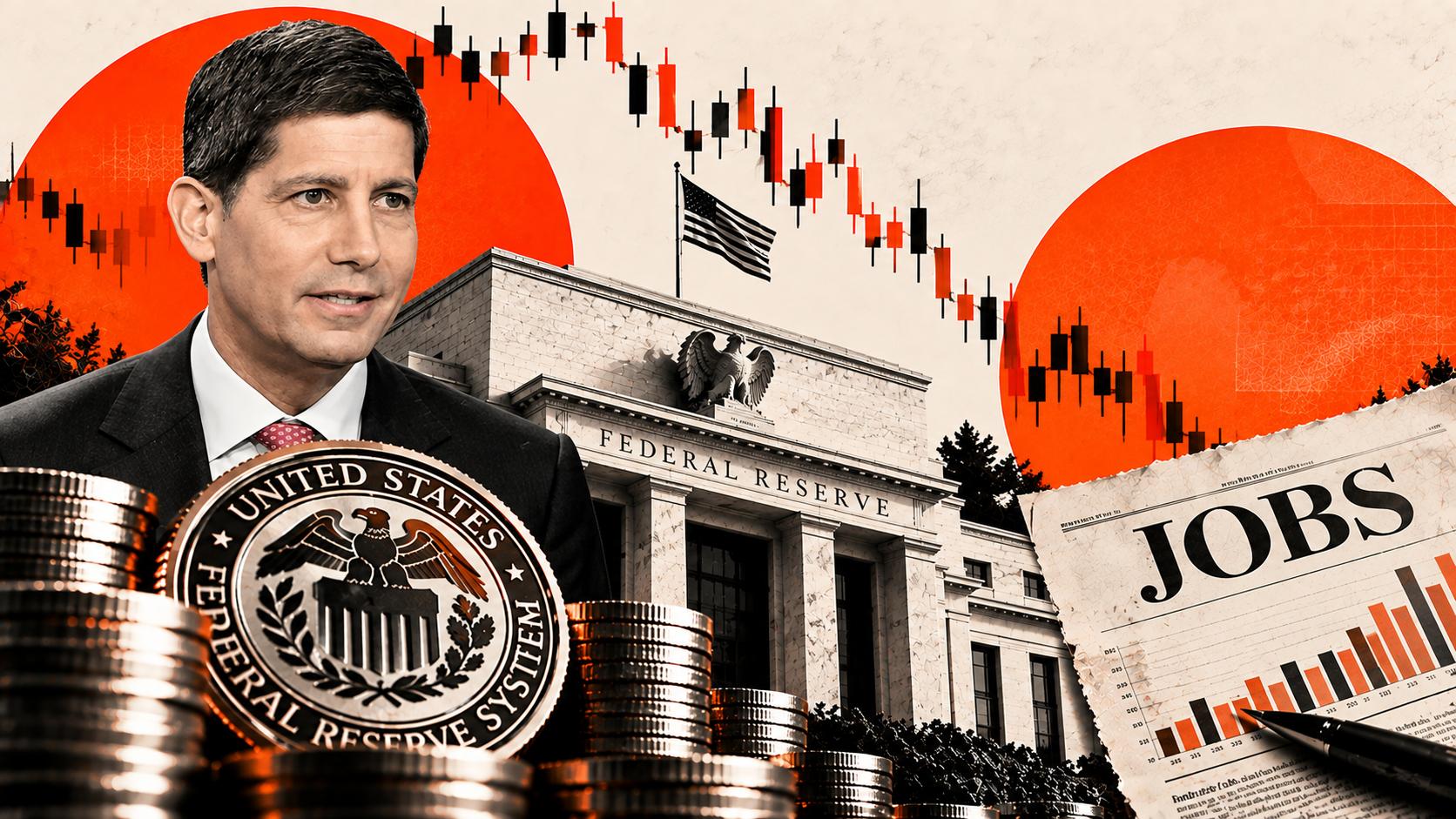
Markets are pricing a Fed pause. The jobs data says the hike is still coming

The market has rapidly changed its mind about the Fed. Only a week ago, investors saw an October interest-rate hike as the most likely outcome. However, softer inflation and cautious comments from policymakers have since turned a pause into the dominant scenario.

Markets are pricing a Fed pause. The jobs data says the hike is still coming
The market has rapidly changed its mind about the Federal Reserve (Fed). Only a week ago, investors saw an October interest-rate hike as the most likely outcome. However, softer inflation and cautious comments from policymakers have since turned a pause into the dominant scenario. Yet beneath that dramatic repricing, the US economy is sending a considerably less dovish message.