|

Aussie Retail Sales beat with 1.4% vs 1% expected, AUD steady

On a relatively quiet week of domestic data, traders were in anticipation of today's Aussie Retail Sales. 

The data has arrived as follows:

Australia Retail Sales for March, preliminary arrived at +1.4% MoM sv expected +1.0%.

  • ''The seasonally adjusted estimate rose 1.4% ($423.9m) from February 2021 to March 2021.
  • In seasonally adjusted terms, Australian turnover rose 2.3% in March 2021 compared with March 2020.
  • The March Quarter 2021 will be relatively unchanged compared to the December quarter 2020, in seasonally adjusted current price terms.''

AUD/USD has stalled in its advance in recent trade and is flat in the session at 0.7722 post the data. 

Given this was the preliminary data, it is subject to revisions so is less impactful on the Aussie. 

"There are also signs that retail is easing in areas where the COVID reopening is more advanced – reflecting both waning 'catch-up' demand and a shift back towards non-retail spending,'" analysts at Westpac warned prior to the data today. 

Meanwhile, AUD/USD is in the process of correcting to a significant resistance zone:
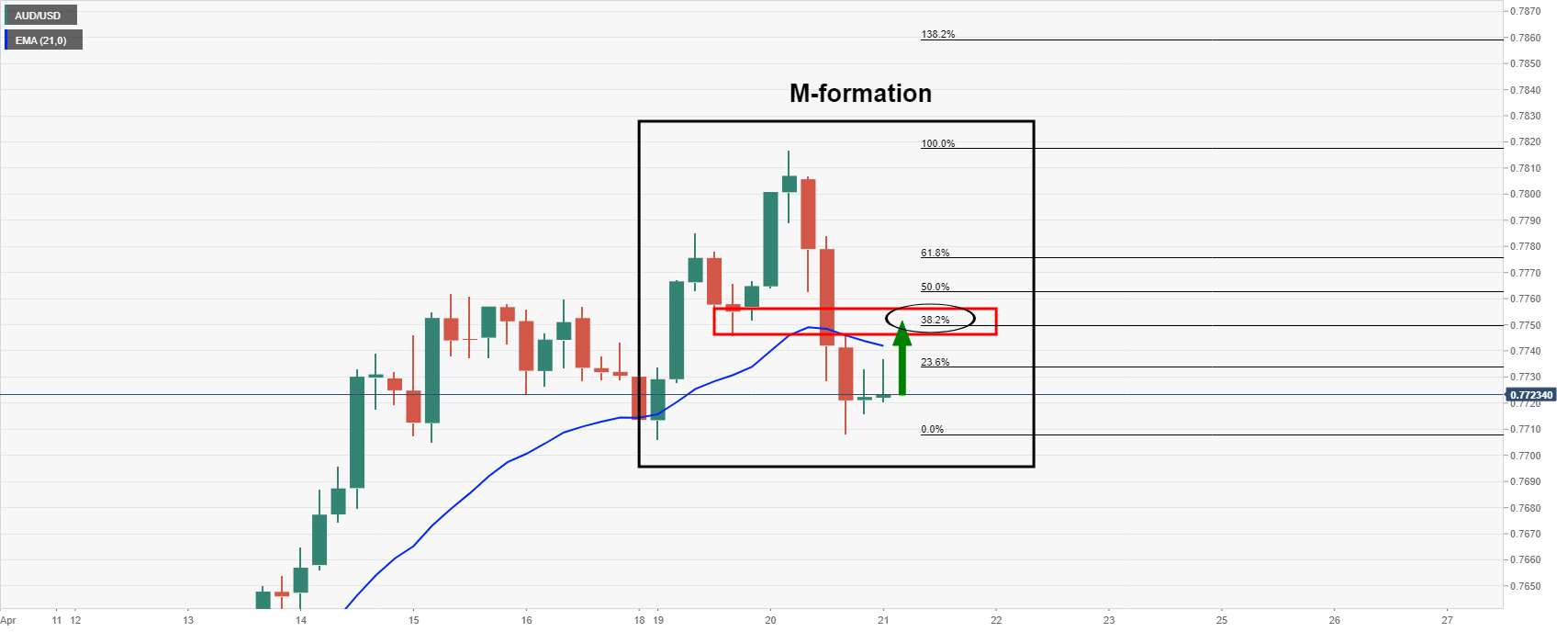
For more information on the thesis for the upside bias in the Aussie, see the prior analysis, AUD/NZD Price Analysis: The bulls are stepping in before next bearish impulse. 

Description of Retail Sales

The Retail Sales released by the Australian Bureau of Statistics is a survey of goods sold by retailers is based on a sampling of retail stores of different types and sizes and it''s considered as an indicator of the pace of the Australian economy. It shows the performance of the retail sector over the short and mid-term. Positive economic growth anticipates bullish trends for the AUD, while a low reading is seen as negative or bearish.

Author

Ross J Burland

Ross J Burland, born in England, UK, is a sportsman at heart. He played Rugby and Judo for his county, Kent and the South East of England Rugby team.


More from Ross J Burland
Share:

Editor's Picks

AUD/USD bounces back toward 0.6950 on fresh USD supply

AUD/USD bounces back toward 0.6950 in the Asian session on Friday. The US Dollar retreats from 17-month highs as traders take profits off the table ahead of the all-important US Nonfarm Payrolls report. Meanwhile, the Australian Dollar draws support from reviving expectations of a November interest rate hike amid elevated global yields and inflation risks.


USD/JPY struggles near 158.00 as USD retreats ahead of NFP

USD/JPY is struggling for fresh impetus near 158.00, moving away from the top end of its weekly range in the Asian session on Friday, after hotter-than-expected Tokyo CPI and amid a broad US Dollar retreat. Traders reposition themselves ahead of US Nonfarm Payrolls.

Gold approaches $4,200 as USD bulls pause for a breather ahead of US NFP report

Gold reverses a modest Asian session dip, climbing back closer to the $4,200 mark in the last hour. Any meaningful upside, however, seems elusive amid a bullish US Dollar as traders keenly await the release of US employment details. The US Nonfarm Payrolls report is expected to show that the economy added only 90K jobs in September, down from the previous month's reading of 162K.

Pi Network retreats to key support level as selling pressure resurfaces

Pi Network price remains volatile in the near term, hovering around $0.0900 at press time on Friday after losing over 3% the previous day. The pullback warns of a steeper correction, with a risk of breaking below a rising wedge pattern on the four-hour chart. Pi Network struggles to maintain a steady recovery as the price remains capped below the $0.1000 psychological barrier.

US jobs report is due: We expect a hot one
In Japan, September Tokyo core CPI rose to 2.7% (cons: 2.4%). The figure was above the BOJ's 2% target for the first time since January. In commodities, Brent crude futures traded above USD 102/bbl on Friday morning after the WSJ reported that the Pentagon will be sending a third aircraft-carrier strike group and additional soldiers to the Middle East.
Markets are pricing a Fed pause. The jobs data says the hike is still coming
The market has rapidly changed its mind about the Federal Reserve (Fed). Only a week ago, investors saw an October interest-rate hike as the most likely outcome. However, softer inflation and cautious comments from policymakers have since turned a pause into the dominant scenario. Yet beneath that dramatic repricing, the US economy is sending a considerably less dovish message.