The Versatility of The Forex Market

First, let me wish you a very happy 2019! I hope this one brings you success, happiness and health in abundance. What a great time to refresh and set new goals and targets, especially when it comes to trading. This is always the ideal time to look over our rules and define our actions for the year ahead. With that in mind, I wanted to cover a question I get plenty of times about the best ways to approach FX trading. There is no better time than now, I guess, to dive right in.
For me, the FX markets lend themselves perfectly to traders of all experience levels, mainly due to the flexibility you can enjoy in position sizing, the multiple opportunities available across these 24-hour markets and, of course, the ease of which we have to open an account and get involved with a smaller amount of capital. I feel that FX markets are much simpler in nature when compared to say, the Futures markets, as there are fewer specifications to worry about and the margin requirements are far less demanding than that of the US Equity markets, where it can be a huge challenge to be able to make a decent amount of money with a more modest amount of starting capital. Leverage in Forex is very attractive and so makes it a perfect and practical starting point for all.
With that now said, let us talk about the different trading styles we can use to trade these currency markets. Forex lends itself well to all three styles of trading available: Intraday, Swing and Position Trading. Here at Online Trading Academy, we also like to refer to Position Trading as Pro-Active Investing. Let’s take a look into each of the three styles, along with the pros and cons associated with each.
Trading Style 1 – Position Trading (aka Pro-Active Investing)
Many people would say this style of trading is similar to the traditional form of longer-term investing. The name position is taken from the act of taking a position in the market. Some also know this style as Buy and Hold, meaning that once the position is opened in the market, it is then held for a long period of time, through both the ups and the downs, giving the position time to work out for a profit in the long run. In many ways this is a flawed strategy, as there is no real exit strategy or way to effectively manage the risk. Instead, here at OTA, we teach people to still hold for a while but also employ the use of a stop-loss and profit target, just as you would on any other trade. This, in essence, is the pro-active method of using this trading style.
Trades of this nature would more likely be found on Monthly, Weekly and Daily charts. The example below using our patented Core-Strategy is an example of a position trade:
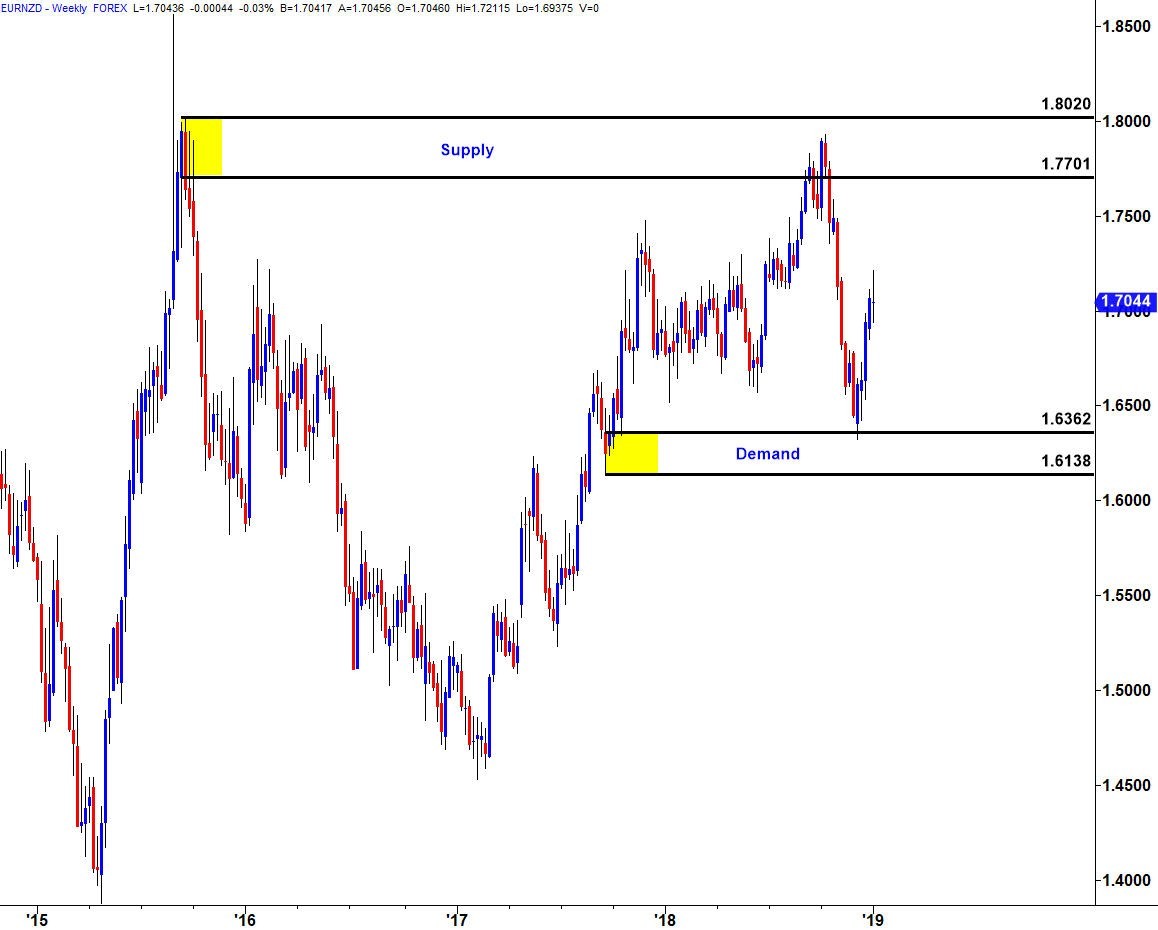
The downside to this type of trade is mainly in the fact that position trades do not present themselves very often and much time is spent waiting for them to trigger. Capital is also tied up for a considerable length of time, yet due to the leveraged nature of FX, this is a reasonable amount. The final issue I would say, is that these trades do require a larger risk in pips, but the reward is that much higher in comparison. For a truly hands-off style of trading with little activity and potentially huge pay-outs from time to time, position trading offers plenty of advantages to the very patient trader. This is the ideal means to manage your long-term wealth.
Trading Style 2 – Swing Trading
I would classify Swing trading as more of a trading style used for short-term income, yet with a nice hands-off and low maintenance approach. Ideal for those still in full-time employment or maybe just short on time, swing is also a Set and Forget approach to the currency markets. Depending on the number of pairs traded and the charts used, we could expect maybe 3 to 6 decent set-ups a week. Charts from 4 hour and higher work well with this trading style and there is the huge benefit that the analysis and planning can be done at the time that suits the trader.
Personally, I like to put aside 15-20 minutes a day to do my analysis and set up my orders each day, giving me plenty of time to do other things with my time. Again, this style offers low maintenance for traders and has the added bonus of controlling emotions due to its set and forget dynamic. The less time the trader spends looking at the screen, the more the trade is left to follow its plan. Here is an example of a swing set-up:
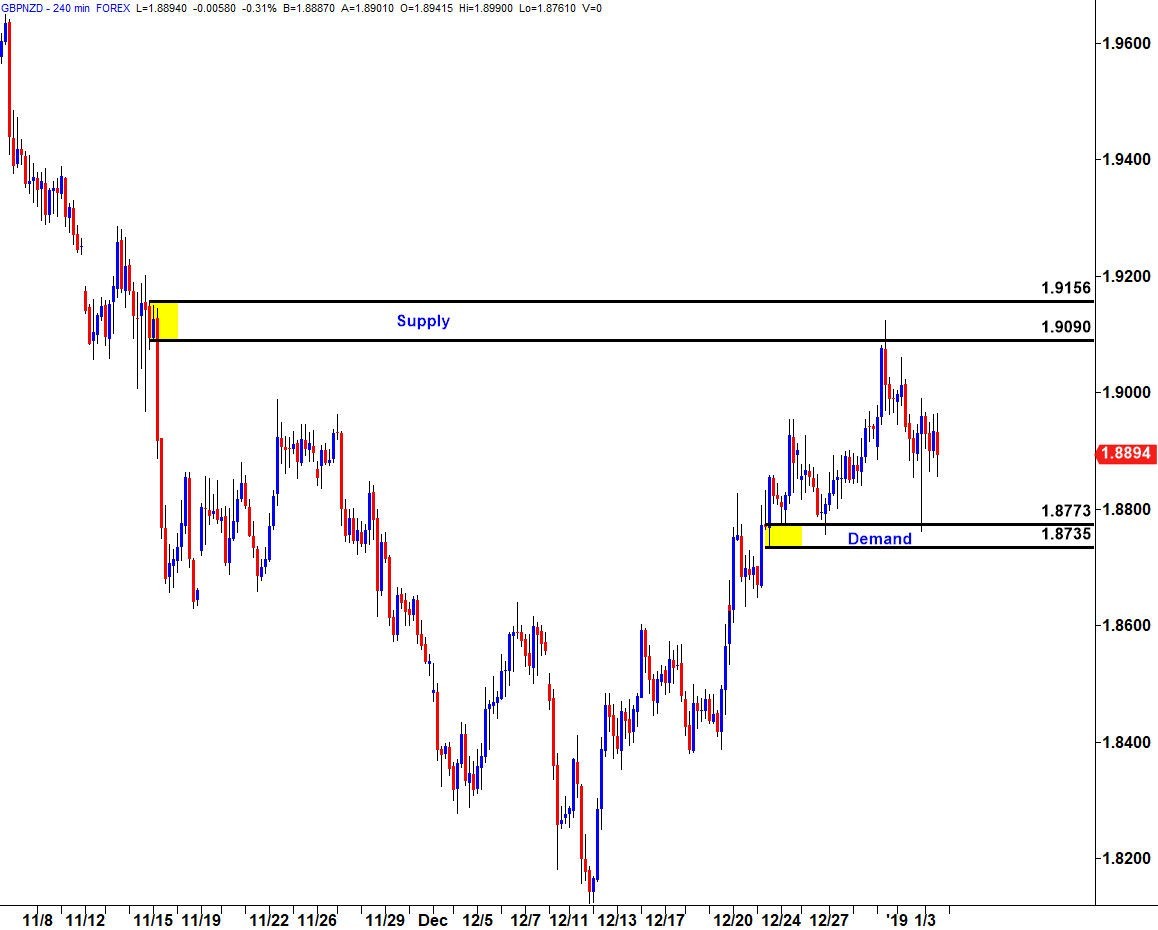
What are the drawbacks then? Well, none that really stand out to hinder progress. This style keeps us close enough to the daily action of the FX markets but also far enough away so that we don’t interfere with the trades either. Yes, you will have to be patient and some weeks will be light on trading, but as your account grows, so will your profits too. I think this is the very best trading style for newer and also more experienced traders alike and is still a huge part of my trade plan.
Trading Style 3 – Intraday Trading
By far this is seen as the most exciting and adrenaline fuelled way to trade, but that does not necessarily equate it to being a good thing. I won’t deny that a proficient Intraday trader can make exceptional profits, mainly due to the sheer amount of opportunity which is presented on a daily basis, especially with wild moves like we have seen of late. However, this can also come at a price and for those lacking in patience, discipline and a plan. Day trading can put you out of the market with losses sooner than most would realize. You have to account for the spread on each entry and on the faster timeframes you are likely to see more noise and false signals, especially considering the huge part that algorithms play in the modern trading scene. It is not all doom and gloom though, because if you can give it time, then there is no reason why you cannot make it as an intraday speculator. Let’s take a look at an example:
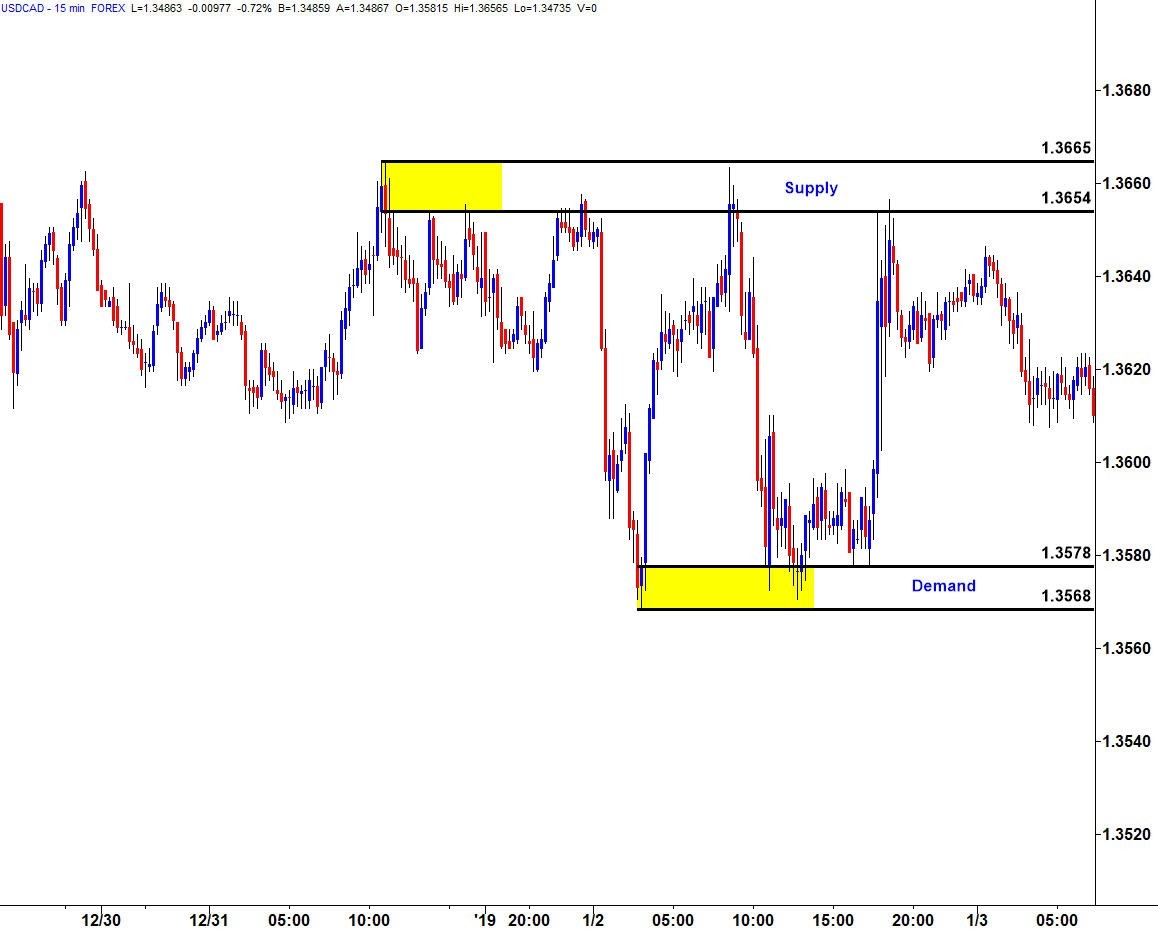
Do you notice how many more trades there were on this chart? Sure you will not win them, all but when it comes together you can see how lucrative it could be, even with some losses in the mix. Patience and discipline, as I said before, are the name of the game here. On the other hand, if you attempt to trade the more volatile pairs like GBPNZD in this style, you are inviting yourself to be chopped to pieces. When you are finding levels on 5 min charts as well, it can be very easy to over trade if you are not careful. Be warned, my friends. Yes, it would be nice to consistently average about 30 pips a day, but it may be easier to go for a bigger move and capture more on a swing trade. The choice is really up to you.
As I have shown you here, the neat thing about all three trading styles is that our Supply and Demand levels that are created by institutional order flow can be seen across many timeframes, thus the strategy works for any style. The key is deciding which is right for you and, of course, your lifestyle. Think about your personality and emotions too, as they are a huge part of the success story in the end.
I would always encourage anyone to start with swing trading to learn to detach from the trades. Only after becoming consistent in that style, then to move on to the others. I hope this was of help to you.
Author

Sam Evans
Bustamante & Co
Starting his career in the London Film, Music and Radio Industry, Sam was a novice in the ways of the Markets. Almost 17 years ago, he jumped to Trader, Fund Manager and Lead Instructor in the Financial Markets.