 Boris Schlossberg
BKTraders and Prop Traders Edge
Aldous Huxley the author of the Brave New World once wrote:
The harder we try with the conscious will to do something, the less we shall succeed.
Proficiency and the results of proficiency come only to those who have learned the paradoxical art of doing and not doing, or combining relaxation with activity, of letting go as a person in order that the immanent and transcendent unknown quantity may take hold.
He called it the Law of Reversed Effort and I don’t think there is any activity in the world where this is more true than in trading where the harder we try the more likely we are to fail.
The more we focus on the setup, the tighter we try to control the risk the more likely we are to get stopped out trade, after trade, after trade. I remember in my early days of trading when I still believed all the lies about “discipline” I managed to get stopped out 14 times in a row perfectly encapsulating Einstein’s observation that the definition of stupidity is doing the same thing over and over again and expecting a different result.
Huxley was right of course. Any creative activity (and trading is certainly one) requires relaxation and lack of focus rather than hyperintense attention to subject. Inevitably, my best setup ideas come to me in the shower when I am not thinking about the markets at all.
My bread and butter trade takes place on the one minute chart and requires hyper attention to every detail. If I actually had to do it all myself I would never succeed. Fortunately my algo does 99% of the work so I really don’t have to pay much attention. Thus I found myself with some free time and just for s-ts and giggles decided to see what would happen if I applied my Bounce setup on monthly time frames in FX.
I barely pay attention to FX these days, leaving all the serious trading to K, but just for fun about six weeks ago I decided to post free trade ideas on Twitter. I traded USD/JPY, GBP/USD USD/CAD and was able to bank profits in all of them. My latest idea was in EUR/USD which I posted last week.
I think all of these FX trades are working mainly because I don’t care. I purposely set 100 pip stops and targets on these trades allowing me to ignore these ideas for days on end. If I get stopped out on the first entry, my algo - the same algo that hypertrades on the 1 minute chart - will sit patiently for days waiting for the trade to set up again. Once it triggers I will casually glance at the action but because my focus is on equities and I truly don’t care about FX I just let it do its thing and the trade finds its way to profit.
I’ve been highly amused by this recent string of “ success” in my FX trading and will continue to post these ideas when the set up presents itself.
I don’t want to mislead you. These aren’t just random ideas that I pull out of my a--. The FX trades are based on a very sound Bounce trading structure that took years of effort to develop. But the seemingly effortless efficiency of their execution is very much based on me not caring. I am simply not trying hard to succeed and as a result am succeeding much more than I thought I would. That’s the beauty of Huxley’s Law of Reversed Effort and as traders we would all be well advised to heed its calling.
Past performance is not indicative of future results. Trading forex carries a high level of risk, and may not be suitable for all investors. The high degree of leverage can work against you as well as for you. Before deciding to trade any such leveraged products, you should carefully consider your investment objectives, level of experience, and risk appetite. The possibility exists that you could sustain a loss of some or all of your initial investment and therefore you should not invest money that you cannot afford to lose. You should be aware of all the risks associated with trading on margin, and seek advice from an independent financial advisor if you have any doubts.
Editors’ Picks

EUR/USD hits two-day highs near 1.1820
EUR/USD picks up pace and reaches two-day tops around 1.1820 at the end of the week. The pair’s move higher comes on the back of renewed weakness in the US Dollar amid growing talk that the Fed could deliver an interest rate cut as early as March. On the docket, the flash US Consumer Sentiment improves to 57.3 in February.

GBP/USD reclaims 1.3600 and above
GBP/USD reverses two straight days of losses, surpassing the key 1.3600 yardstick on Friday. Cable’s rebound comes as the Greenback slips away from two-week highs in response to some profit-taking mood and speculation of Fed rate cuts. In addition, hawkish comments from the BoE’s Pill are also collaborating with the quid’s improvement.

USD/JPY drops back below 157.00, as focus shifts to Japan snap election
USD/JPY is back in the red below 157.00 in the Asian session on Friday. The Japanese Yen recovers ground against the US Dollar amid some profit-taking ahead of Japan's snap general election on Sunday. The preliminary reading of the Michigan Consumer Sentiment Index report for February will be released later on Friday.
Editors’ Picks

EUR/USD: US Dollar to remain pressured until uncertainty fog dissipates Premium
The EUR/USD pair lost additional ground in the first week of February, settling at around 1.1820. The reversal lost momentum after the pair peaked at 1.2082 in January, its highest since mid-2021.

Gold: Volatility persists in commodity space Premium
After losing more than 8% to end the previous week, Gold (XAU/USD) remained under heavy selling pressure on Monday and dropped toward $4,400. Although XAU/USD staged a decisive rebound afterward, it failed to stabilize above $5,000.

GBP/USD: Pound Sterling tests key support ahead of a big week Premium
The Pound Sterling (GBP) changed course against the US Dollar (USD), with GBP/USD giving up nearly 200 pips in a dramatic correction.

Bitcoin: The worst may be behind us
Bitcoin (BTC) price recovers slightly, trading at $65,000 at the time of writing on Friday, after reaching a low of $60,000 during the early Asian trading session. The Crypto King remained under pressure so far this week, posting three consecutive weeks of losses exceeding 30%.
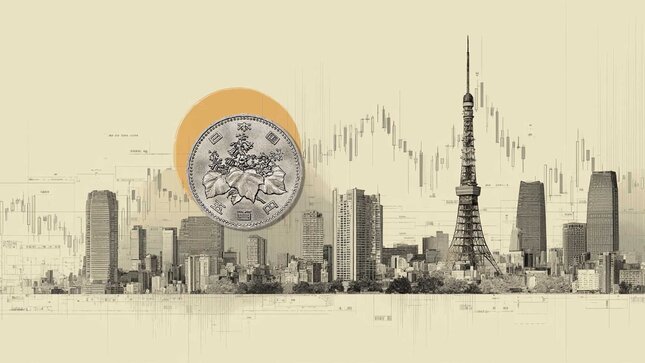
Three scenarios for Japanese Yen ahead of snap election Premium
The latest polls point to a dominant win for the ruling bloc at the upcoming Japanese snap election. The larger Sanae Takaichi’s mandate, the more investors fear faster implementation of tax cuts and spending plans.
RECOMMENDED LESSONS
Making money in forex is easy if you know how the bankers trade!

I’m often mystified in my educational forex articles why so many traders struggle to make consistent money out of forex trading. The answer has more to do with what they don’t know than what they do know. After working in investment banks for 20 years many of which were as a Chief trader its second knowledge how to extract cash out of the market.
5 Forex News Events You Need To Know

In the fast moving world of currency markets where huge moves can seemingly come from nowhere, it is extremely important for new traders to learn about the various economic indicators and forex news events and releases that shape the markets. Indeed, quickly getting a handle on which data to look out for, what it means, and how to trade it can see new traders quickly become far more profitable and sets up the road to long term success.
Top 10 Chart Patterns Every Trader Should Know

Chart patterns are one of the most effective trading tools for a trader. They are pure price-action, and form on the basis of underlying buying and selling pressure. Chart patterns have a proven track-record, and traders use them to identify continuation or reversal signals, to open positions and identify price targets.
7 Ways to Avoid Forex Scams

The forex industry is recently seeing more and more scams. Here are 7 ways to avoid losing your money in such scams: Forex scams are becoming frequent. Michael Greenberg reports on luxurious expenses, including a submarine bought from the money taken from forex traders. Here’s another report of a forex fraud. So, how can we avoid falling in such forex scams?
What Are the 10 Fatal Mistakes Traders Make
Trading is exciting. Trading is hard. Trading is extremely hard. Some say that it takes more than 10,000 hours to master. Others believe that trading is the way to quick riches. They might be both wrong. What is important to know that no matter how experienced you are, mistakes will be part of the trading process.
The challenge: Timing the market and trader psychology

Successful trading often comes down to timing – entering and exiting trades at the right moments. Yet timing the market is notoriously difficult, largely because human psychology can derail even the best plans. Two powerful emotions in particular – fear and greed – tend to drive trading decisions off course.