AI becomes the new central banker
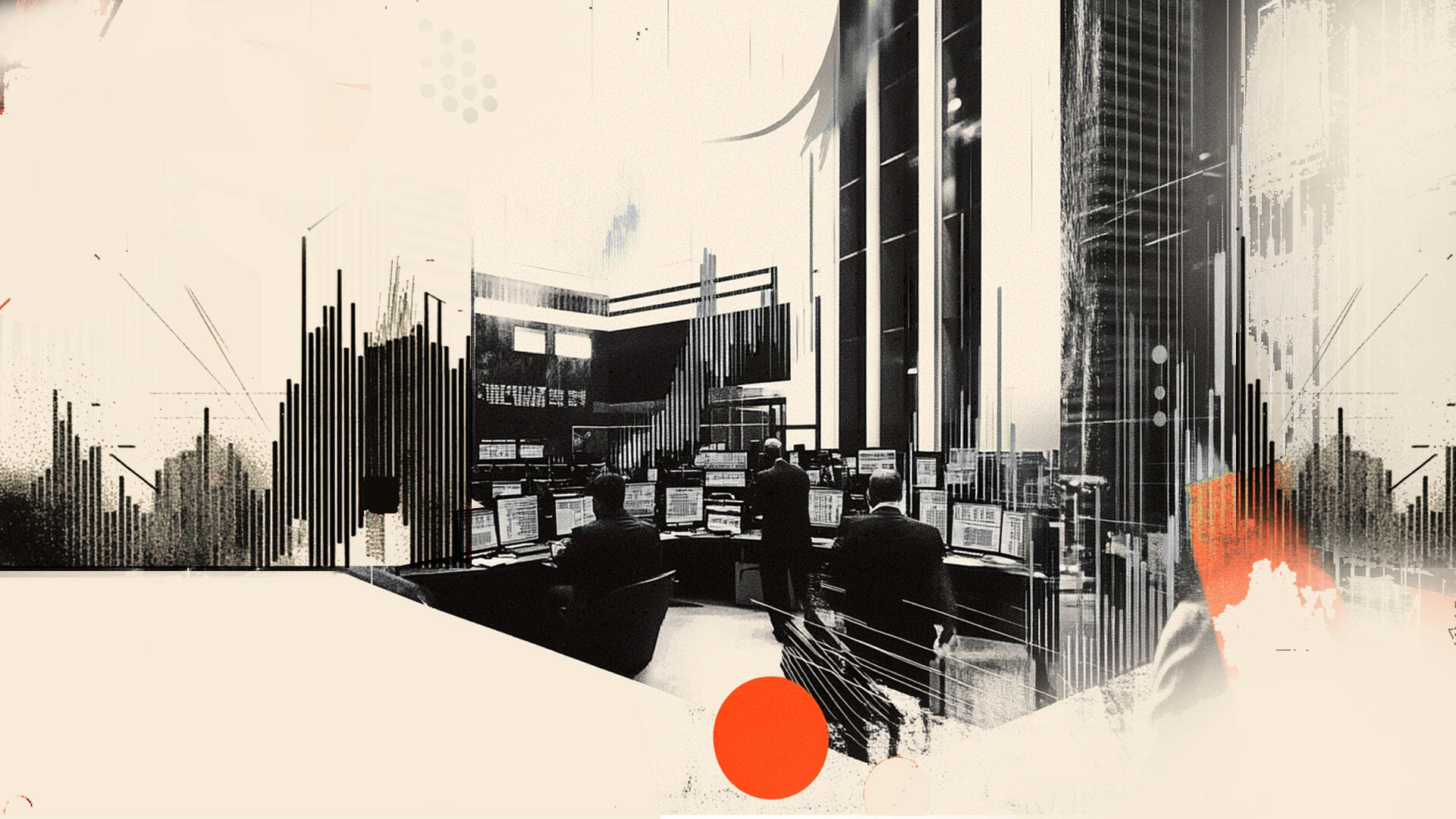
Monetary policy once dictated the rhythm of global markets. Today, that rhythm is increasingly written by algorithms.
Artificial Intelligence has evolved from assisting analysts to actively shaping macroeconomic expectations.
AI parses millions of data points, inflation trends, employment shifts, geopolitical chatter, and even market sentiment on social media, and generates policy forecasts faster than any central bank can meet.
As a result, the traditional hierarchy of economic power is being inverted: while central banks still set rates, AI increasingly sets the tone.
- The new macroeconomic asymmetry.
For decades, central banks have operated on predictable cycles: data collection, policy debate, and quarterly statements.
AI, by contrast, operates in real time, learning, recalibrating, and projecting continuously.
This has created a new macroeconomic asymmetry: governments legislate in months, but algorithms evolve in milliseconds.
Traders no longer wait for central bank announcements to position themselves.
They now rely on machine-learning models that anticipate what policymakers are likely to do, well before the official statement.
By the time a governor speaks, markets have already priced the algorithmic consensus.
This speed differential has transformed how liquidity, volatility, and sentiment interact.
Every data release, from CPI to payrolls, instantly triggers automated forecasts that ripple across asset classes.
AI is not just accelerating information flow; it is rewriting the temporal logic of macroeconomics.
- How AI shapes policy expectations.
AI’s advantage lies in its capacity to read the world as a continuous stream of signals rather than isolated events.
Natural language models digest policy minutes, press conferences, and parliamentary debates to detect subtle linguistic shifts, words like “appropriate,” “persistent,” or “data-dependent”, and assign probabilistic meanings to them.
Each phrase can move billions in capital flows.
Meanwhile, predictive macro models simulate rate paths under hundreds of scenarios, integrating inputs such as commodity prices, yield-curve distortions, fiscal balances, and even weather data.
They don’t replace macroeconomists; they multiply their foresight.
For example, an AI system might analyze the Federal Reserve’s tone across five years of speeches, correlate it with inflation deviations, and generate a real-time estimate of the next policy move.
These forecasts then feed into algorithmic trading engines that adjust positions in milliseconds, well before official data confirmations.
The result is a world where policy expectation becomes endogenous: markets influence policymakers as much as policymakers influence markets.
AI is no longer an observer of monetary policy; it has become an active participant.
- Central banks vs. algorithms. The new tug of war.
This feedback loop has profound consequences for central banks themselves.
Every statement, even a misplaced comma, is now parsed by thousands of AI models within seconds. Communication strategy has become as critical as rate setting.
To stay relevant, central banks are also adopting AI.
The European Central Bank, Bank of England, and several Asian institutions already deploy machine-learning systems for inflation forecasting, liquidity stress testing, and macro-prudential surveillance.
However, they face an inherent challenge: AI outside the institution often moves faster than AI within it.
In this new dynamic, central banks are learning to communicate through the machine layer, recognizing that their messages are interpreted by algorithms first and humans second.
This redefines monetary signaling: guidance must now be machine-legible as well as human-credible.
The question that arises is not whether AI will replace central bankers, it’s whether AI will become their counterpart, continuously testing, simulating, and sometimes outpacing their decisions.
- From models to market intelligence.
The convergence of macroeconomics and machine learning is transforming how traders, hedge funds, and portfolio managers interpret the world.
What used to be a monthly forecast is now a living model, updated in real time with alternative data: freight costs, satellite imagery, and payment-system analytics.
AI macro engines feed these signals into cross-asset algorithms that rebalance portfolios dynamically.
If the model detects an early sign of rate divergence between the Fed and the ECB, it triggers an automated FX carry rotation; if inflation persistence rises, commodity exposure adjusts instantly.
In this landscape, human judgment shifts from reaction to interpretation.
The competitive edge no longer lies in being first to the data, but in understanding how the machines read it.
Investors now ask:
- Which models are moving the market?
- What assumptions are embedded in those models?
- And how can we align our human perspective with algorithmic intelligence without being subsumed by it?
· The risk of over-delegation
Yet, the rise of algorithmic macro-policy comes with hidden risks.
If the same datasets and models inform both traders and policymakers, the system becomes self-referential, prone to feedback loops and collective blindness.
Markets might move not because fundamentals change, but because algorithms agree that they should.
Moreover, data bias and model opacity can amplify systemic risks.
An AI model that misinterprets fiscal tightening in one region as a global deflation signal could trigger premature risk-off trades across the world.
In extreme cases, machine consensus can override human caution.
Therefore, the future of macro stability depends on the governance of AI, ensuring that speed does not outrun accountability, and that the architecture of global finance remains explainable.
- The human role. From central banking to meta-banking.
Central bankers and investors alike must now operate at two levels:
- The policy level, where rates, liquidity, and inflation targets remain defined by institutions; and.
- The meta level, where AI models continuously interpret, anticipate, and influence those policies.
In this meta-monetary world, the human role becomes more strategic.
Policymakers must manage not only economic outcomes but also the behavior of the algorithms that frame those outcomes.
Likewise, traders must develop the literacy to read the macro narrative through both human and machine eyes.
The next decade will likely see hybrid committees, human economists supported by algorithmic advisors, debating not only the cost of credit but also the credibility of the data that drives it.
The frontier question will no longer be What will the Fed do next? but rather What does the machine already believe the Fed will do?
- Intelligence as the new policy instrument.
We have entered an era where intelligence, not interest rates, defines the true rhythm of the economy.
Policy, pricing, and perception are now intertwined in a single digital feedback loop.
AI may not hold the power to print money, but it holds something equally powerful, the ability to shape belief.
For investors, this shift demands adaptation.
Success will depend not on resisting AI’s rise but on learning to interpret its signals, manage its risks, and complement its precision with human context.
The central bank of the future may still reside in a marble building, but its true counterpart already operates in the cloud.
Author

Nikolaos Akkizidis
Independent Analyst
Nikolaos Akkizidis is an Independent Financial Writer, Economist, Author, and Speaker with more than two decades of experience in financial services, capital markets, investment advisory, portfolio management, trading, risk manage