PCE Preview: Crypto market outlook around US Personal Consumption Expenditures release
- US Core PCE is expected on Friday April 28 and could bear significant implications on the cryptocurrency market.
- The data captures inflation while reflecting variations in consumer behavior, thus critical in the Fed’s decision-making process.
- Pundits anticipate another modest 0.3% increase in Core PCE, the Fed’s favorite critical inflation gauge.

The Department of Commerce is expected to release the Personal Consumption Expenditures (PCE) data for March on Friday April 28 at 12:30 GMT. The PCE data is popular for representing evolving inflation in the US and its relation to the changes in consumer behavior. This makes it a crucial factor in the Federal Reserve’s decision-making process in estimating inflation rate in the US economy.
All eyes will therefore be on this inflation indicator on Friday, with the hope that it could put to rest any concerns about whether rate-setters would introduce another interest rate hike in May. Notably, the relationship between the PCE and the crypto industry is best presented in the debate that stocks and digital assets have become overly correlated. As such, traders whose portfolios contain either stocks or crypto face similar risks.
PCE next in line as crypto markets ride the tailwinds of macroeconomic events
After the Gross Domestic Product (GDP) release on April 27, the crypto market is waiting on the PCE report, which would provide another glimpse of inflation. Worth mentioning, just last week the UK reported an inflation rise of 10%, a hotter-than-expected number that startled the market. In part, this led to the scenario that the crypto market now faces because, in its wake, 16,000 BTC were sold last week, worth around $467 million in a single transaction on Binance.
Someone sold 16000 $BTC on binance yesterday, causing cascading liquidations of leveraged longs.
— CaptainCrypto (@CaptainCrypto33) April 20, 2023
Nothing has changed in the macroeconomic environment.
We are still very much bullish!
Buy this dip, get some $LTC, $BTC or $MEWC
While Fed chair Jerome Powell opened the door to a more aggressive policy path in the previous gathering, he emphasized that it depended on incoming data. Hotter PCE inflation numbers could see the crypto market react bearishly over fears of more rate hikes in coming months.
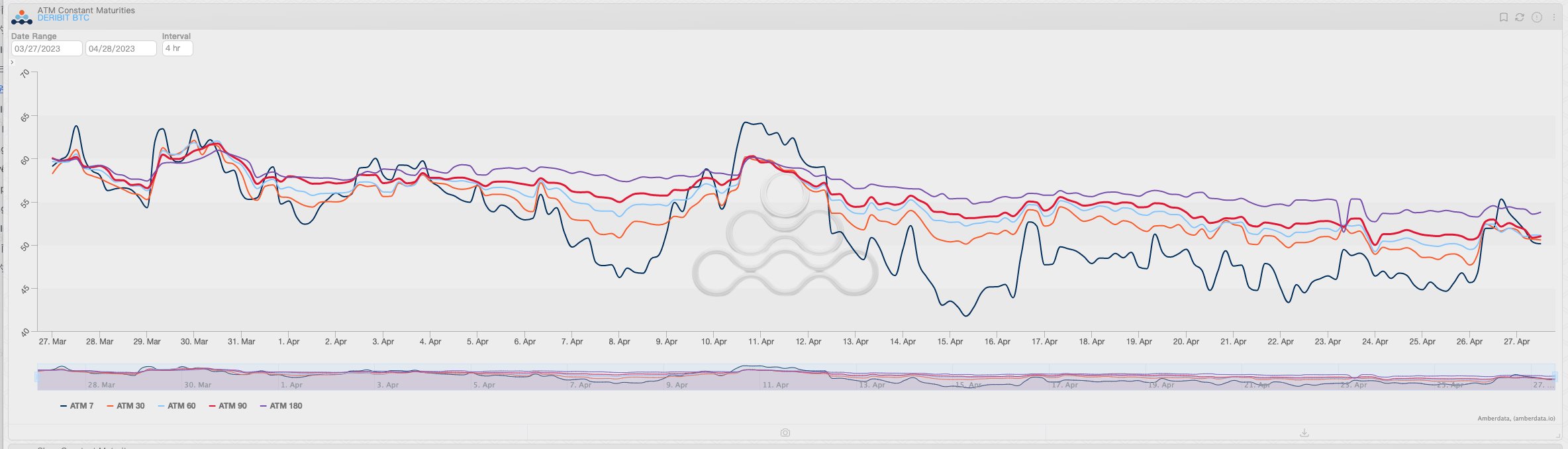
Nevertheless, the economy seems to be nearing its limit with levels of uncertainty returning in traditional and crypto markets alike. Already, crypto asset volatility appears to be intensifying as market players are spooked by rising uncertainties. Bitcoin (BTC) is struggling to reach and sustain above $30,000. Of interest, however, is that the implied volatility surfaces of the flagship crypto and Ethereum (ETH) only trembled a bit as traders await more information to make their judgments.
Impact of PCE Statistics on the crypto markets
The PCE data could have a significant impact on the cryptocurrency market. As it stands, economists anticipate that the PCE index announced tomorrow will be 0.3%, akin to the previous release that saw the crypto market turn green. In the previous release, the market enjoyed a positive surprise showing that inflation was cooling.
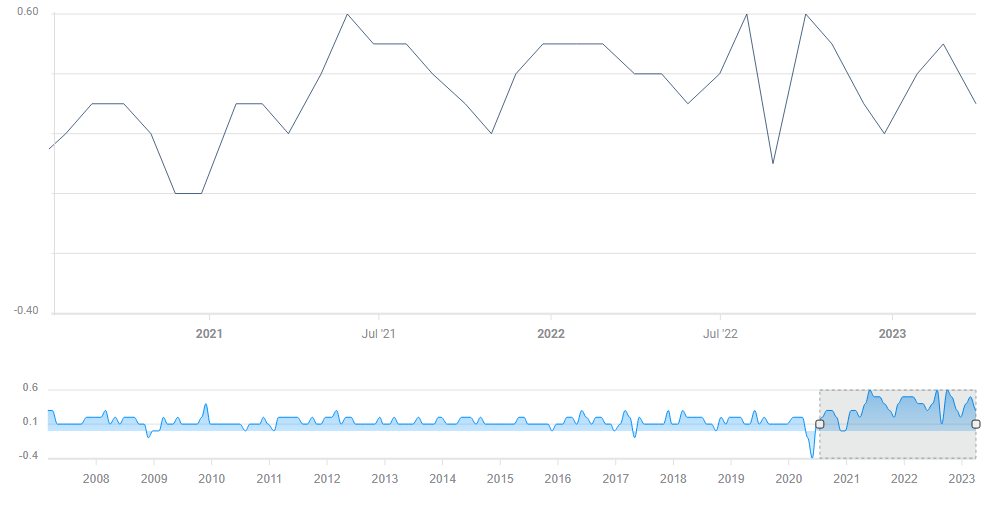
Source: FXStreet
A good PCE report showing that inflation is easing could inspire a new bullish momentum for crypto even as market players anticipate the Federal Open Market Committee (FOMC) meeting on May 2/3. The crypto market is waiting for many macro scenarios to play out.
Given that we have had strong retail sales and jobs numbers, which are not bad things to have, inflation is expected to be stickier for longer than what the market hoped for. Nevertheless, the resilience in the recent economic reports increases the chances of a soft landing.
The silver lining amid multiple macro-economic events
The positive aspect amid all these macro scenarios is that the May FOMC could be the last interest rate hike that we see for a while. This would be a good news scenario, and explains why all eyes are on the PCE report- The results will show the Fed what will be the next interest rate hike ahead of next week’s FOMC meeting.
Even after the PCE report, investors should not expect a lot of activity in crypto before the May FOMC meeting.
Also Read: US Core PCE Preview: Why this is a lose-lose situation for the US Dollar
Author

Lockridge Okoth
FXStreet
Lockridge is a believer in the transformative power of crypto and the blockchain industry.