Maker deploys “emergency DAI parameter change” proposal following SVB collapse
- MakerDAO’s stablecoin DAI de-pegged to nearly $0.85 on March 11 as Silicon Valley Bank shuttered on Friday.
- DAI’s exposure to USDC has been claimed as the reason behind the de-pegging due to Circle holding about $3.3 billion of its reserves in SVB.
- The new parameter proposes an increase in USDC swap fees to discourage swapping and also limits the daily mint to 250 million DAI.

The ongoing instability in the financial sector impacted what is considered to be one of the safest asset types in the crypto market. Stablecoins took a hit over the weekend following the shutdown of Silicon Valley Bank, one of the biggest US bank failures. This has led MakerDAO, the developer of stablecoin DAI, to change its parameters.
DAI to minimize USDC exposure
In an announcement on March 11, Maker proposed a set of emergency changes in the DAI parameters to reinforce the peg. The proposal was passed on Saturday itself and is set to be deployed on Monday. The deployment will bring significant changes to the stablecoin operations, mainly focusing on reducing the vulnerability DAI faces from USD Coin (USDC).
Commenting on the same, Maker stated,
To address the uncertainty surrounding the centralized stablecoin market, the Risk Core Unit has submitted an emergency proposal for Executive Vote to limit Maker’s exposure to impaired stablecoins and reinforce the DAI peg.
The USDC peg stability module (PSM) will bear the most change, with DAI reducing the daily mint limit to just 250 million DAI. At the same time, the proposal will also increase the swap fees for swapping USDC to DAI to 1%. The reason behind the increase in swap fees is to discourage users from swapping USDC for DAI. This would incentivize alternative methods for disposing of USDC and limit the module to cases where the DAI price deviates upwards.
Additional changes to modules of Gemini Dollar (GUSD) and Paxos (USDP) also focused on reducing the daily mint limit to 10 million DAI for GUSD and 250 million DAI for USDP. However, the reason behind reducing the mint limit for GUSD is different from USDC. Maker proposed the aforementioned change only to limit any potential losses due to contagion risk from USD Coin.
What went wrong with DAI
The world’s fourth largest stablecoin by circulation, DAI, was significantly collateralized by USDC. As USDC took a hit from the shuttering of the Silicon Valley Bank on Friday, DAI lost its peg as well. The reason behind USDC’s de-pegging is the exposure of its issuer, Circle, to the failed bank. Per Circle’s disclosure, the company had about $3.3 billion of its nearly $40 billion reserves held in SVB.
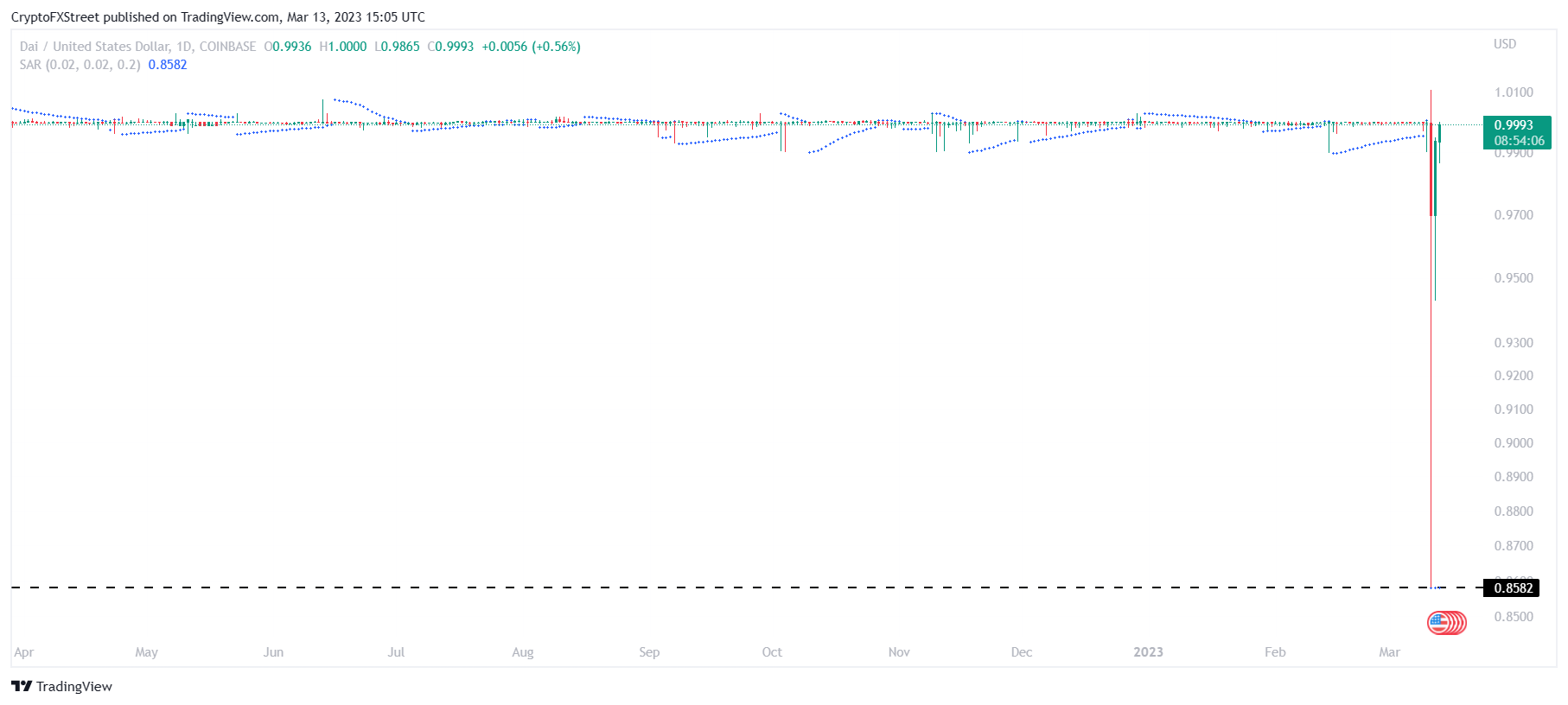
DAI/USD 1-day chart
As a result, USDC lost its $1 stable price over the weekend and fell to trade at $0.82 at one point on Saturday. Following USDC’s lead, DAI also de-pegged and ended up changing hands at $0.85 during the intra-day trading hours. Both the stablecoins have since recovered to their $1 price, with holders expecting sustainability from here on.
Author

Aaryamann Shrivastava
FXStreet
Aaryamann Shrivastava is a Cryptocurrency journalist and market analyst with over 1,000 articles under his name. Graduated with an Honours in Journalism, he has been part of the crypto industry for more than a year now.