Here’s why Bitcoin miners are bullish and what it means for BTC
- Bitcoin mining difficulty hit an all-time high of 43.05 Trillion in the recent recalculation.
- BTC miners are deploying huge capital to scale operations despite the uncertainty of profitability.
- Bitcoin miners are bullish on operational efficiency and long-term BTC price rally, plugging in more machines to the network.

Bitcoin miners are engaged in an arms race for computing power. The recent recalculation increased BTC mining difficulty by 9.95%; miners are deploying capital to expand operations despite the spike. This reveals a bullish bias among Bitcoin miners and fuels a positive sentiment among BTC holders.
Also read: Three catalysts that could drive Bitcoin price out of its recent slump
Bitcoin mining difficulty hits all-time high at 43.05 Trillion, here’s how miners reacted
Bitcoin mining difficulty represents the computational power spent on producing a single Bitcoin. BTC mining difficulty hit a new all-time high at 43.05 Trillion, according to data from Coinwarz.
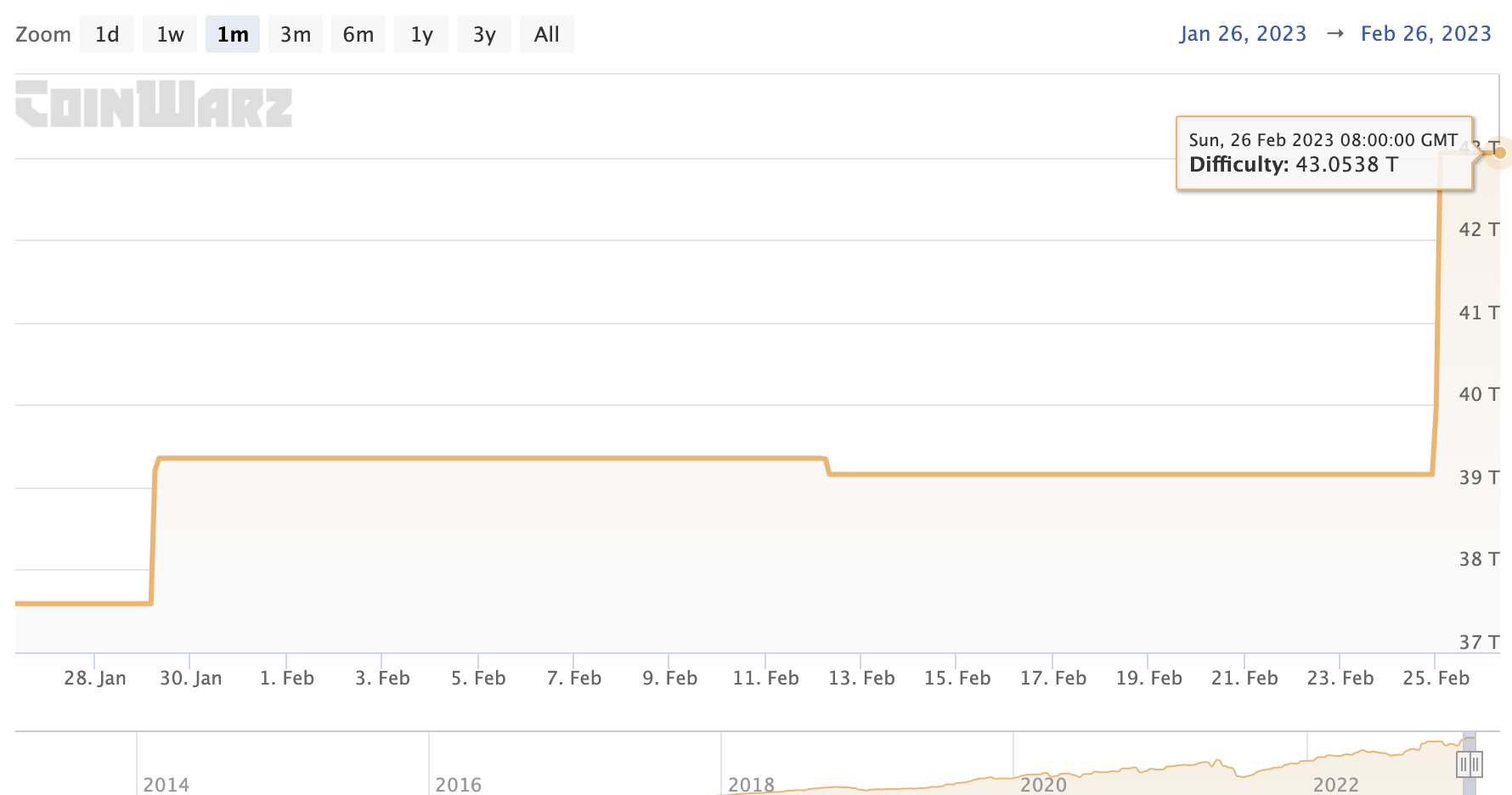
Bitcoin Mining Difficulty
While mining difficulty does not influence price directly, a spike in difficulty requires higher energy consumption in mining one BTC and makes it expensive for miners to sustain profits. Miner profitability is affected by BTC mining difficulty.
When Bitcoin price rallies, mining profitability increases until the next recalculation, ie. mining difficulty adjustment.
Despite the rising cost of mining BTC, miners are deploying higher capital and scaling operations. Uncertainty is associated with profitability since it relies on the asset’s price; miners have displayed a strong belief in operational efficiency and Bitcoin price rally in the future.
Co-founder of Group Bitcoin mining firm Xive, Didar, commented on the sudden spike in BTC mining difficulty.
An arms race in computing power. As a result of the next recalculation, the difficulty of mining increased by 9.95%. The indicator has updated its historical maximum at around 43.05 T.
— Didar (@didar_bekbau) February 25, 2023
Huge capital already deployed in #bitcoin mining and it doesn’t stop there. Miners willing… https://t.co/EII3UT87Ao
What to expect from Bitcoin price?
Miners are bullish on Bitcoin price recovery. Despite the recent pullback in Bitcoin price, the asset could recover from its current decline. BTC price hit the lower trendline, and a rebound from the recent drop could drive Bitcoin to the $23,594 level that acted as resistance throughout the second half of January 2023.
If Bitcoin bulls push the asset higher, the target is $25,212, which was resistance throughout February 2023.
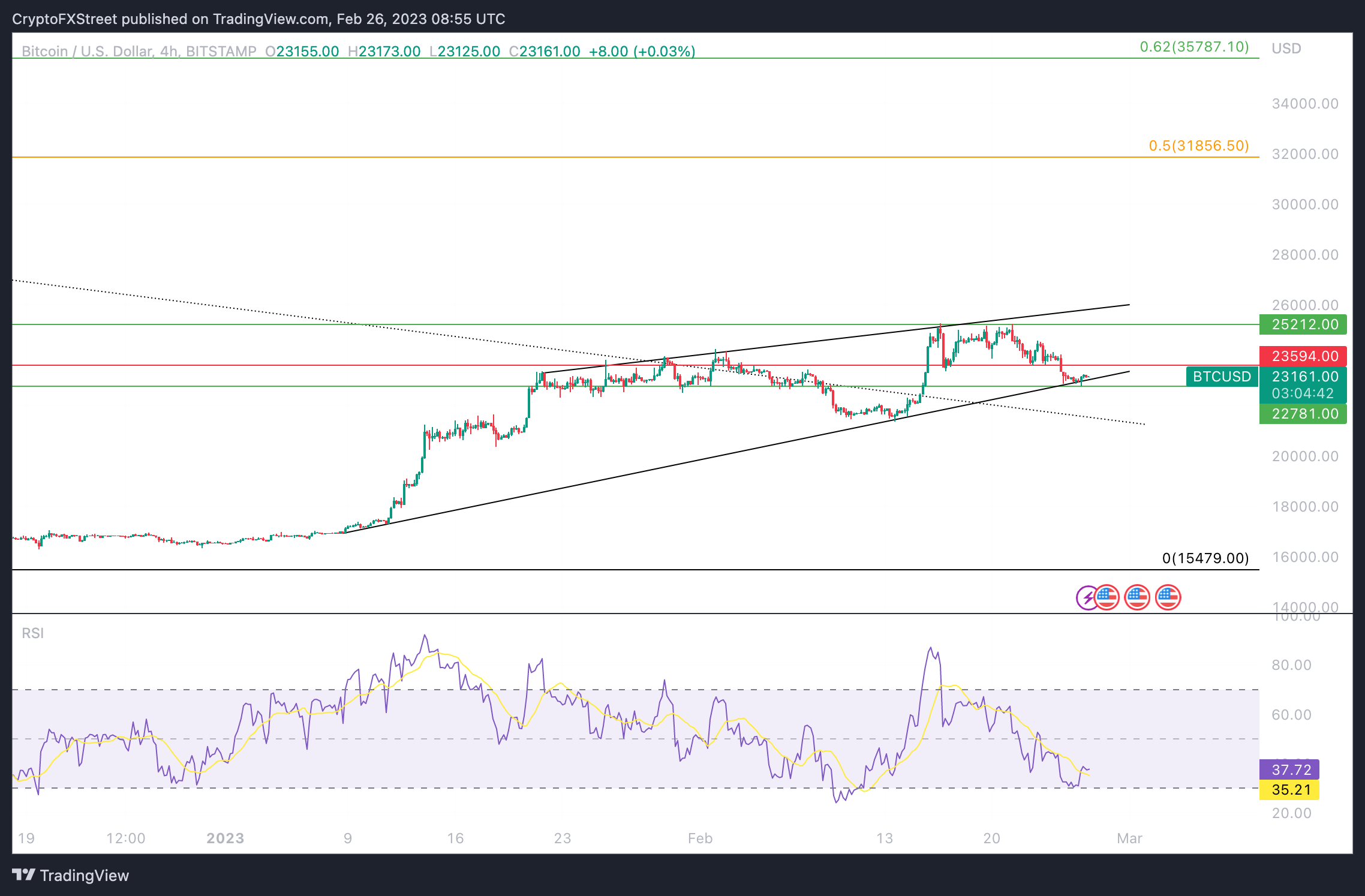
BTC/USD price chart
The Relative Strength Index, a momentum indicator supporting the current BTC recovery, RSI climbed from 35.21 to 37.72, signaling strength in the recent uptrend. A close below the lower trendline and a drop below the February 14 low of $22,781 could invalidate the bullish thesis for Bitcoin.
Author

Ekta Mourya
FXStreet
Ekta Mourya has extensive experience in fundamental and on-chain analysis, particularly focused on impact of macroeconomics and central bank policies on cryptocurrencies.