Could Grayscale's GBTC discount narrow after SEC delays decision on spot Bitcoin ETF?
- Grayscale’s GBTC shares are trading at a discount of 20.6%, narrowing consistently since mid-June.
- GBTC discount started to narrow right after BlackRock filed its spot Bitcoin ETF application and remains tied to the SEC’s approval of the investment product.
- Bitcoin spot ETFs are closer to approval with Grayscale’s lawsuit win against the SEC, however, delays are likely to dampen demand for GBTC shares.

Grayscale, a cryptocurrency asset management firm, made headlines for its landmark win against the US Securities & Exchange Commission (SEC). Grayscale’s lawsuit win has had an impact on the price of its GBTC shares.
The discount on GBTC has narrowed. As of early Friday, GBTC is trading at a 20.62% discount. The discount is deeply correlated with the supply and demand for GBTC shares. It is, therefore, likely that an approval of a spot Bitcoin ETF by the SEC drives demand for the shares higher and pushes GBTC from discount to premium territory.
Also read: Ethereum Cancun upgrade development is on track, testing phase comes next
Grayscale GBTC shares trade at 20.62% discount after landmark lawsuit win
Grayscale’s win against the US SEC marked a key milestone for the asset manager in its journey toward launching the spot Bitcoin ETF for investors. While there is time for the regulator to review and appeal the ruling, the lawsuit had its impact felt in the crypto ecosystem.
GBTC shares that have been trading at a discount for nearly two years witnessed an increase in demand among institutional investors. This narrowed the GBTC discount. When the world’s largest asset manager, BlackRock, filed its spot Bitcoin ETF application, the GBTC discount started to narrow consistently.
The GBTC discount has narrowed from 43.3% on June 15 to 20.6% on September 1, based on data from Coinglass.
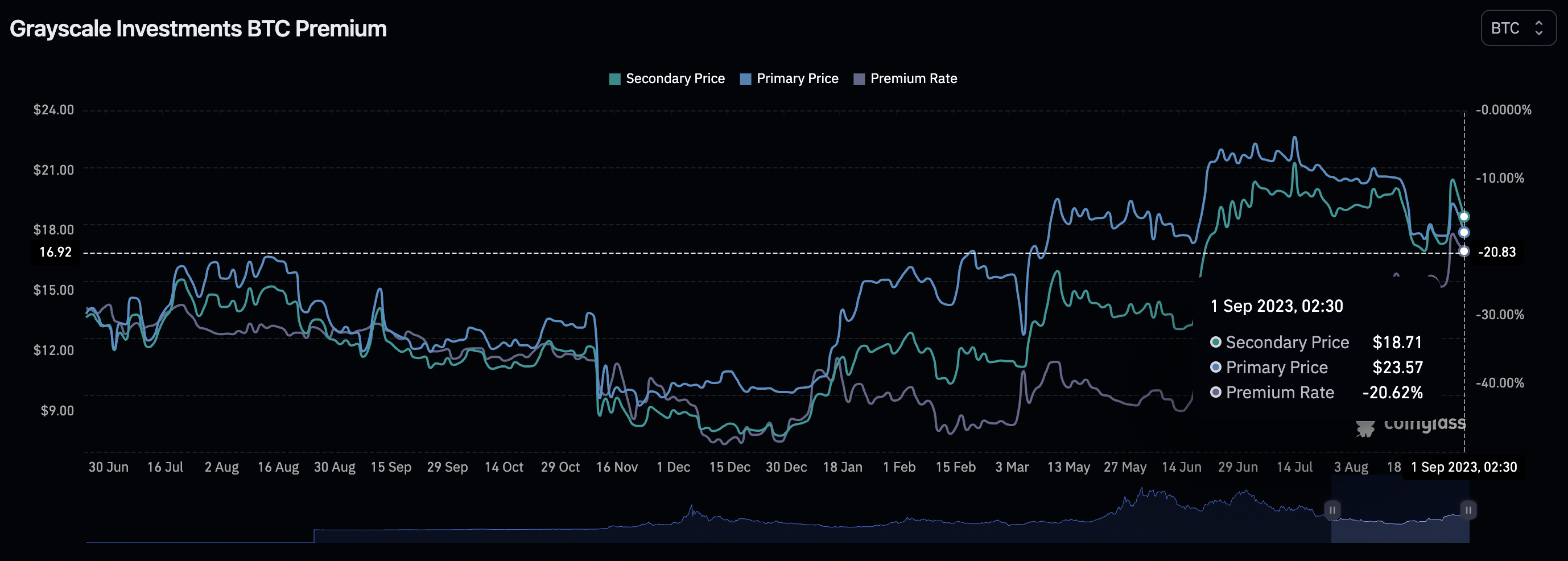
Grayscale Investments BTC Premium
Can GBTC discount be flipped into premium territory?
The GBTC discount is correlated with the demand for Grayscale’s shares. An approval of a spot Bitcoin ETF by the financial regulator is likely to drive demand for GBTC shares and result in a further narrowing of the GBTC discount. Though the discount is still stark, a continuation of this trend could flip the discount into a premium for the first time since February 2021.
As of September 1, the SEC has delayed its decision on the spot Bitcoin ETF applications of BlackRock, Wisdom Tree Funds, Invesco, Galaxy Digital and Valkyrie Funds.
Crypto ETF FAQs
What is an ETF?
An Exchange-Traded Fund (ETF) is an investment vehicle or an index that tracks the price of an underlying asset. ETFs can not only track a single asset, but a group of assets and sectors. For example, a Bitcoin ETF tracks Bitcoin’s price. ETF is a tool used by investors to gain exposure to a certain asset.
Is Bitcoin futures ETF approved?
Yes. The first Bitcoin futures ETF in the US was approved by the US Securities & Exchange Commission in October 2021. A total of seven Bitcoin futures ETFs have been approved, with more than 20 still waiting for the regulator’s permission. The SEC says that the cryptocurrency industry is new and subject to manipulation, which is why it has been delaying crypto-related futures ETFs for the last few years.
Is Bitcoin spot ETF approved?
Bitcoin spot ETF has been approved outside the US, but the SEC is yet to approve one in the country. After BlackRock filed for a Bitcoin spot ETF on June 15, the interest surrounding crypto ETFs has been renewed. Grayscale – whose application for a Bitcoin spot ETF was initially rejected by the SEC – got a victory in court, forcing the US regulator to review its proposal again. The SEC’s loss in this lawsuit has fueled hopes that a Bitcoin spot ETF might be approved by the end of the year.
Like this article? Help us with some feedback by answering this survey:
Author

Ekta Mourya
FXStreet
Ekta Mourya has extensive experience in fundamental and on-chain analysis, particularly focused on impact of macroeconomics and central bank policies on cryptocurrencies.