Bitcoin price is up, but BTC mining stocks could remain vulnerable throughout 2023

Bitcoin miners have been under duress for more than a year and even with BTC price trading at $24,000, BTC mining stocks could still face challenges throughout 2023.
Bitcoin mining stocks usually follow BTC’s price because it directly influences the company's earnings. These stocks were beaten down heavily in the last quarter of 2022, especially in the month of December. The downturn after FTX's collapse worsened with the bankruptcy filings of the largest U.S.-based Bitcoin mining company, Core Scientific.
During this time, other mining stocks, like Marathon Digital Holdings (MARA) in the chart below, exhibited a weak correlation with Bitcoin’s price, suggesting that December’s downturn was probably overblown.
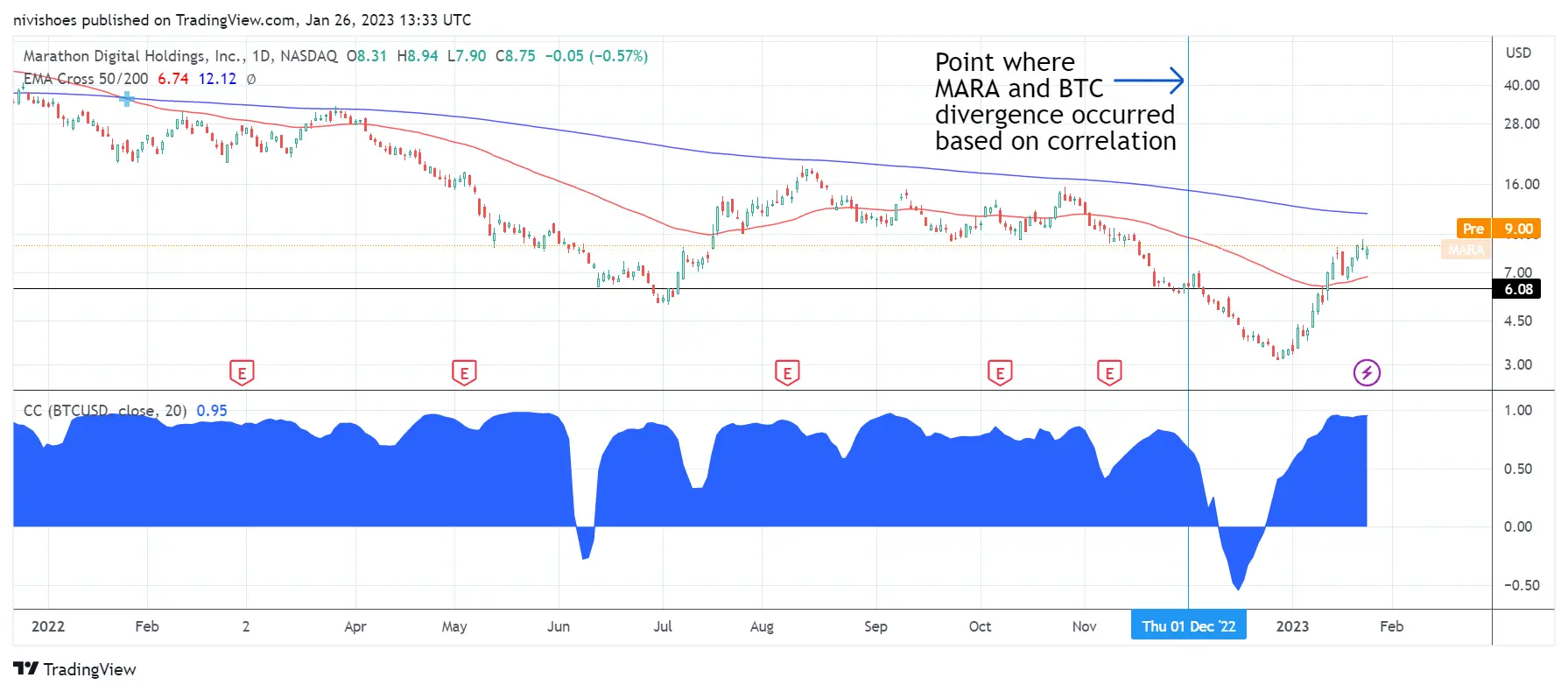
MARA/USD price chart with MARA-BTC Correlation Coefficient index. Source: TradingView
The negative trend reversed at the start of 2023 as most mining stocks posted impressive gains. The Hashrate Index mining stock index, which tracks the average price of publicly listed mining and hardware manufacturing companies, increased by 62.5% year-to-date. The positive price spike also restored the strong correlation between BTC price and mining stocks.
However, the mining industry remains under stress, with low-profit levels expected for prolonged periods. Since Q2 2022, mining companies have funded operations selling BTC from reserves, selling newly mined BTC, raising debt and issuing new shares. Unless Bitcoin’s price consolidates above $25,000, the industry will likely witness a few takeover attempts or further treasury sales to pay off debt.
Some mining companies are operating at a loss
Currently, the top mining companies' price-to-earnings (PE) ratio is negative, suggesting that they're operating at a net loss, making their stock prices vulnerable to steep downturns.
Riot Blockchain, Bitfarms Ltd, Hive Blockchain Technologies, Cleanspark Inc, Marathon Digital Holdings and Hut 8 Mining are the largest publicly traded Bitcoin mining companies with over 1% of the global hashrate share. The top 15 public mining companies have a combined share of around 19%.
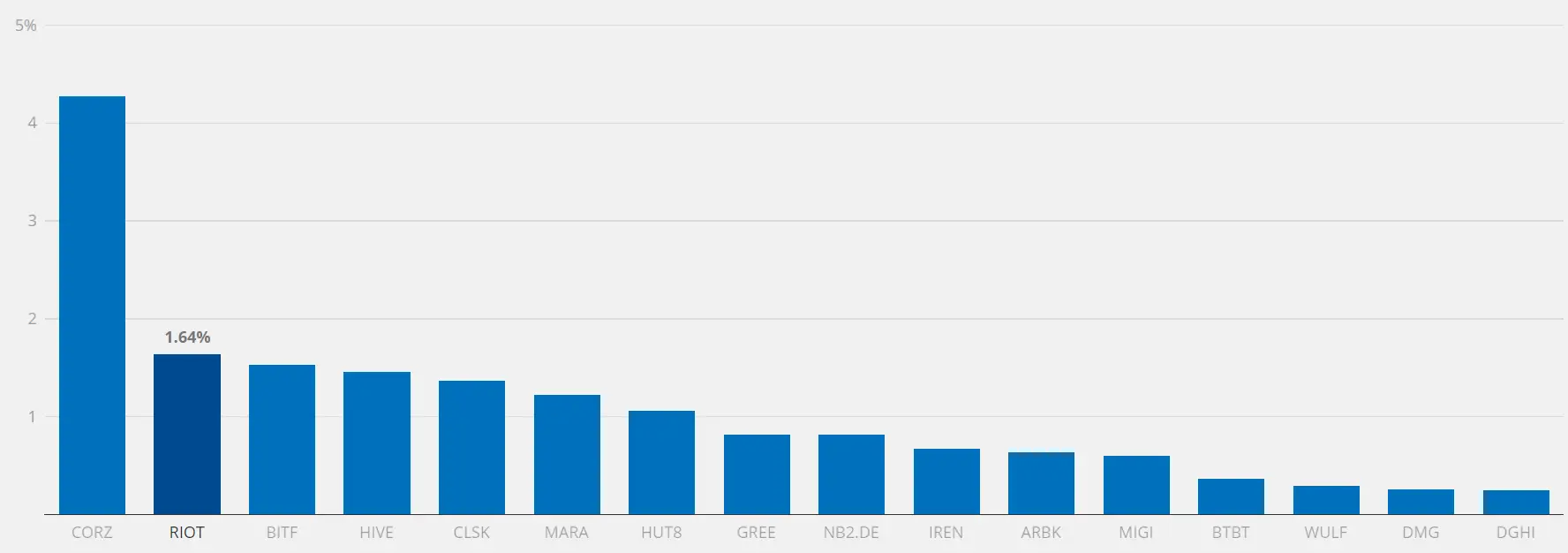
Market share of Bitcoin mining companies by hashrate. Source: TheMinerMag
Notably, the PE ratio of most companies in the industry is between 0 and 2, except for Marathon, Hive and Hut 8. This raises alarms that these companies could be overvalued at their current valuations.
A net loss position is no reason to reject a stock because markets are usually forward-looking. If one is long-term bullish on Bitcoin, the mining stocks are obvious choices. However, these companies must survive through the bear market before bearing the fruits of the next bull run.
Shareholders suffered losses due to bad debt and dilution
Overleveraged or indebted firms, that have to meet their interest obligations, are particularly stressed and vulnerable to insolvency.
Marathon, Greenidge and Stronghold have over $200,000 in debt per unit of Bitcoin mining, with Marathon’s debt peaking at $1.1 million per mined BTC. Marathon collateralized its loans with Bitcoin in its treasury. And the firm now holds 10,055 BTC worth around $235 million.
By the end of October 2022, Marathon took $100 million in loans, which risks getting liquidated if Bitcoin’s price falls below the loan threshold value. For instance, if the loan threshold is 150%, the company will be forced to sell some of its BTC to clear the loans if Bitcoin price drops below $15,000.
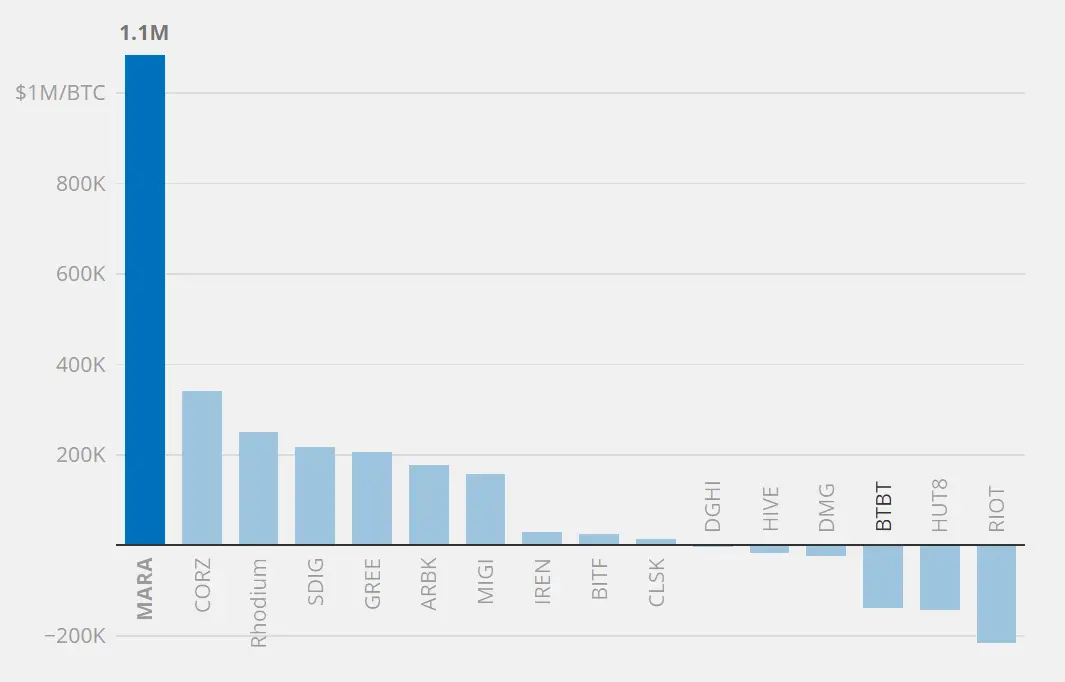
Debt per BTC produced by mining companies. Source: TheMinerMag
In this regard, it is encouraging to see that Hive, Hut8 and Riot are mostly debt-free and functioning essentially on equity capital. This reduces the pressure of paying interest rates on the debt and provides flexibility in raising funds or expanding by absorbing some of the marketshare left by now bankrupt mining operations
However, there’s another way to raise funds. Instead of raising debt, miners can dilute their shares. The companies raise investment from public market investors in exchange for additional stock. This reduces the ownership ratio of shareholders. Hut 8 mining and Riot had diluted north of 40% of their shares by Q2 2022. Hut 8 diluted around 15% of shares again in the third quarter of the same year.
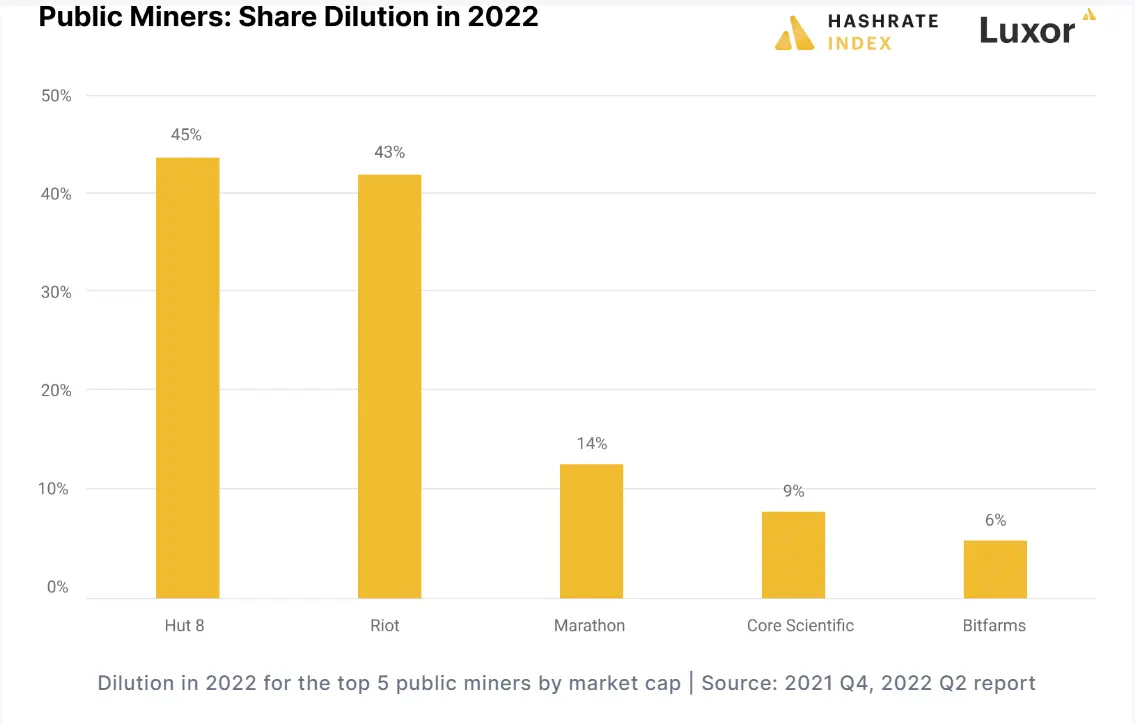
Share dilution of public mining companies by Q2 2022. Source: Hashrate Index
The need to raise money has exposed these indebted companies to liquidation risks, while excess dilutions have also significantly reduced the value of investor holdings.
Mining company mandates on treasury holdings
While mining companies are struggling with profitability, they are determined to conserve their Bitcoin treasury levels. Despite suffering losses since Q2 2022, Marathon was able to retain its treasury holding levels.
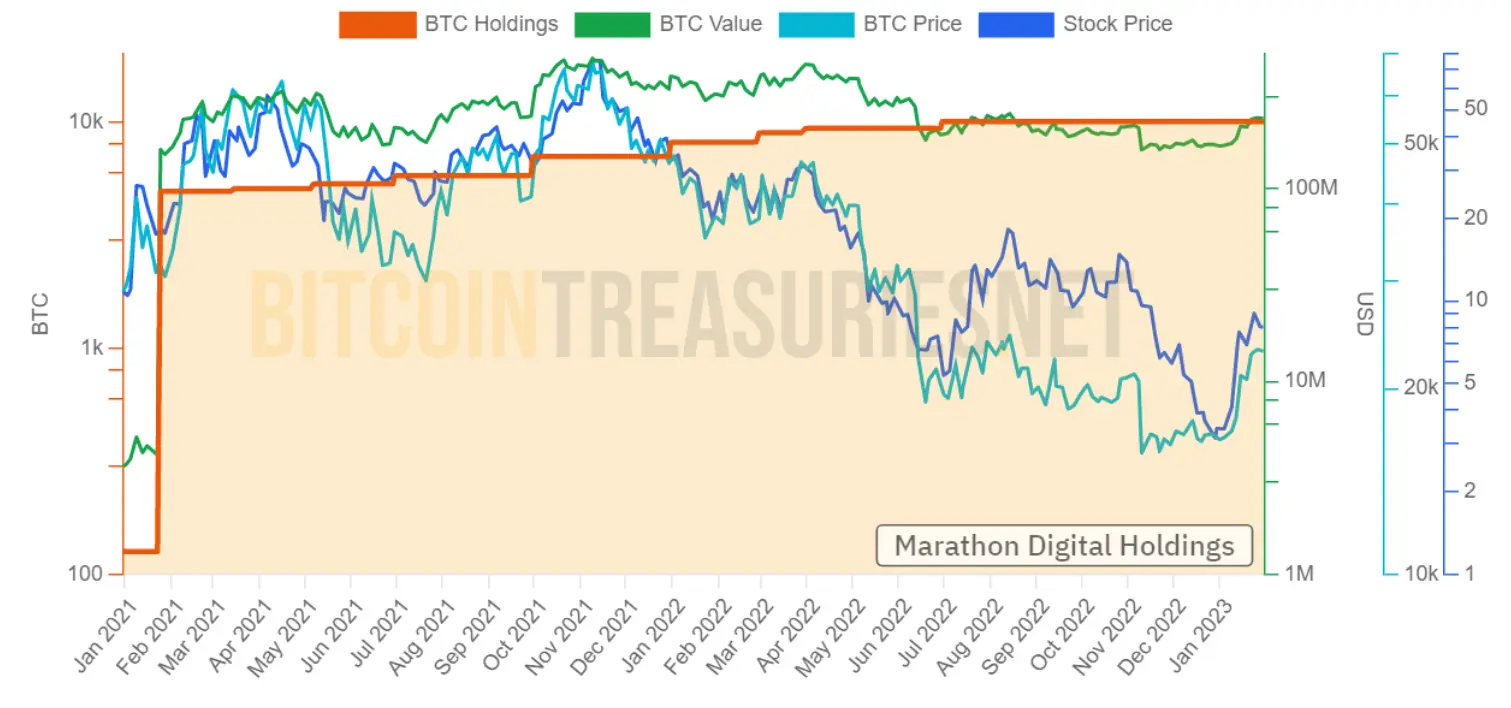
Marathon’s Bitcoin Treasury holdings. Source: BitcoinTreasuries!Net
At the same time, Hut 8 mining uses a more aggressive policy in selling its mined BTC. This has led to a strong increase in its holdings since mid-2022.
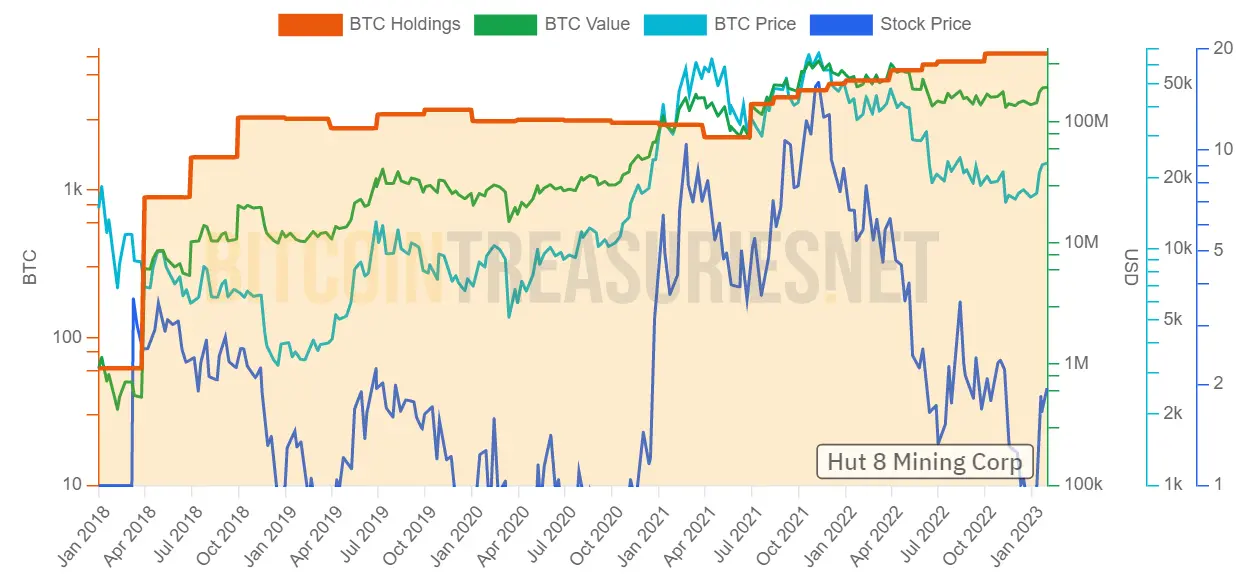
8Hut’s Treasury has increased since July 2021. Source: BitcoinTreasuries!Net
Whereas, others like Riot and Hive have resorted to using their BTC treasury to cover operational and expansion costs. Hive's holdings have reduced significantly since the third quarter of 2022, from 4,032 BTC to 2,348 BTC. Hive is relying on the expansion of its miner fleet and cost reductions to sustain itself.
Clearly, Bitcoin mining companies remain vulnerable to BTC price, debt liquidations and shareholder losses due to excess dilution. According to on-chain analyst and Crypto Quant founder Ki Young Ju, 2023 will see entities taking over entire mining companies with a chance to buy them at a discount.
While it won't affect Bitcoin price much, mining stocks are still exposed to the threat of considerable losses.
Author
Cointelegraph Team
Cointelegraph
We are privileged enough to work with the best and brightest in Bitcoin.