Binance FUD rises on CFTC lawsuit as exchange-linked addresses fall almost $1.5 billion, on-chain data shows
- Binance-linked addresses plummet by over $1 billion following CFTC lawsuit.
- The exchange has processed 16X more withdrawals than Bitfinex, DeFiLlama reports.
- Binance had processed $708.85 million in transactions over the past 24 hours.
News of the Commodity Futures Trading Commission (CFTC) filing a lawsuit against Binance and CEO Changpeng Zhao (CZ) has inspired a new wave of Fear, Uncertainty, and Doubt (FUD) in the cryptosphere. Based on data from DeFiLlama, the largest crypto exchange by trading volume has processed 16X (16 times) more withdrawals than Bitfinex, its closest rival.
Read: Binance CEO Changpeng Zhao's official response to the CFTC complaint
Perspectives from different on-chain metrics: Binance-related addresses recording outflows
On-chain data indicates that Binance-related addresses are posting outflows in the aftermath of the lawsuit filed by the CFTC.
1. Arkham Intelligence data
A snapshot of the dashboard of crypto intelligence platform Arkham Intelligence reveals that the value of the wallets linked to the prominent exchange plummeted by around $1.46 billion since the news headlined.
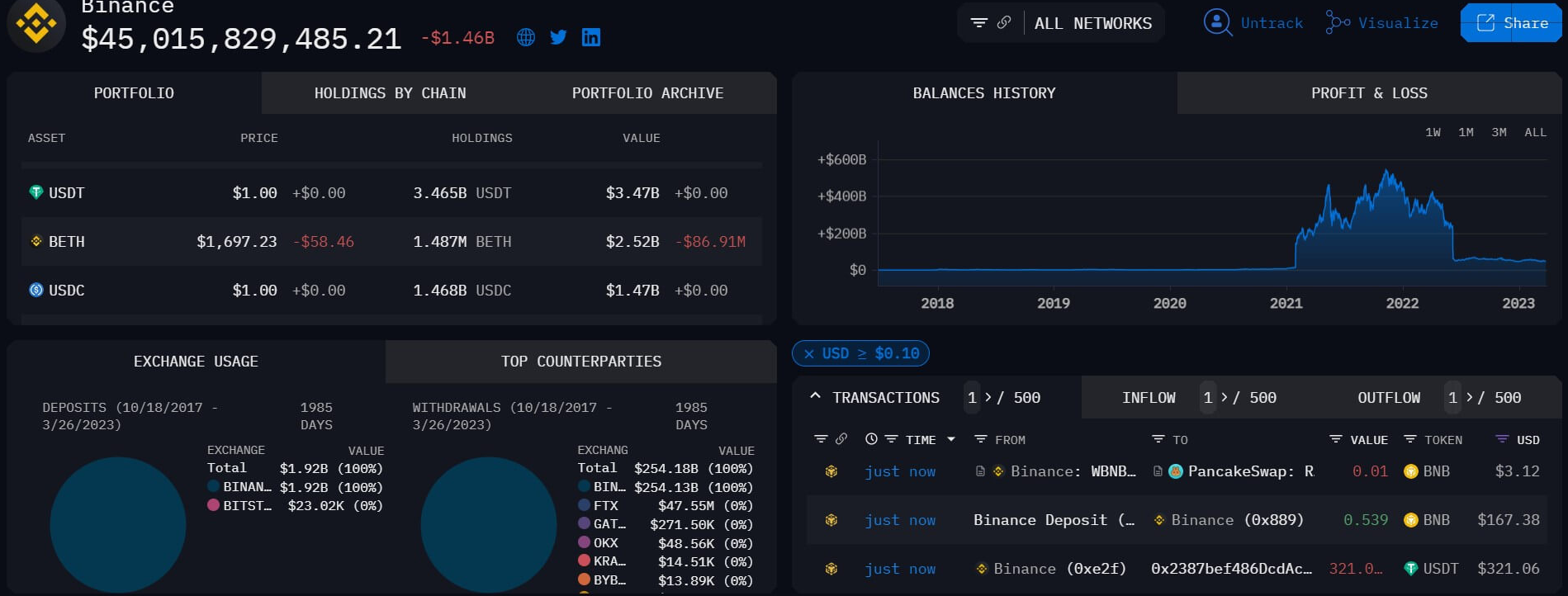
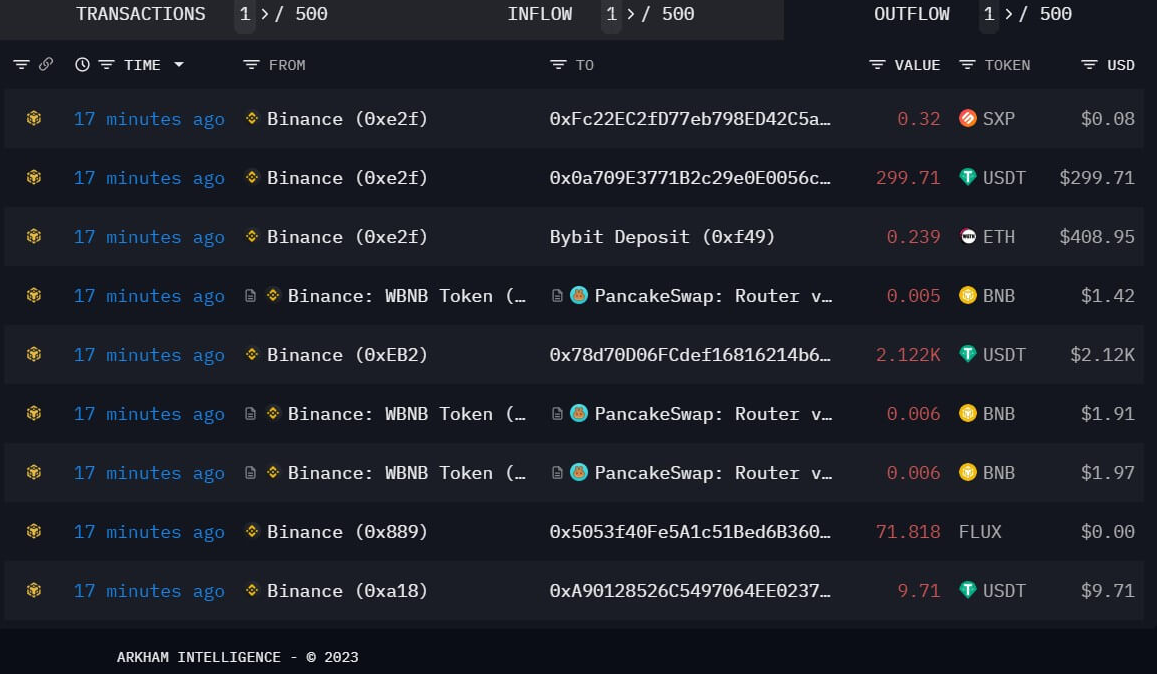
From the above data, we see that most of the withdrawals are transactions by retail investors pulling out their holdings from the exchange.
2. DeFiLlama data
DeFiLlama has corroborated the report with its centralized exchanges’ transparency dashboard, showing that Binance had processed $708.85 million in transactions over the past 24 hours.
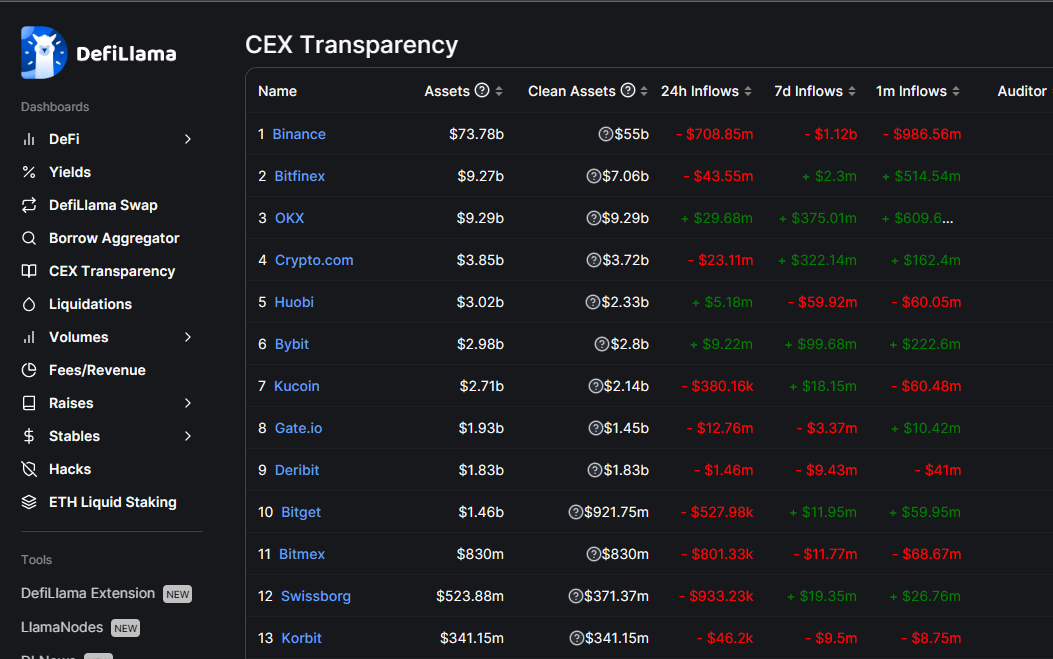
Notably, this is 16X higher than the amount processed by its closest rival, Bitfinex.
Comparing Binance FUD: FTX vs CFTC
The torrent of these withdrawals fades when compared to what was recorded in November 2022 when the crypto exchange FTX crumbled under the stewardship of Sam Bankman-Fried. At the time, Binance processed over $6 billion in withdrawals within a seven-day span.
Nevertheless, considering the current data, which is barely 12 hours old, the volume of floods to come remains to be seen.
In a recent citing, Binance processed almost $1 billion in withdrawals after a regulatory clampdown against Binance USD (BUSD), the exchange’s stablecoin product.
This is what the outflows mean
The news about the CFTC lawsuit against Binance on allegations of violating future and derivatives trading laws has caught market participants off-guard, especially Binance Coin (BNB) community members. As a result, the token has plunged by 6% as reported earlier.
A cohort of the community members fear the lawsuit could impede the platform’s operations. The sentiment was worsened after Adam Cochran, partner at MetaCartel Ventures DAO, comments, saying,
Attempting to strike a fatal blow to Binance… [the lawsuit could make] Binance liable for billions upon billions of dollars in fines.
Cochran also humored that CFTC would “single-handedly save the US from a recession by making Binance pay back US fees and liquidations since 2017 with that “make whole” clause.” In his opinion, a settlement would be the only semi-safe path for the exchange, where CFTC would still push for the billions in make whole, disgorgement and civil penalty payments but may allow CZ [et al] to avoid admission of guilt.
CZ has since responded to the development with a tweet citing the number, 4. The Binance executive previously used this number in reference to FUD, which means he probably wants community members to ignore the news.
4
— CZ Binance (@cz_binance) March 27, 2023
Whether the case passes as FUD, however, is questionable, given “It is not a rumour or a matter of uncertainty.” Cochran describes the case as damning with chat records from insiders.
Notably, AJ Nelson previously called regulator attention to Binance and its executive after the Securities and Exchange Commission (SEC) sent a Wells notice to Coinbase exchange.
It is absolutely shocking to me the @SECGov is bringing charges against @coinbase, while non have been brought against @cz_binance & @binance.
— AJ Nelson (@ajnbtc) March 22, 2023
For years @coinbase has followed the rules and done everything right. Conversely @binance has broken all the rules and not cared.…
A Wells notice typically precedes an enforcement action, which means Binance’s case is a step ahead of the US-based exchange’s case.
Author

Lockridge Okoth
FXStreet
Lockridge is a believer in the transformative power of crypto and the blockchain industry.