Will the Bank of Japan Governor, Ueda stick to the plan?
On Friday we see the 1st Bank of Japan policy meeting for the newly appointed Governor Ueda. There is a case building that there will be a lifting of the ultra-low policy that has been in place since the early 2000s. This low-interest policy approach aimed to stimulate economic growth and maintain price stability. More recently the BOJ has implemented various additional measures to stimulate the economy including Quantitative easing and yield curve control, intending to keep long-term interest rates close to zero.
More recent data out of Japan show signs of more continued price pressures. The most recent CPI reads out of Japan put the current rate at 3.2%. Comfortably above the 2.0% target. Ueda has been vocal since taking office that “now is not the time to lift the policy restraints”. He has all but dismissed the persistent wage growth as a cyclical pressure and not necessarily sustainable. So I believe that he will not want to lose face or credibility by making any significant changes at his first meeting. However, he may well set out more hawkish rhetoric for the meetings to come. Undoubtedly these price pressures are building and they will likely have to move later in the year. I am also conscious, however, of a more recent comment where he indicated that a move is best delivered with the 'element of surprise'. 'When the market is not expecting it'. This makes the meeting this Friday very ‘live’ and could really go either way.
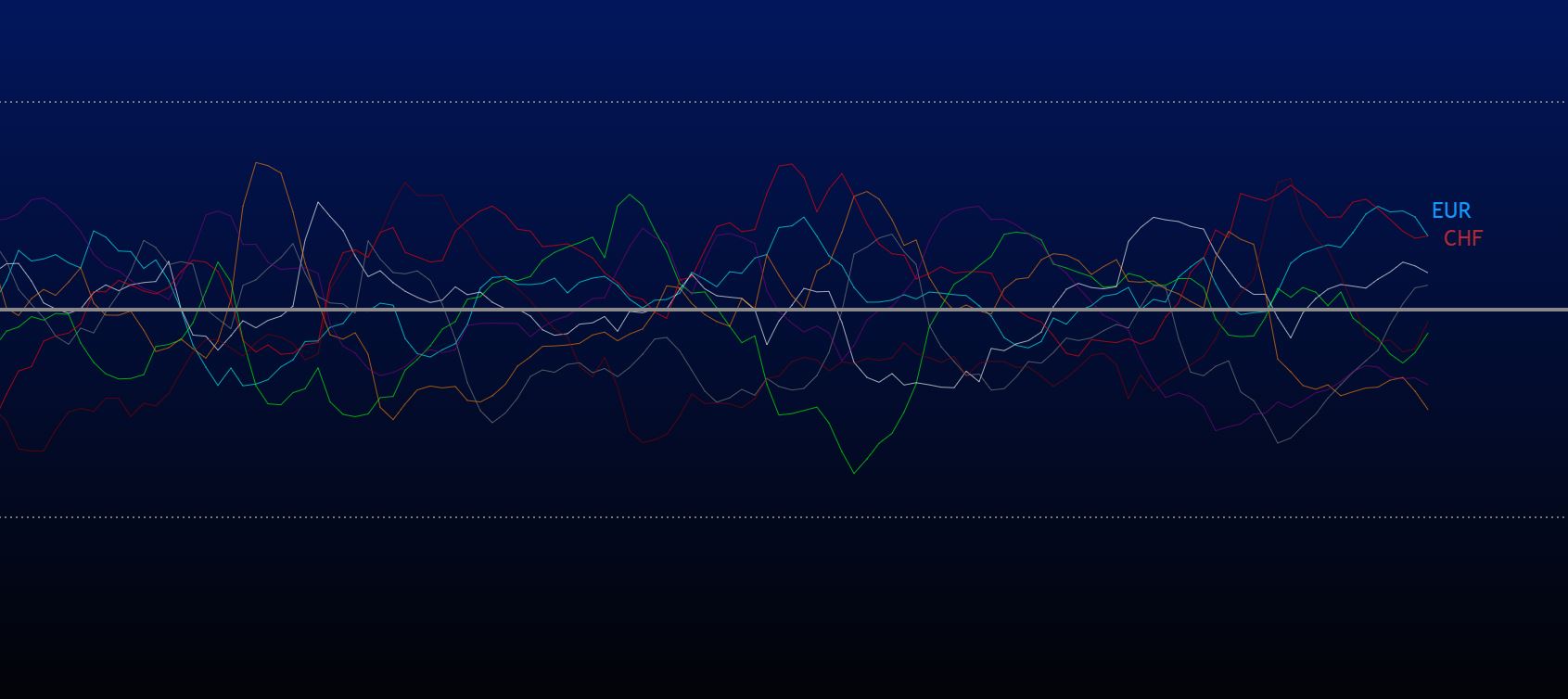
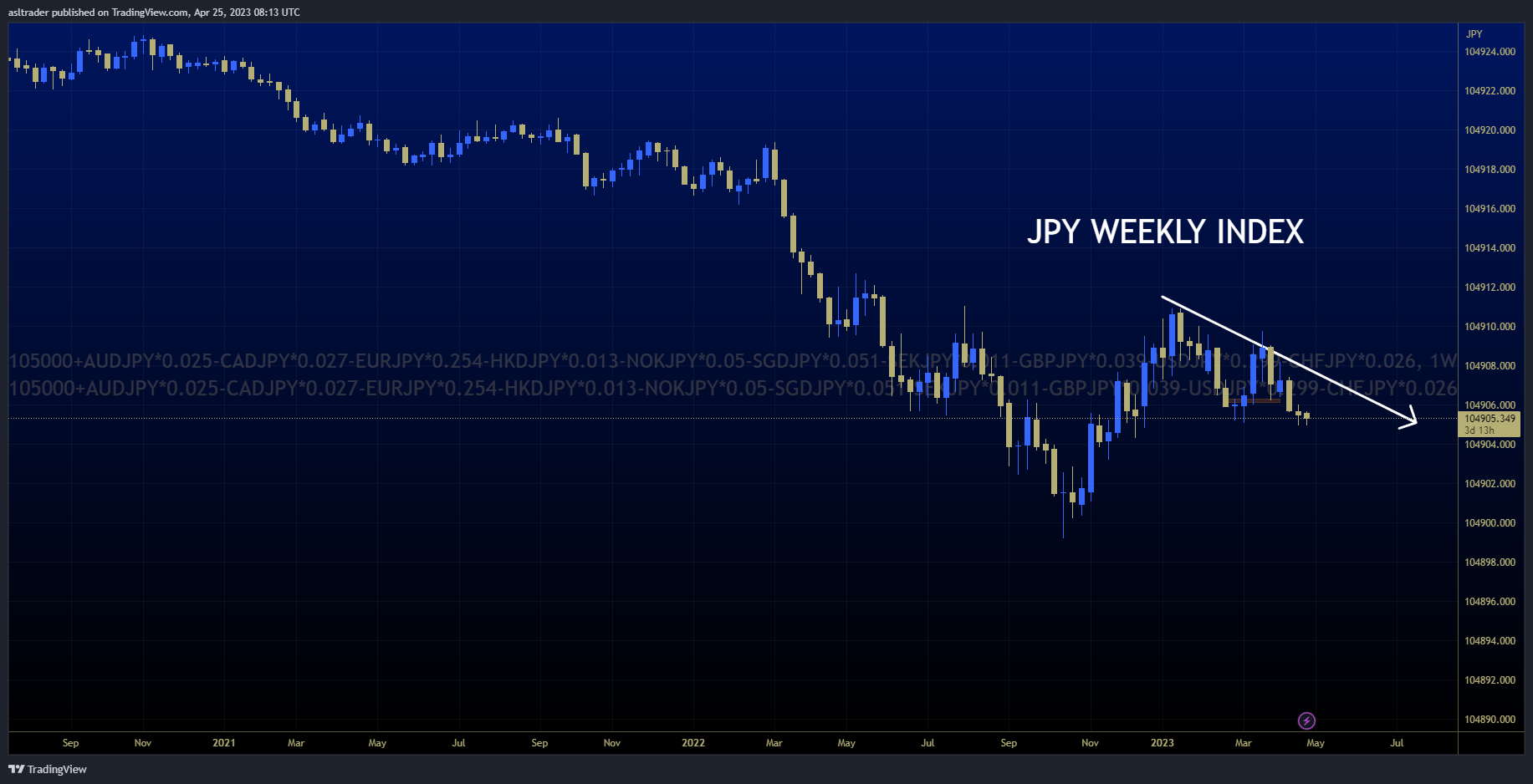
On the technicals, the JPY continues to look weak. The USD, measured by the DXY, has declined 5 weeks out of the last 6 shedding almost 3%. The USDJPY has gained approximately 3% in the same time period. So putting that into perspective, the JPY has declined against a declining USD, indicating a substantially weaker JPY. If Ueda sits on the fence this week, as expected, the JPY will continue to struggle. Traders looking for an edge should look to buy the stronger currencies and sell the weaker. The EUR and CHF are both outperforming the basket of 8 (see momentum meter chart below).
Author

Andrew Lockwood
The City Traders
30 + years veteran trader registered and authorised under Financial Services Authority FSA (disbanded in 2013). Futures and Options trader on the London International Futures and Options exchange (LIFFE).