US Initial Jobless Claims Preview: Exceptional layoffs become mundane
- Claims forecast to slide to 838,000 in February 19 from 861,000.
- Continuing Claims expected to drop to 4.467 million from 4.494 million.
- Layoffs to stay high as business failures spread after the pandemic year.
- Markets have ceased watching claims for economic direction.

High levels of layoffs are threatening to become a feature of the US economy as businesses give up after a year of pandemic lockdowns and restrictions.
If Initial Jobless Claims drop to 838,000 in the February 19 week from 868,000 as forecast, it would be the first decline since January yet weekly claims would remain almost 100,000 higher than at their low in late November.
Initial Jobless Claims
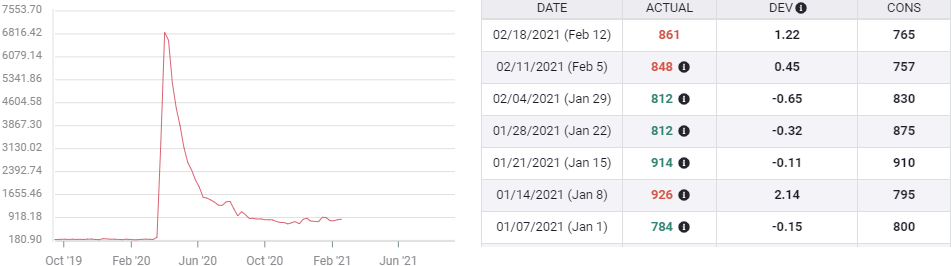
Continuing Claims are expected to fall to 4.467 million in the week of February 12, which would be the fewest of the pandemic, from 4.494 million previously.
California's and the lockdown fallout
The renewed lockdown of the nation's largest economy and increased restrictions elsewhere as the pandemic proliferated in December pushed unemployment claims from a low of 711,000 in the first week of November to 926,000 two months later. The four-week moving average ballooned from 740,500 in the third week of November, the lowest of the pandemic to 856,500 in the last week of January, the highest since October 2.
Even though US COVID-19 cases have dropped precipitously since the first of the year, down 77% to last week, the residue of that fall wave continues to wreak havoc among businesses that depend on consumer habits from before the pandemic.
Failures among scores of firms that had managed to keep going even as people largely refrain from eating out and travel will likely keep layoffs high until a majority of consumers are convinced it is safe to resume their old lives.
Conclusion
The January Retail Sales surge and a prospective boom from the stimulus package in March and April will come too late for many small businesses crippled by the year-long collapse of revenues.
Markets have stopped looking to the claims numbers for clues to an improving economy, counting on a repeat of the January consumption spurt to ignite a much faster economic recovery.
Equity prices and Treasury yields reflect a conviction that an economic recovery lies just ahead. The currency market is waiting for proof that the US economy has turned the corner. No one, it seems, is much concerned that more than three-quarters of a million people become unemployed each week.
Author

Joseph Trevisani
FXStreet
Joseph Trevisani began his thirty-year career in the financial markets at Credit Suisse in New York and Singapore where he worked for 12 years as an interbank currency trader and trading desk manager.
















