The Fed and Norges Bank turn more hawkish
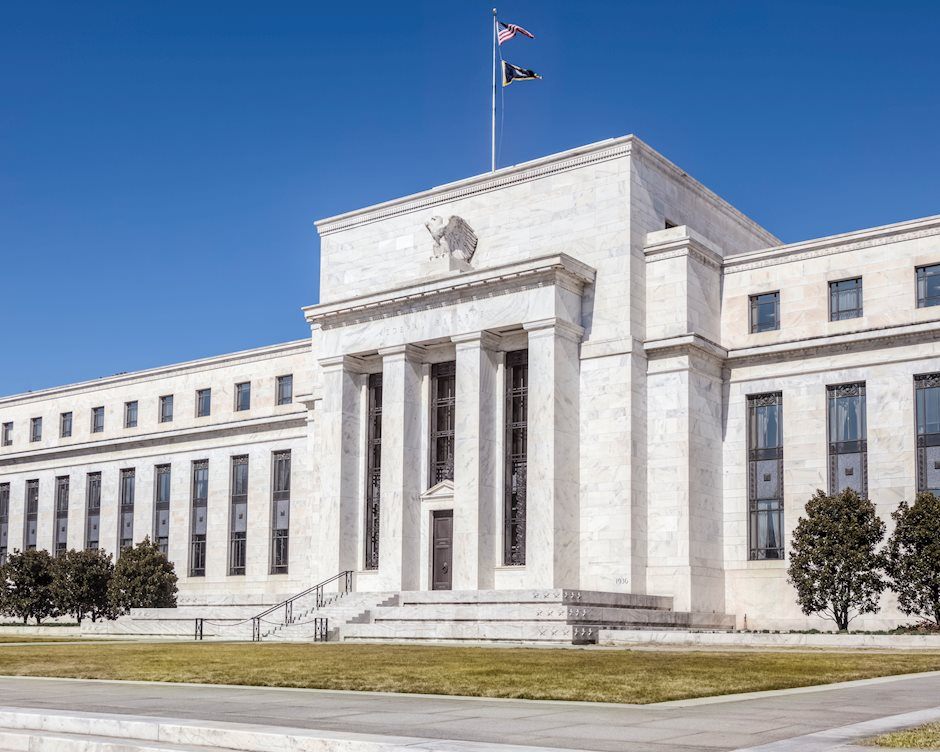

This week’s most important event was the Fed meeting. The Fed was more hawkish than anticipated and the meeting most likely marked the first step of the Fed taking the foot off the gas. The Fed is now signaling two rate hikes by end-2023 and that the FOMC members will continue discussing tapering at upcoming meetings. US Treasury yields rose significantly (especially 5yr) and EUR/USD has declined from above 1.21 to below 1.20. We discuss the Fed (including our new Fed call) in Fed Research: Review – Slowly taking the foot off the gas, 16 June.
On COVID-19, most focus is on the so-called delta variant (B.1.617.2 first found in India), which forced the UK government to postpone the full re-opening by four weeks. More and more cases are also found in other countries, as the delta variant seems to be around 50% more transmissible than the alpha variant (B.1.1.7 first found in the UK). The good news is that the vaccines are still very effective according to two Public Health England studies. So if anything this is mostly a “delayed, not derailed” story.
In China, we got data for retail sales, industrial production, fixed assets investments, and property investments this week. All data were weaker than anticipated supporting our view that Chinese growth is slowing amid tighter monetary and credit policies.
Norges Bank sent a hawkish signal at its meeting yesterday, as it plans to normalize monetary policy faster than expected and priced in markets. The verbal guidance clearly shows that Norges Bank plans to hike for the first time at the September meeting. See more details in the Scandi section.
Next week, we get preliminary Markit PMIs in June for the euro area, the UK, and the US. In the light of the gradual easing of restrictions, we are interested in the goods versus services dynamics, not least whether we are about to see a peak in manufacturing. In the euro area, for instance, we expect PMI services to increase but will not be surprised if the manufacturing index falls.
The Bank of England (BoE) meets next week, but it is one of the interim meetings without a Monetary Policy Report, so do not expect the BoE to make any major changes. We will keep an eye on what the BoE thinks about inflation after the higher-than-anticipated inflation in May.
In the US, we get monthly private consumption data for May on Friday. We are in particular interested in whether service consumption is making a comeback at the expense of goods consumption. We expect the PCE headline price index rose 0.5% m/m in May (3.9% y/y up from 3.6%).
In the euro area, the regional elections in France on Sunday are interesting ahead of the French presidential election next year. The focus is very much on how Marine Le Pen’s Rassemblement National (RN) party is performing. Besides that, we think it is unlikely that ECB President Lagarde will send new policy signals when she speaks in front of the European Parliament.
Author
Danske Research Team
Danske Bank A/S
Research is part of Danske Bank Markets and operate as Danske Bank's research department. The department monitors financial markets and economic trends of relevance to Danske Bank Markets and its clients.