Markets overtly bullish on EUR? NZD breaks LT trend line support

The EUR/USD pair is down 0.66% at 1.1775 as renewed hopes of tax reform in the US put a bid under the greenback. The common currency has remained resilient despite Catalan crisis and growing evidence that normalizing policy would be a tough job for the ECB.
FXStreet EUR/USD Forecast Poll shows, markets see very little probability of a decline in the EUR in the next three months.
Big buildup in January expiry In-the-money call options
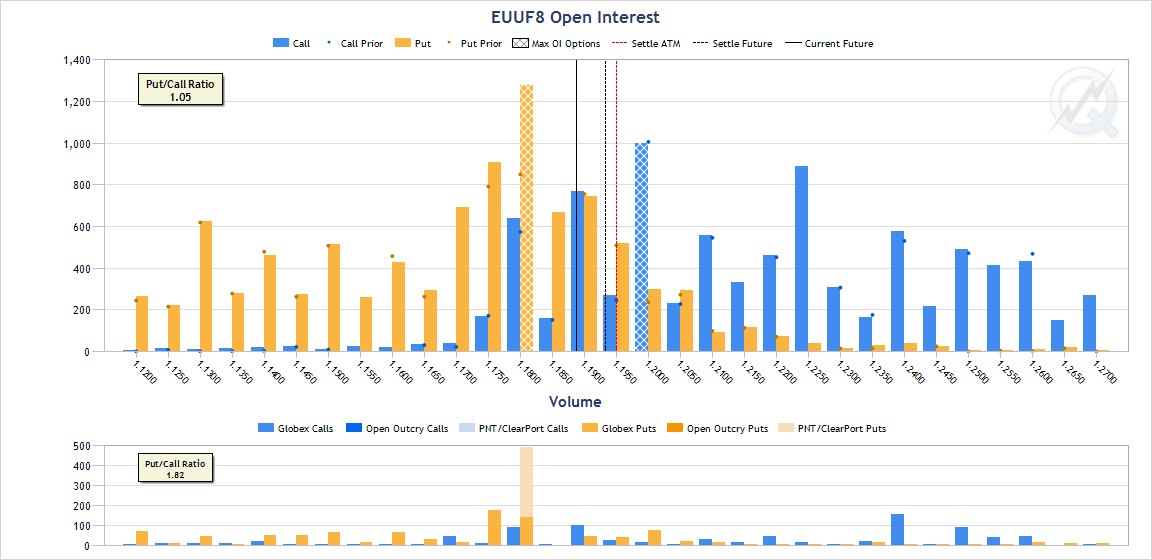
The options data published by the CME also show big build up in the open interest/open positions in EUR/USD January expiry 1.18 call option. Significant build up is also seen in 1.17 call and 1.1750 call.
Sentiment looks overtly bullish if we take into account the following factors-
Markets are overestimating the ECB's ability to exit the ultra easy monetary policy - It would be far more difficult for the ECB to unwind the ultra easy policy compared to Fed. This is because the ECB has pushed rates into negative territory. Normalizing policy will be a challenge.
Fed was stuck near the zero lower bound, still, it had to begin telegraphing the first move at least 15 months in advance. Furthermore, there was no political crisis in the US ahead of the liftoff.
Thus, it is quite clear that the ECB would have to dedicate a far more time in telegraphing the first rate hike.
The tables may have turned in favor of US - Senate's decision to approve 2018 budget plan has opened doors for tax overhaul without democratic support. The China relation story is likely to push up inflation expectations in the US. Washington looks more stable than it did 6 months ago.
Across the pond, things are looking shaky. Angela Merkel is on a weak footing (following her weak election victory), hence dealing with another round of debt crisis would be easier said than done. The Catalan issue presents a big risk to the Euro project. Brexit is still a mess. Negotiations are going nowhere. In the long run, a "no deal" scenario could end up being more damaging for the EU.
To cut the long story short, the odds of a sell-off in EUR/USD are high and markets look overtly bullish on the EUR. Even the technical chart shows a major bearish reversal pattern
Daily chart
-636441228177883901.png)
- When viewed on the daily chart, today's move appears to have opened doors for a sell-off to head and shoulder neckline level of 1.1660.
- A break below the neckline would signal the rally from the January low of 1.0341 has ended. As per the measured height method, the spot could then target 1.1228 levels.
NZD/USD - Long-term trend line breached
Weekly chart
-636441228711756768.png)
- The trend line sloping higher from Aug 2015 low and Jan 2016 low has been breached.
- The RSI has turned bearish and the ADX line is ticking higher (bearish trend is gaining strength).
- The pair looks set to test 0.68 levels ahead of the year end and may fall further to 0.6680 levels.
- Only a move back above the weekly 50-MA (blue line) would signal bearish invalidation.
Author

Omkar Godbole
FXStreet Contributor
Omkar Godbole, editor and analyst, joined FXStreet after four years as a research analyst at several Indian brokerage companies.