It’s not nice to tease the markets: Equities enter bear territory
- Dow drops into bear market, ending longest bull run in history.
- Dollar and Treasury yields revive, oil falls.
- Markets await stimulus plans from the White House.

The economic stimulus package promised by the White House but not yet delivered sparked the latest selling panic in a stock market thoroughly spooked by fears of the economic effects from the global spread of the coronavirus.
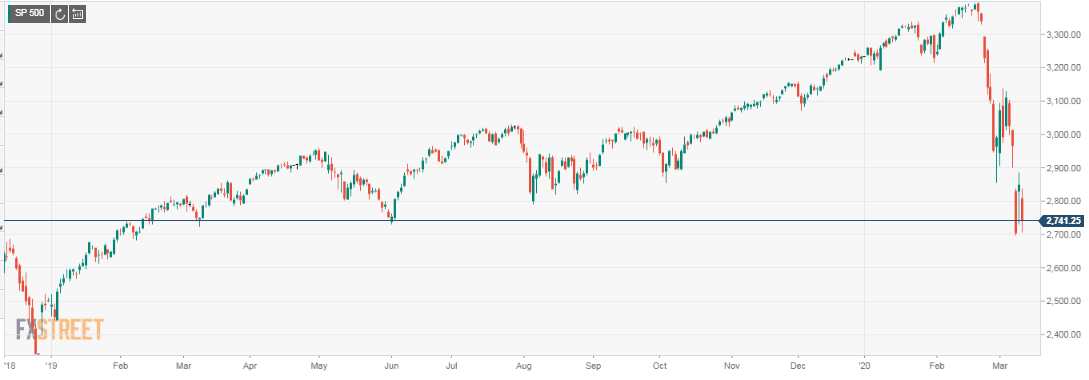
All three major American equities fell sharply, erasing yesterday’s gains and bringing the Dow down 5.85% to 23,553.53 more than 20% below its high on February 12th of 29,568.57, the entry to a bear market. The S&P 500 lost 4.7%, 140.85 points, ending at 2,741.38.
S&P 500
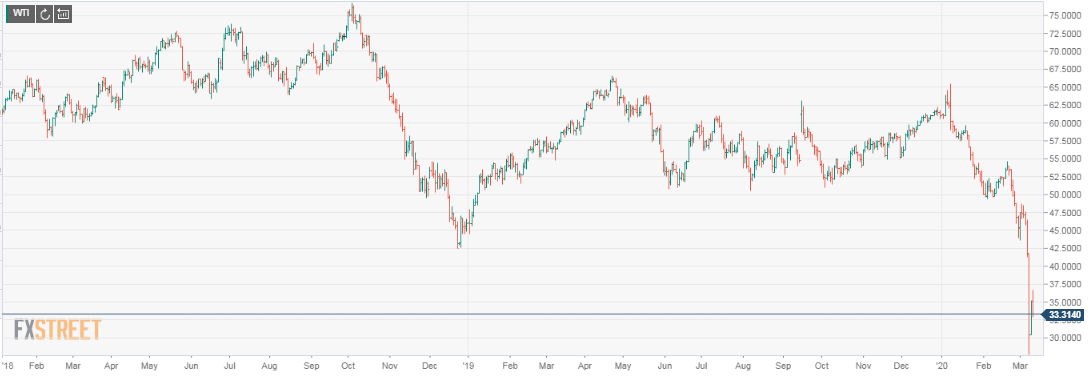
Oil saw its largest one day decline since the Gulf War of 1991 on Monday with West Texas Intermediate plunging from $41.73 at the open as low as $27.69 before closing at $30.49 as Russia and Saudi Arabia threatened to raise production. The price had recovered to $33.88 near the close on Wednesday.
WTI
Treasury yields fall and recover
The yield in the 10-year Treasury dropped to its all-time low on Monday at 0.498%, 89 basis points below its previous low from July 2016. By late Wednesday afternoon, the return had climbed back more than 30 basis points to 0.876%.
US 10-year yield

CNBC
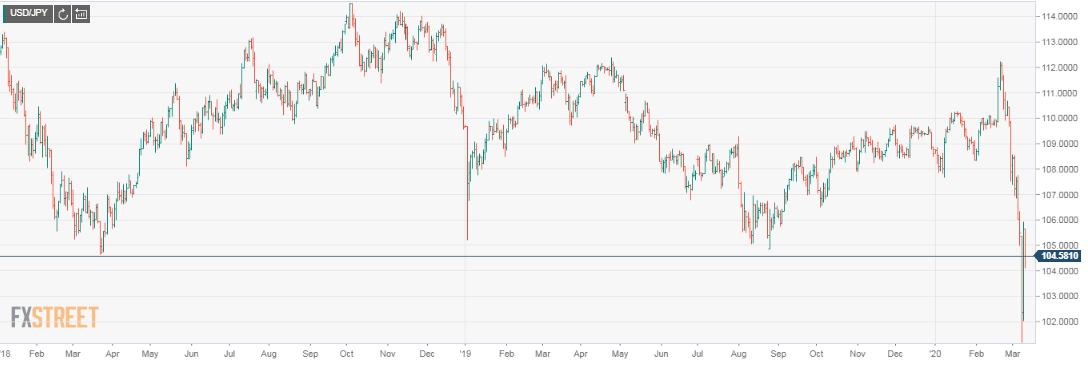
The dollar lost ground against the yen at 104.84, down from yesterday’s finish at 105.64 but higher than Monday’s three-year low close at 102.37. Against the euro, the greenback was essentially unchanged at 1.1277 just under Tuesday’s 1.1280 close.
A report from the Institute for Supply Management noted that 75% of respondents in its survey for the March purchasing managers indexes said that their firms had experienced supply chain delays and disruptions.
Stimulus package delayed
But the biggest disappointment on the day was the lack of clarity from the White House and Congress on the government’s plans for a fiscal stimulus to offset the potential economic drag from the Coronavirus and its impact on GDP.
On Monday President Trump had said that he wanted to eliminate payroll taxes for employees and employers through the end of the year. As a tax proposal, it would need to go through the House of Representatives which is controlled by the Democrats where Majority Leader Steny Hoyer declared the plan a “non-starter.” Payroll taxes are used to fund Medicare and Social Security.
Markets had expected the plan to be outlined on Tuesday but a proposed statement by President Trump did not occur and the White House has released no details since.
The Federal Reserve cut the base rate 0.5% on March 3rd in the first emergency move since the financial crisis and is expected to reduce again next week at its scheduled March 17-18 meeting.
Author

Joseph Trevisani
FXStreet
Joseph Trevisani began his thirty-year career in the financial markets at Credit Suisse in New York and Singapore where he worked for 12 years as an interbank currency trader and trading desk manager.