Germany: Let the game of thrones begin
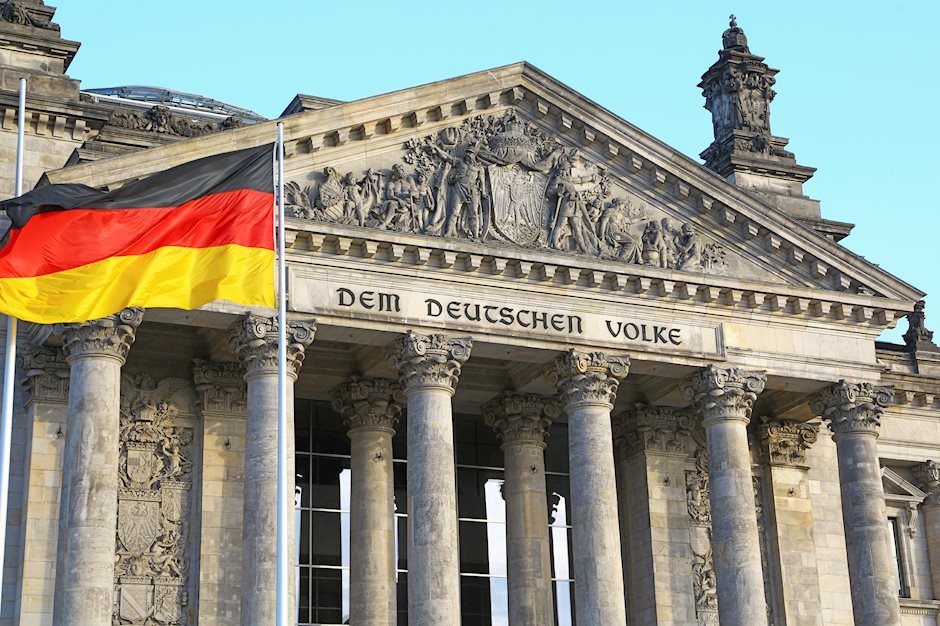

SPD becomes the largest party, giving Olaf Scholz the best chances to succeed Angela Merkel as chancellor. ‘Traffic light’ (60% probability) and ‘Jamaica’ (40% probability) coalitions most likely and positive from an economic perspective. Markets reacted mutely to the inconclusive election result in line with in our expectations. Difficult and lengthy coalition negotiations lie ahead.
Unchartered territory
With the ‘era Angela Merkel’ drawing to an end, German politics has entered unchartered territory with a possible change in government. Preliminary results put the Social Democrats (SPD) as largest party in the Bundestag with 25.7% of the votes, giving its candidate Olaf Scholz the best chances to succeed Angela Merkel as chancellor. For the Conservatives (CDU/CSU), election night confirmed a bitter defeat with its worst ever election result of 24.1%, that could see the party returning to opposition for the first time in 16 years. In line with past experiences, the Green party underperformed on election night compared to polling, but with a vote share of 14.8%, still achieved its best ever result in federal elections, positioning the party as a kingmaker in upcoming coalition negotiations. Another election ‘winner’ (and possible kingmaker) in the coalition talks is the liberal FDP party, which increased its vote share to 11.5%. The eurosceptic AfD party on the other hand could not capitalize on the weakness of the ‘established’ parties and gained less votes (10.3%) than in 2017. As a political pariah, its chances of affecting actual policy-making remain slim. As the election result was broadly in line with latest polls, the market reaction was relatively muted as we expected.
The election result leaves several coalition possibilities on the table (for what policies to expect from them, see also below). With SPD’s chancellor candidate Scholz and CDU/CSU’s candidate Laschet both claiming the right to lead the next government, we expect parties to start parallel talks on a ‘traffic light’ (60% probability) and ‘Jamaica’ (40% probability) coalition in the coming days. A left-wing ‘Red-red-green’ coalition of the SPD, Greens and the Left, that held the biggest potential for a fiscal regime shift, failed to gain a majority, contributing to the muted market reaction. While Olaf Scholz has the best cards to succeed Angela Merkel as chancellor in our view, his fortunes will depend on whether he can convince the FDP to make one of the ‘traffic light’ trio. From an economic perspective, both outcomes - ‘traffic light’ or ‘Jamaica’ - would be positive in our view, due to an increased focus on public and climate investments as well as the potential for a somewhat more relaxed fiscal stance down the line that could boost Germany’s long-term growth prospects. We also expect any future German government to maintain a strongly pro-European stance.
Difficult and lengthy coalition negotiations now lie ahead and we would be surprised to see a new German government in place before the end of the year (after the 2017 election it took 172 days). In the meantime we expect markets to remain very headline driven as Germany’s ‘game of thrones’ unfolds and pay close attention to any comments from the ‘kingmakers’ regarding economic and fiscal policy plans and priorities.
Author
Danske Research Team
Danske Bank A/S
Research is part of Danske Bank Markets and operate as Danske Bank's research department. The department monitors financial markets and economic trends of relevance to Danske Bank Markets and its clients.

















