Japanese Yen weakens despite government warnings

The USD/JPY pair is on the rise again this Wednesday, recovering more than half of its previous losses despite ongoing warnings from Japanese authorities about sharp fluctuations in the yen. Finance Minister Shunichi Suzuki reiterated today that the government is prepared to act against excessive currency volatility. Additionally, Bank of Japan Governor Kazuo Ueda noted that the BoJ is assessing the impact of yen movements on inflation to inform future decisions better.
Last week, the yen strengthened by 5.2%, a move that the market largely attributes to financial interventions. While there has been no official confirmation of these measures, the market's interpretation is bolstered by data from the Bank of Japan, which indicates approximately 60 billion USD in expenditures. These actions are likely aimed at stabilising the national currency's value.
However, these interventions only provided a brief respite for the authorities. The yen's decline remains primarily influenced by the significant interest rate differential between the US Federal Reserve and the Bank of Japan. With rates at 5.5% and 0%, respectively, this disparity continues to exert downward pressure on the yen, and as long as it persists, the currency is likely to remain weak.
USD/JPY technical analysis
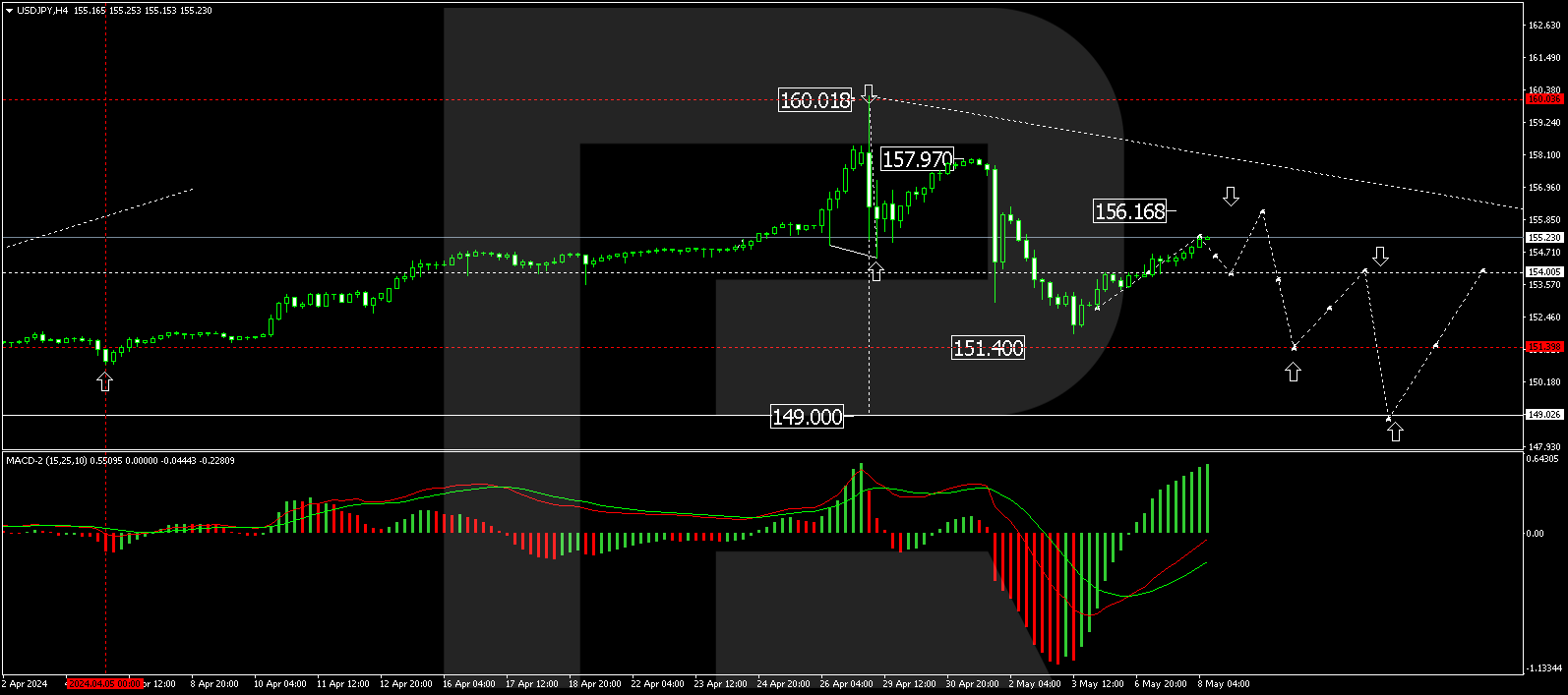
On the H4 chart, USD/JPY is currently forming a wave of decline towards 151.40. The local target of 151.86 has already been reached. The market is now correcting from the previous wave of decline and is expected to reach at least 156.00. After this correction, a new phase of decline towards 151.40 may begin. This scenario is technically supported by the MACD oscillator, whose signal line is below zero but directed upwards.
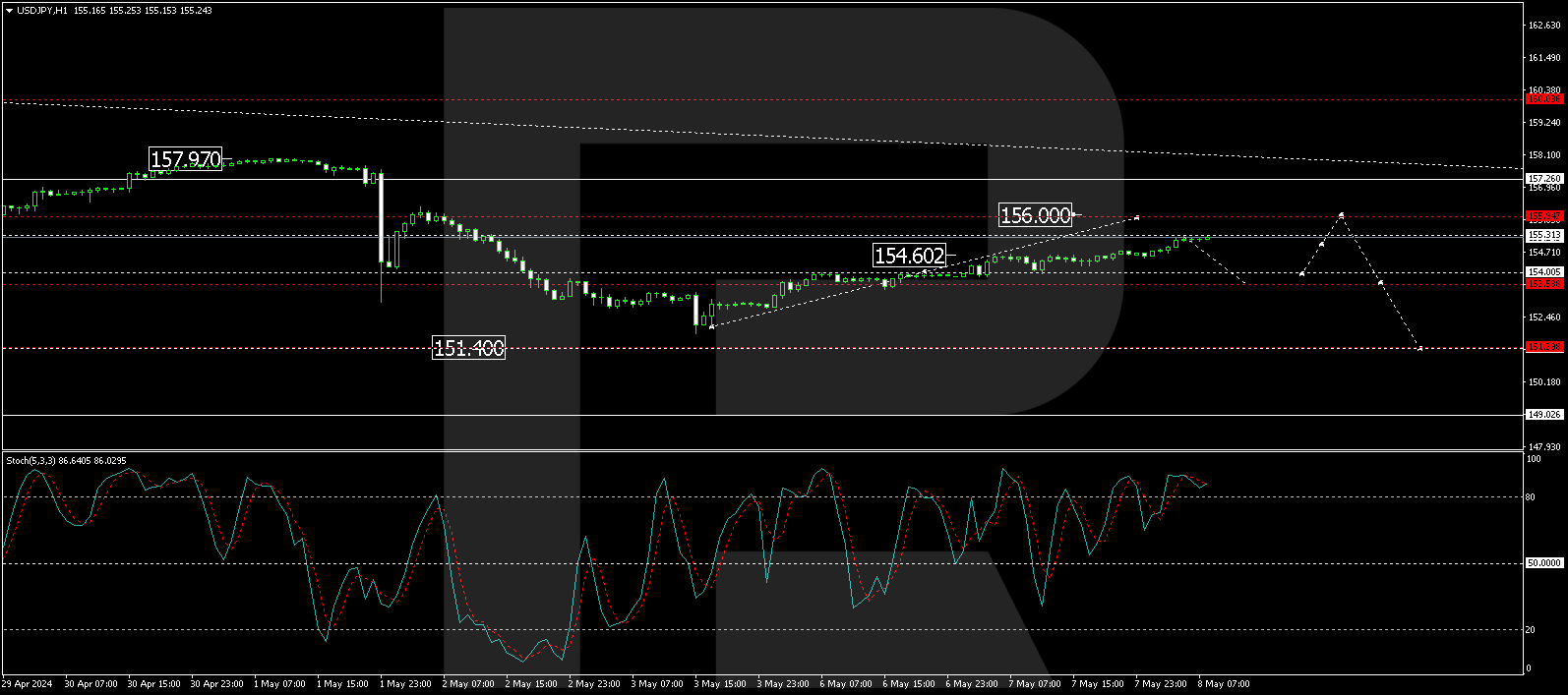
On the H1 chart, USD/JPY has formed a consolidation range around the 154.00 level, with an anticipated upward breakout leading to a correction towards 156.00. Currently, a growth link to 155.88 is forming. Following this, a potential decline back to 154.00 (testing from above) may occur before possibly rising again to 156.00. The Stochastic oscillator confirms this technical outlook, with its signal line above 80 and poised for a decline.
Author

Andrey Goilov
RoboForex
Higher economic education. Andrey Goilov has been working on the Forex market since 2005. A financial analyst and successful trader. Preference in trading is highly volatile instruments.