Canadian Jobs Preview: Slowdown in jobs growth could worsen CAD’s plight
- Canada to record a Net Change in Employment of 27.5K in December.
- BOC remains firm on its tightening plans as the Omicron strain seems to be milder.
- Canada’s jobs blowout could rescue CAD bulls amid a parallel US NFP release.

Amidst a cautiously hawkish Bank of Canada (BOC), WTI prices correcting and FOMC minutes pointing to aggressive tightening, USD/CAD is likely to extend its ongoing upward trajectory.
The Canadian dollar is set to experience more pain, with the recovery in the Canadian employment sector seen faltering in December after a big November jobs blowout.
Statistics Canada is due to be published the December labor market report on Friday at 1330GMT. The North American economy is expected to add 27.5K jobs in December as against a massive jobs growth of 153.7K reported in November. The Unemployment Rate is seen steadying at 6.0% last month while the Participation Rate is also likely to remain unchanged at 65.3% in the given period.
November’s growth exceeded expectations of 38K, which was closer to October levels. The gains pushed employment a full percentage point higher than pre-pandemic levels, which suggested that Canada was on its way to a full economic recovery.
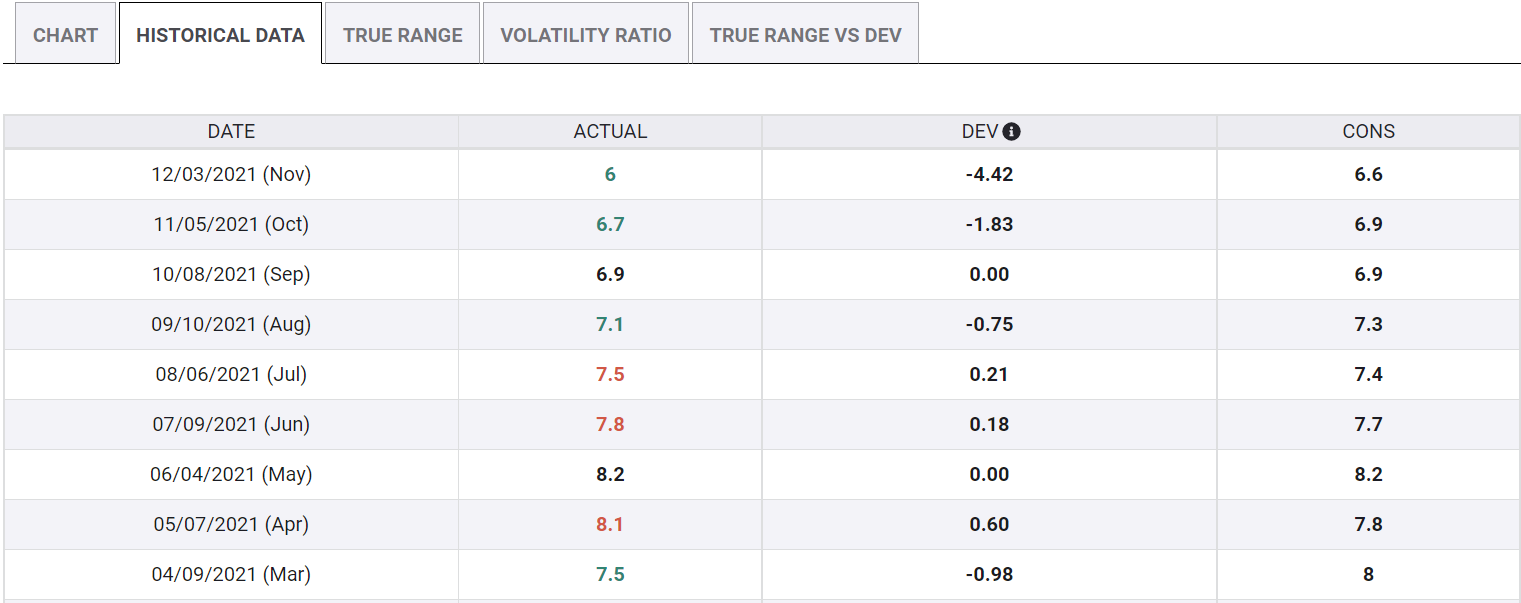
Source: FXStreet
At the same, the US is scheduled to release its monthly labor market report as well, with the headline Nonfarm Payrolls seen rising to 400K in December vs. 210K booked previously. The Unemployment Rate is likely to tick down to 4.1% in the reported month vs. November’s 4.2%.
A potential slowdown in the Canadian employment sector combined with robust American jobs data could likely keep the Canadian dollar undermined against its US counterpart.
Adding credence to this premise, the December Fed meeting minutes revealed that the world’s most powerful central bank remains on track for faster tightening amid elevated inflation and a strong labor market. The Fed policymakers also discussed the beginning of a reduction to the balance sheet.
On the other hand, the Bank of Canada (BOC) maintained its key interest rate at 0.25% in December while delivering cautious language in its accompanying monetary policy statement. The BOC officials remained wary over the economic impact of the new Omicron coronavirus variant.
The Omicron strain, however, has proven to be milder than initially estimated, and therefore, markets are now pricing in five quarter-point rate increases by the BOC this year. The USD/CAD pair may ignore the hawkish BOC expectations amid contrasting labor market scenarios in both the North American economies.
USD/CAD Probable Scenarios
Heading into Friday’s Canadian jobs data release, the US dollar is on an upsurge, tracking the yields higher following the hawkish Fed outlook. WTI keeps its corrective decline intact below $78 amid a reduced appetite for high-beta assets.
USD/CAD’s technical chart favors bulls, pointing to a likely extension of the US dollar strength or a big disappointment in the Canadian jobs data.
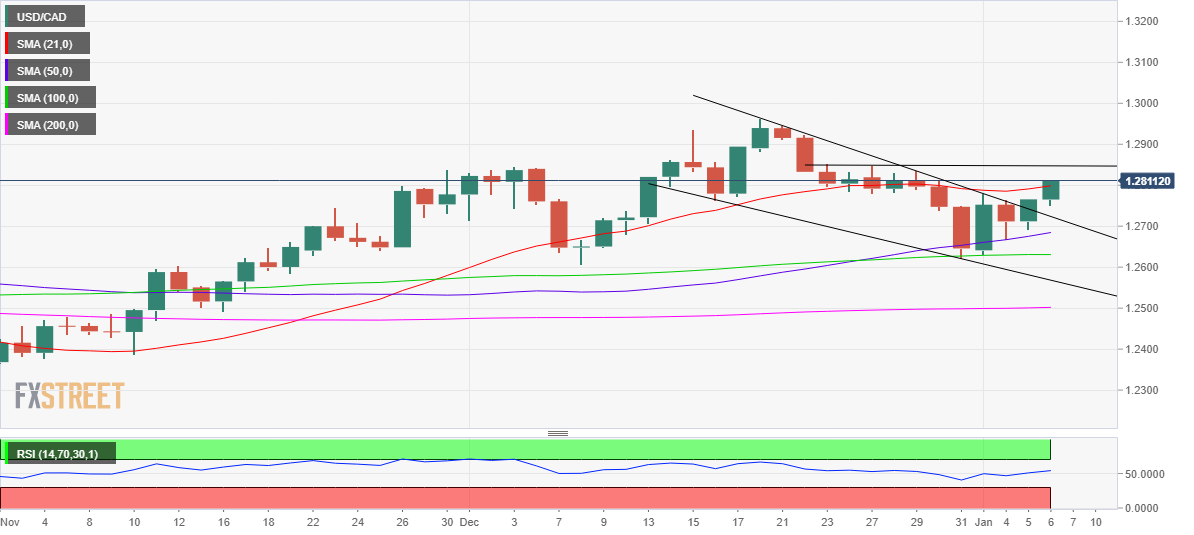
USD/CAD: Daily chart
USD/CAD has confirmed a falling wedge breakout on the daily sticks a day before, with the bulls now recapturing the critical 21-Daily Moving Average (DMA) at 1.2798. The pain in the Canadian dollar could be exacerbated if the jobs data fall short of the market’s expectations, prompting the pair to break through the recent range highs around 1.2850. Further up, all eyes will remain on the 1.2900 level. The 14-day Relative Strength Index (RSI) looks north just above the midline, backing the bullish view.
Only an upside surprise on the Canadian jobs data or a big disappointment on the US NFP report could save the day for CAD bulls. In that case, the spot could retrace to test the wedge resistance-turned-support at 1.2723, below which a sharp drop towards the bullish 50-DMA at 1.2684 will be in the offing.
Author

Dhwani Mehta
FXStreet
Residing in Mumbai (India), Dhwani is a Senior Analyst and Manager of the Asian session at FXStreet. She has over 10 years of experience in analyzing and covering the global financial markets, with specialization in Forex and commodities markets.